Ingredients, reviews, and professional insight for NZ beauty
Twelve months of training, a lifetime of opinions about it. Having spent years on the education side of the NZ beauty industry — running product training sessions, watching new graduates find their feet, and fielding the same honest questions from prospective students — the gap between what people expect from beauty therapy training and what it actually delivers has never been wider. Here is what the prospectus does not tell you.
The NZ Certificate in Beauty Therapy (Level 4) is the industry entry point. It is a one-year, full-time qualification that covers the core competencies: skin analysis, facial treatments, waxing, tinting, and makeup application. When you finish, you are qualified to perform these treatments in a salon under standard operating conditions. You can get hired. You can work on clients. That is what Level 4 does.
The NZ Diploma in Beauty Therapy (Level 5) adds a second year. It goes deeper into advanced skin treatments, body therapies, and the business side of running or managing a salon. Level 5 graduates are better positioned for skin clinic roles and for moving into senior therapist or management positions down the track. It is not essential for getting your first job, but it broadens where that first job can lead.
The distinction matters because some graduates treat Level 4 as a halfway point and feel incomplete without the diploma. It is not incomplete. Level 4 is a standalone qualification that gets you working. Level 5 is a strategic choice, not a compulsory next step.
Here is what nobody puts in the prospectus: your qualification proves you can perform treatments safely and to a nationally recognised standard. It does not make you fast. It does not make you confident with a client whose skin does not match the textbook. It does not teach you how to read the room when someone sits down in your chair and clearly had a terrible day.
The gap between qualifying and being genuinely competent is roughly twelve to eighteen months of paid work. Every experienced therapist knows this. The training gives you the technical foundation — the muscle memory, the product knowledge, the safety protocols — and your first salon role gives you everything else. Speed comes from repetition. Confidence comes from handling the unexpected. Commercial instinct comes from watching what makes a client rebook.
This is not a criticism of the training programmes. It is the nature of hands-on professions. A newly qualified electrician does not rewire a house unsupervised. A newly qualified therapist should not expect to run a full column of back-to-back facials on day one without support.
Alongside the NZQA qualifications sits a growing market of specialist short courses: lash lift and tint, cosmetic tattooing, dermaplaning, LED light therapy, advanced Brazilian waxing, brow lamination. These are not part of the national qualification framework. They are standalone certifications issued by training providers or product brands, and the quality ranges from genuinely excellent to barely worth the weekend.
The good ones are taught by working practitioners, involve supervised practical hours, and give you a skill you can offer clients the following Monday. The questionable ones hand you a certificate after eight hours of watching someone else do the treatment twice. Before you spend the money, ask how many practical hours are included and who is teaching.
Employers increasingly value these add-ons because they expand the service menu. A therapist who holds a Level 4 plus a credible lash extension certification is more employable than one who holds Level 4 alone. But stack them strategically — choose specialisations that complement each other and match the type of salon or clinic you want to work in.
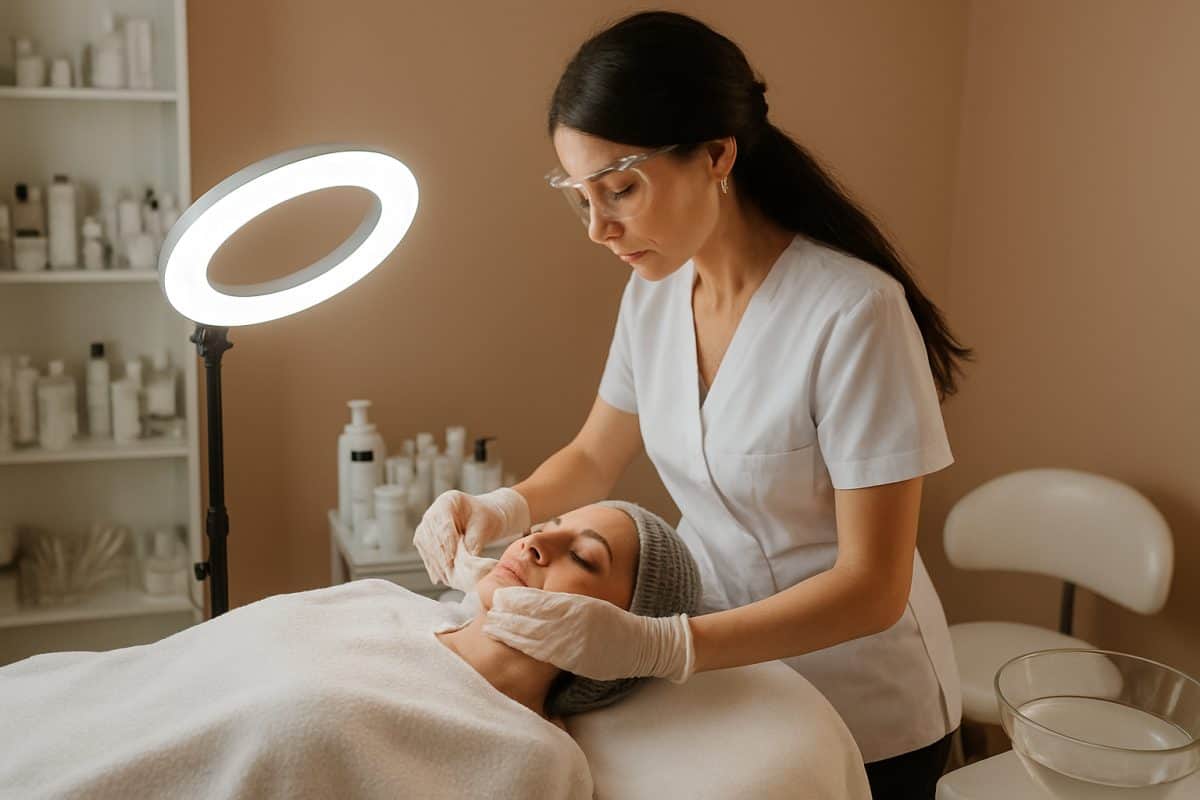
Skin analysis is where beauty therapy stops being about pretty and starts being about science. You learn to Fitzpatrick type — classifying skin by its response to UV exposure — and to identify conditions that change how you treat: dehydration versus dryness, sensitisation versus sensitivity, congestion patterns, barrier damage. You learn contraindications, the conditions that mean you do not perform a treatment at all, because getting this wrong is where real harm happens.
Good programmes spend more time on analysis than most students expect. It can feel frustrating when you want to be doing facials and instead you are staring at skin under a magnifying lamp, writing up assessments. But analysis is the skill that separates a competent therapist from someone who just follows a protocol card. Every treatment decision you make for the rest of your career starts with reading the skin in front of you.
Facial treatments build on that foundation: cleansing sequences, enzyme and manual exfoliation, extraction technique, mask selection, and facial massage. You learn to adapt a treatment to what the skin needs rather than running the same routine on every client.
Waxing is the skill that surprises most students. It looks simple from the client side of the table. On the training side, it is technique-intensive and takes far more practice than anyone anticipates. Strip wax, hot wax, different body areas, working with hair growth patterns, managing pain response, dealing with skin reactions — Brazilian waxing alone can take weeks of practice before you feel remotely confident.
The practical hours requirement exists for a reason. You practise on classmates first, which is awkward and humbling and absolutely necessary. Then you move to the student clinic, where real clients book treatments at reduced rates and you perform them under tutor supervision. The clinic hours are where training starts to feel real. Someone you have never met is trusting you with their skin, and you have to deliver.
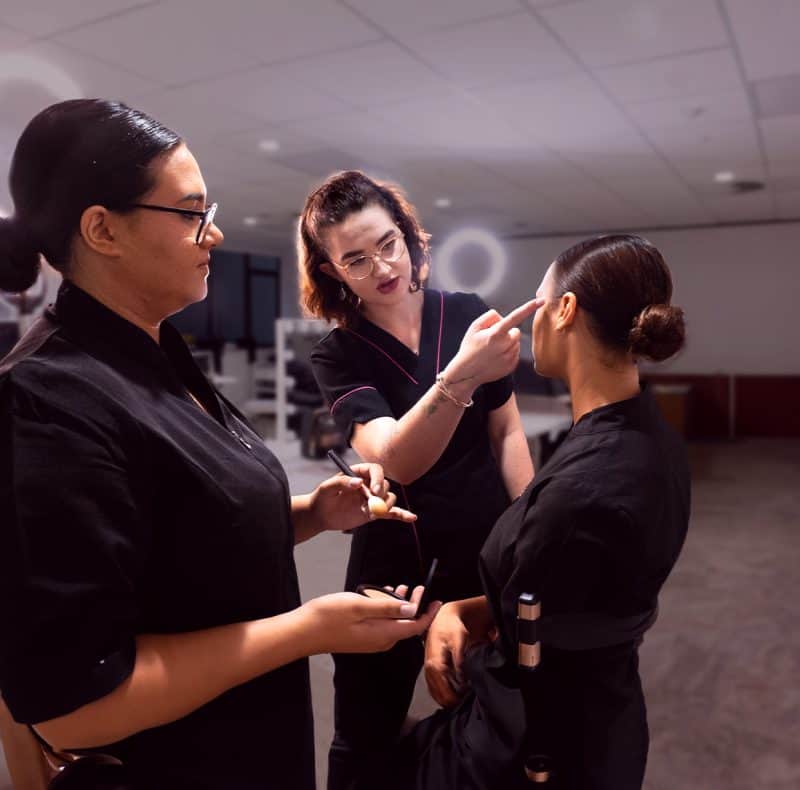
Brow and lash tinting rounds out the practical components. Tint mixing, patch testing protocols, application precision around the eye area. Makeup application covers corrective and occasion techniques. These are assessed practically — you perform the treatment while a tutor observes and marks against competency standards. There is nowhere to hide.
The polytechnic path runs through the Te Pukenga network — the merged system of former polytechnics and institutes of technology. Programmes at institutions like Toi Ohomai, Ara, WINTEC, or Otago Polytechnic deliver the NZQA qualification within a larger campus environment. You get broader student support services, access to libraries and counselling, and eligibility for fees-free study in your first year of tertiary education. The delivery tends to be structured: set timetables, set cohorts, standardised assessment.
Private training establishments are typically smaller operations dedicated to beauty and wellness. Some are independently owned; others are affiliated with product brands. They may offer more flexible scheduling, smaller class sizes, and a culture that feels more like a salon than a campus. They can also be more expensive, and not all are eligible for fees-free funding.
Neither option is inherently better. The polytechnic route suits students who want structure, support systems, and lower upfront costs. The PTE route suits students who want a more immersive, industry-focused environment and are comfortable paying for it. The qualification at the end is the same NZQA standard either way. What differs is the learning experience and the networks you build while you are there.
The single most revealing question you can ask a training provider is about their student clinic. Does it take real, paying clients? How many hours will you spend in it? A programme where you practise mostly on classmates is a programme where you graduate without ever managing a real client interaction under pressure.
Student-to-tutor ratio matters more than the brochure photos. Eight students to one tutor in a practical session means you get watched, corrected, and coached. Twenty students to one tutor means you are largely teaching yourself while someone walks past occasionally. Ask the question directly.
Look at the tutor team. Are they working therapists who teach, or career educators who used to practise? Both have value, but a team made up entirely of people who have not touched a client in a decade will teach you techniques that may no longer reflect current industry practice. Check whether the provider is NZQA registered — this is non-negotiable — and look up their most recent External Evaluation and Review report. These are public documents and they are revealing.
The products used in training matter less than the techniques taught. You will encounter different product ranges throughout your career. The fundamentals of skin analysis, treatment adaptation, and client management transfer across every brand.
If you are entering tertiary study for the first time, the fees-free policy covers your first year of full-time study at an eligible provider. For a Level 4 programme at a polytechnic, this can cover the entire qualification. Private providers may or may not be fees-free eligible — check before you enrol, because the difference is significant.
Beyond tuition, budget for the costs that the prospectus mentions in small print: a professional uniform, a treatment kit that includes implements and consumables, products for practising at home, and the incidental expenses of being a full-time student for a year. StudyLink student allowance and loan options apply to eligible students, but the allowance alone rarely covers living costs in Auckland or Wellington.
The total outlay for a polytechnic Level 4 year versus a PTE equivalent can differ by thousands of dollars. That does not automatically make the cheaper option better — but it does mean you should compare what you are getting for the price. A more expensive programme that includes significantly more practical hours, better equipment, and stronger industry placement connections may justify the premium. One that charges more for the same qualification with fewer contact hours probably does not.

Most graduates walk into their first salon role earning at or slightly above minimum wage. This is the reality of an industry where new therapists are slow, need supervision, and cannot yet fill a full appointment column. Commission structures vary by salon — some pay a base wage plus a percentage of treatment revenue, others pay flat hourly rates. Either way, the first year is about building speed and a client base, not earning well.
Therapists working in Auckland and Wellington can command slightly higher rates, but the cost of living in both cities absorbs the difference quickly. Regional salons pay less but often offer more stable hours and lower overheads for therapists considering their own business later.
The financial picture improves with experience and specialisation. A therapist with three years of experience, a loyal client base, and a couple of specialist certifications earns meaningfully more than a graduate. But this is not an industry that makes anyone rich quickly. The therapists who stay and thrive are the ones who genuinely enjoy the work and build their earning capacity deliberately over time, not the ones who expected a qualification to deliver a comfortable salary on day one.
The salon floor is where most careers start, but it is not where the interesting ones stay. Skin clinics — the ones offering advanced facials, chemical peels, and device-based treatments — pay better and attract therapists who want to work at the clinical end of beauty. These roles typically require Level 5 plus specialist device training, and they suit therapists who find the science more compelling than the pampering.
Spa and resort positions offer a different lifestyle entirely. Destination spas and hotel day spas in Queenstown, Rotorua, and the Coromandel hire qualified therapists for seasonal and permanent roles. The pay is variable but the working conditions can be considerably more pleasant than a high-street salon.
Brand education is a path that few graduates consider but that suits the right personality perfectly. Product companies need educators who can train salon teams on new ranges, demonstrate techniques, and represent the brand at events. Distribution companies hire technical managers who bridge the gap between the laboratory and the treatment room. These are the roles where beauty industry knowledge meets commercial acumen — and they tend to pay accordingly.
The therapists who earn well long-term are the ones who either specialise deeply or move sideways into commercial roles. The qualification opens the door. What you do with your first three years in the industry determines which doors open next.
Every training programme covers consultation techniques as a module. Very few teach you how to rebook a client who is wavering, how to recommend a retail product without sounding like you are reading a script, or how to manage your appointment book so you are not sitting idle for two hours every Thursday afternoon. The commercial rhythm of salon life — the part that determines whether you earn enough to stay in the industry — is learned almost entirely on the job.
Level 5 includes business management units, but they operate at the theoretical level: business plans, marketing concepts, financial management principles. These are useful if you eventually open your own salon. They do not teach you the daily reality of working in someone else’s, where rebooking rates and retail targets are the numbers that matter.
The salons that produce the best therapists are the ones with a mentoring culture — where a senior therapist or salon owner actively teaches new graduates the commercial skills alongside the clinical ones. If you are choosing your first role, the mentoring environment matters more than the hourly rate. A salon that invests in your development for the first twelve months is worth more than an extra dollar an hour at a place that leaves you to figure it out alone.
The beauty industry does not stand still, and a qualification is a snapshot of what was current when you studied. Ingredients, devices, and treatment protocols evolve constantly. The LED therapy parameters taught in your programme may be updated within two years. The skincare science you learned is a foundation, but the active ingredient landscape shifts as new research emerges and new formulations reach the NZ market.
Brand training days are the most accessible form of continuing education. When a skincare brand launches a new range or a device company releases updated protocols, they run education sessions for therapists — usually free, usually half a day, and usually worth attending. Industry events like Beauty Expo NZ offer concentrated learning plus the chance to see new products and technologies before they hit salon shelves.
The informal learning matters just as much. Working alongside experienced therapists, comparing notes on what works, watching how a senior colleague handles a difficult skin presentation — this is ongoing professional development that no course provides. The therapists who stay sharp over a long career are the ones who treat every day in the treatment room as a learning opportunity, not just the days when someone hands them a certificate at the end.
Beauty therapy training in New Zealand is solid, structured, and genuinely useful — but it is a starting line, not a destination. The qualification gets you through the door of your first salon. Everything that determines whether you build a career worth having happens after that. The best therapists are not the ones who graduated top of their class. They are the ones who kept learning once the classes stopped.