Ingredients, reviews, and professional insight for NZ beauty
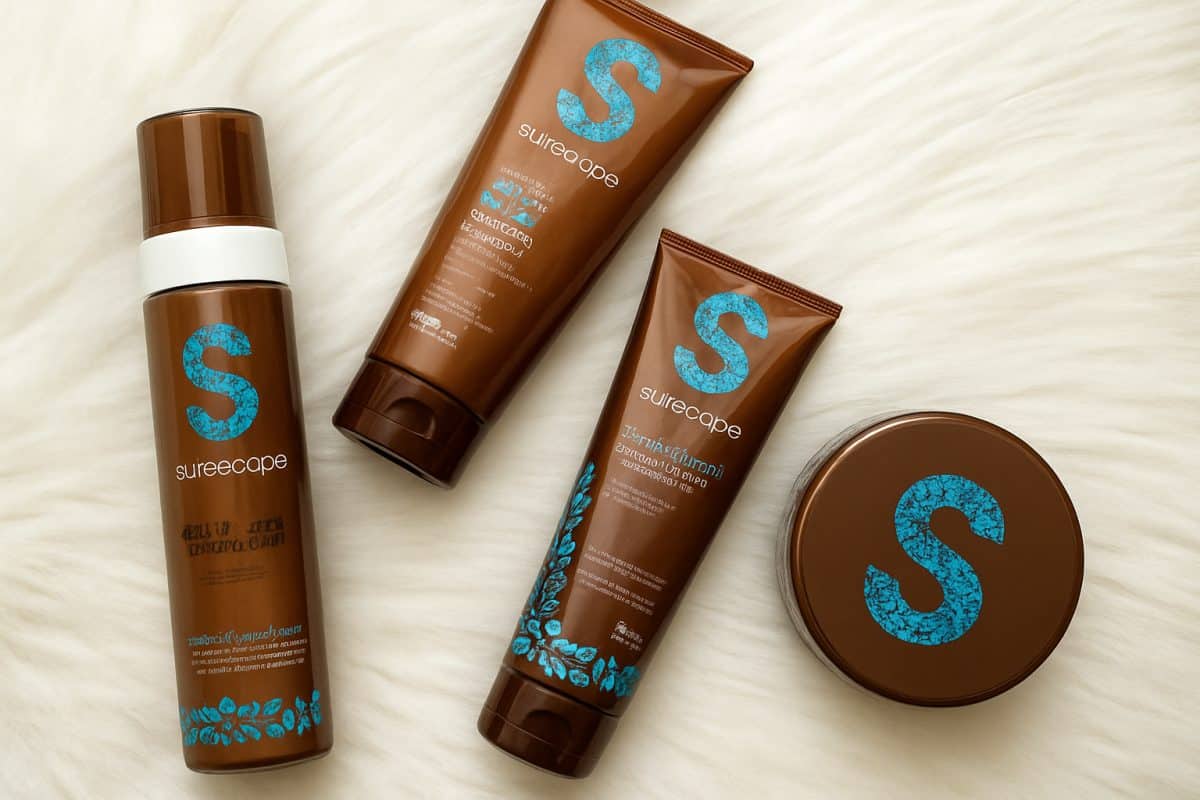
Sunescape has built its brand on being the natural option in a market full of chemical-sounding alternatives. Australian-made, sugar-cane-derived DHA, botanical extracts, clean-beauty packaging — it ticks every box that a particular type of consumer is looking for. But spray tanning is ultimately a chemical process, regardless of what is printed on the bottle, and the question worth asking is whether the natural positioning delivers a measurably different result or just a more comfortable story.
Every spray tan on the market works through the same fundamental mechanism, and it has nothing to do with UV exposure or melanin. The active ingredient is dihydroxyacetone — DHA — a simple sugar that reacts with the amino acids in the outermost layer of your skin. The reaction is called the Maillard reaction, and if that sounds familiar, it should. It is the same chemical process that browns toast, sears steak, and gives roasted coffee its colour.
When DHA contacts the dead cells of the stratum corneum, it binds to the free amino groups on the surface and produces melanoidins — brown pigments that sit in the top layer of skin. The tan is not a stain in the traditional sense. It is a chemical change in cells that were already dead when the solution hit them. This is why every spray tan fades the same way: not like paint peeling, but like skin naturally shedding. Your body cycles through its outer skin layer roughly every seven to ten days, and the tan goes with it.
DHA concentration in professional spray tan solutions typically ranges from about 8% at the light end to 14% or higher for competition-depth colour. The assumption that higher concentration equals a better tan is one of the more persistent myths in the industry. What higher concentration actually gives you is more DHA reacting with more amino acids, which produces a darker result — but also a higher risk of that telltale orange undertone that makes a spray tan look like a spray tan.
The orange problem comes from excess DHA overwhelming the available amino acids. When there is more DHA than the skin can cleanly react with, the leftover molecules produce a different set of melanoidins that skew warm and coppery rather than brown. Sunescape positions itself in the mid-range, and that is a deliberate formulation choice. A moderate DHA concentration, paired with a well-balanced pH, tends to produce a more convincing colour on a wider range of skin tones. The trade-off is that you will not get the deepest possible tan from a single application — but for most people who want to look like they spent a week in Hawke’s Bay rather than a day in a competition tent, that is the right compromise.
The moment you step out of the spray booth, you are looking at two separate things on your skin. The guide bronzer — sometimes called a cosmetic bronzer — is a temporary tint added to the solution so the technician can see where they have sprayed and ensure even coverage. It washes off completely the first time you shower. The DHA tan developing underneath is invisible at this point. It needs six to eight hours to complete the Maillard reaction.
This is where first-time clients frequently lose their nerve. They walk out of the salon looking bronzed, follow the instructions to wait before showering, then stand in the shower watching brown water run off and step out looking significantly paler than when they went in. The panic is understandable but misplaced. What washed off was the cosmetic bronzer doing its job. What remains is the developing DHA tan, which will continue to deepen over the next twelve to twenty-four hours. Experienced spray tan users know this, but if nobody explains it beforehand — and not all salons do — the first shower after a spray tan can feel like an expensive mistake.
In New Zealand and Australia, the terms “natural” and “organic” are not regulated when applied to cosmetics under current cosmetic product safety standards. There is no government body that audits a spray tan solution before it prints the word natural on the bottle. A product could contain 95% synthetic ingredients and 5% aloe vera extract and legally describe itself as containing natural ingredients — because it does, technically. The claim is not false. It is just not what the consumer pictures when they read it.
Certified organic is a different story, but almost no spray tan solutions carry genuine certification. Certification bodies like Australian Certified Organic or COSMOS require a minimum percentage of organically farmed ingredients and prohibit a list of synthetic compounds. The compliance cost is significant and the DHA molecule itself — the ingredient that actually produces the tan — sits in a grey area regardless of how it was sourced. The result is that most brands in this space rely on self-declared natural positioning rather than third-party verification, and consumers have no easy way to compare claims between brands.
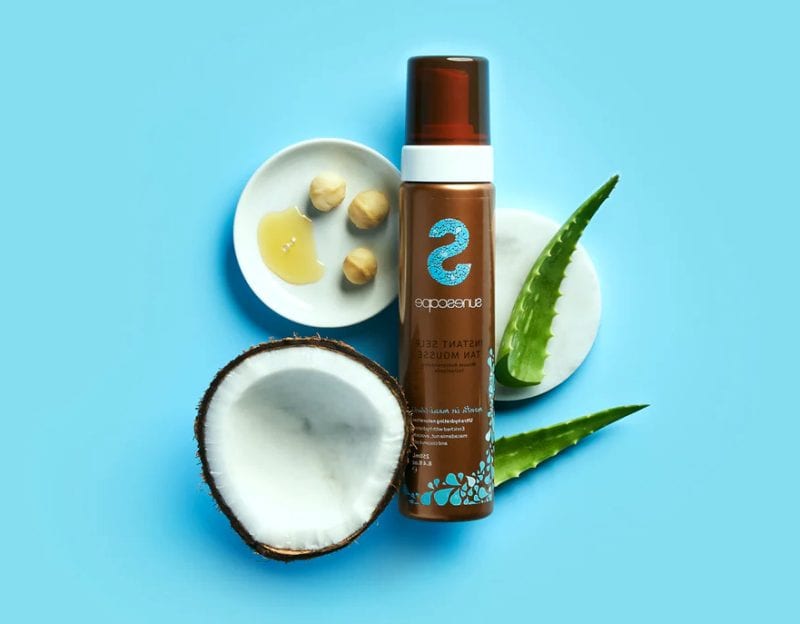
Sunescape’s marketing leans heavily on the idea that their DHA is derived from sugar cane rather than synthesised in a lab. They also highlight a list of organic botanical extracts in their formulations — ingredients like green tea extract, aloe vera, and vitamin E. These are real ingredients with documented skin benefits. The question is how much of the total formula they represent, and whether their presence materially changes the tanning result.
DHA derived from sugar cane is still dihydroxyacetone. The molecule does not carry a memory of its origin. Once purified, there is no chemical test that could distinguish sugar-cane-derived DHA from petroleum-derived DHA — they are the same compound. Where Sunescape has a more defensible position is in what they leave out. Their solutions are marketed as free from parabens, propylene glycol, and certain sulphates. For people with sensitive skin or chemical sensitivities, the absence of these ingredients is a practical benefit, not just a marketing one. The botanical extracts likely contribute to a more pleasant application experience and some post-tan skin conditioning, but they are not driving the colour development.
The short answer is no. Sugar-cane DHA and synthetic DHA produce identical Maillard reactions on the skin. The tan colour, depth, and fade pattern are determined by concentration, pH, and the supporting ingredients in the formula — not by the biosynthetic pathway that produced the DHA molecule.
What does change the result is formulation. A well-designed spray tan solution manages the pH to optimise reaction speed and colour tone, includes humectants to keep skin hydrated during development, and uses preservatives that maintain stability without irritating the skin. Two solutions with identical DHA concentrations can produce noticeably different results based on these supporting factors. This is where the genuine differences between brands live — not in whether the DHA came from a cane field or a chemical plant, but in the overall recipe. When Sunescape produces a good result, and it often does, the credit belongs to competent formulation, not to the origin story of one ingredient.
The NZ salon spray tan market is dominated by a handful of Australian brands, which makes sense given the shared distribution channels and similar consumer preferences. Sunescape is one of the more visible names, but it operates alongside several well-established competitors. Naked Tan has a strong following among NZ technicians for its dark-development formulas and competitive pricing. Bondi Sands, originally a consumer brand, has pushed into the professional space with salon-grade solutions. Mine Tan offers one of the broadest shade ranges available, including solutions designed for very fair and very dark skin tones.
Availability varies. Sunescape and Naked Tan are relatively easy to source through NZ beauty distributors, and both offer training and support for salon owners through networks aligned with the NZ Association of Registered Beauty Professionals. Others, particularly smaller Australian brands, may require direct ordering and carry higher freight costs. For NZ salons, the practical question is often less about which formula is theoretically best and more about which brand has reliable NZ distribution, reasonable wholesale pricing, and consistent product quality batch to batch.
On the treatment bed, Sunescape distinguishes itself in two areas that therapists consistently mention: scent and colour tone. The application smell is noticeably lighter than many competing brands. That characteristic fake-tan odour — the one that announces your weekend plans to everyone in the office on Monday — comes from DHA breaking down during and after application. Sunescape has managed to reduce it, though not eliminate it entirely. No DHA-based product can.
The colour development is where Sunescape earns its natural-looking reputation. Mid-tone tans on light to medium skin develop with an olive-brown undertone rather than the warm-orange that cheaper or higher-concentration solutions tend to produce. The guide bronzer is reasonably accurate to the final result, which makes the technician’s job easier. Where Sunescape falls short relative to some competitors is in depth and longevity. If a client wants a dark, dramatic tan for an event, brands like Naked Tan or Mine Tan will take them deeper in a single session. Fade longevity is average — roughly five to seven days with proper aftercare, which is standard for a mid-concentration formula.
Sunescape offers a retail range of self-application products, including a tanning mousse and a gradual tanning mist, available through selected NZ stockists and online. The formulations are decent, but the gap between a professional spray tan and a home application is not really about the product. It is about the person holding the mitt.
A trained technician applies solution with consistent pressure, even coverage, and the ability to feather around joints, hands, and feet where product tends to pool. Someone doing it themselves in the bathroom, no matter how good the mousse, is working with limited angles, uneven pressure, and the near-certainty of missing at least one patch on their back. People who get the best results from Sunescape’s retail products tend to be those who have had multiple professional spray tans and understand the mechanics — they know to exfoliate the day before, apply barrier cream to cuticles and between fingers, and use long, sweeping strokes rather than circular rubbing. If you have never had a professional spray tan and are considering starting with the at-home version, manage your expectations. The product is not the variable. You are.
Sunescape sits at a premium price point in the NZ market, both for salon solutions and retail products. A professional Sunescape spray tan typically costs $50-$75 depending on the salon, which is comparable to other premium brands but noticeably above budget options. The retail mousse runs around $50-$60 for a bottle that lasts four to six applications.
Is the premium buying a better formulation? Partially. The reduced scent, the clean ingredient list, and the natural colour development are real product advantages backed by genuinely competent chemistry. But a significant portion of what you are paying for is the brand experience — the clean packaging, the botanical-garden aesthetic, the story about sugar cane and natural ingredients. That is not a criticism. Brand experience is a legitimate thing to value, and plenty of Sunescape users feel better about a product that aligns with their clean-beauty preferences even when the functional difference from a well-formulated competitor is modest. The point is to know which part of the price tag is formulation and which part is positioning.
Sunescape is a good spray tan for a specific person. If you want a subtle, believable mid-tone tan — the kind where people wonder if you went to the Mount for the weekend rather than knowing you stood in a booth — it delivers. If you are sensitive to the chemical smell of traditional spray tans, it is one of the better options available in NZ. If you have reactive skin and want to avoid parabens and common irritants, the cleaner ingredient list has practical value.
It is not the right choice if you want a deep, dark event tan from a single session. It is not the most cost-effective option if you get spray tans fortnightly and price is a factor. And the “natural” and “organic” positioning, while not dishonest, should not be the primary reason you choose it — the DHA molecule does not care where it came from, and neither does your skin. Choose Sunescape because you like the result it produces and the way it feels on your skin, not because of a marketing story about sugar cane.
The spray tan industry runs on a simple piece of chemistry that has not fundamentally changed in decades. What changes is how brands package that chemistry and what story they tell around it. Sunescape tells a better story than most, and backs it with a formula that genuinely performs well in the mid-tone range. Whether that is worth the premium over a less photogenic competitor depends on what you are buying — a tan, or a feeling about a tan.