Ingredients, reviews, and professional insight for NZ beauty
Spawear built a business on a premise that sounds obvious once you hear it: beauty therapists deserve workwear designed for beauty therapy. Not repurposed hospitality tunics, not healthcare scrubs with a different label, not retail separates that disintegrate after a month of sixty-degree washes. Purpose-designed professional uniforms for people who spend their days performing skilled physical work on other people’s skin.
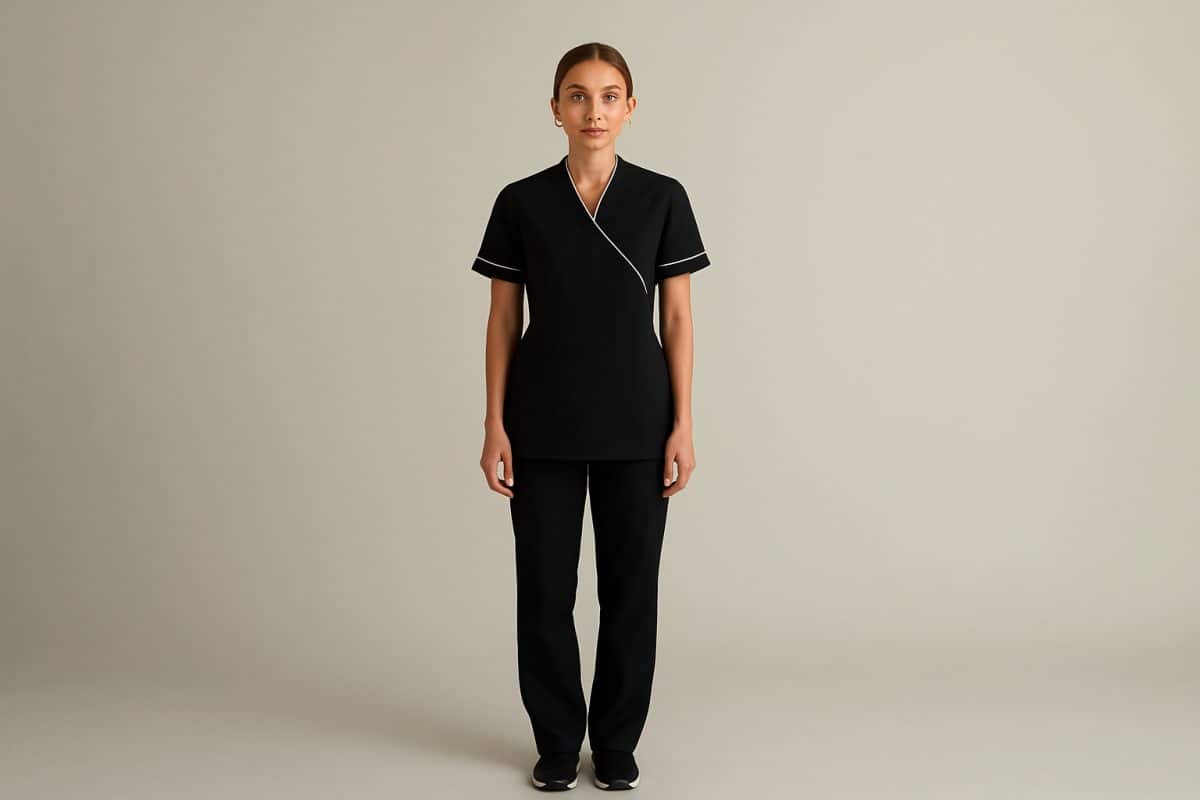
Ask someone outside the industry what a beauty uniform looks like and they will probably describe a black polo shirt with a logo embroidered on the chest. That image is about twenty years out of date. Professional beauty workwear now encompasses purpose-designed tunics, treatment pants, clinical wraps, and specialised footwear — garments engineered for people who spend eight hours on their feet performing physically demanding, precision work.
The tunic has replaced the polo in most serious salons for good reason. A well-designed beauty tunic offers a full range of shoulder and arm movement without riding up at the waist when you reach across a treatment bed. The fabric is typically a polyester-cotton blend with stretch, treated for stain resistance and antimicrobial performance. Treatment pants feature reinforced knees, stretch waistbands, and gusseted crotches for the constant bending and squatting that facial and body work demands.
Footwear matters more than most people realise — salon floors get slippery with product residue, and shoes designed for this environment have non-slip soles, arch support for long days, and closed toes for chemical protection. This is technical workwear. It just happens to look clean and professional while doing its job.
The beauty industry has a fit problem that rarely gets discussed. Standard hospitality uniforms — the ones designed for waitstaff and hotel receptionists — assume you will be standing upright and walking. They do not account for the specific movements of a beauty therapist: leaning over a treatment bed for forty-five minutes, squatting beside a pedicure station, reaching across a client to work on the opposite shoulder.
The seams pull in the wrong places. The waistband digs in when you bend. The collar rides up into your jaw during a facial. Healthcare scrubs come closer but they are designed for a different aesthetic — loose, utilitarian, clinical. A beauty therapist needs to look polished while performing physical work, which is a combination most workwear categories simply do not cater for.
The result is predictable. Walk into salons across New Zealand and you will find therapists wearing yoga pants and a branded tee, or nursing tunics that almost work, or fast-fashion black separates that fall apart after three washes. They have given up on finding workwear that actually fits the work.
There is a reason your dentist wears scrubs and your accountant wears a shirt. Clothing signals professional identity before a word is spoken, a dynamic well understood by the New Zealand Association of Registered Beauty Professionals. In beauty therapy, where the service involves close physical contact with a client who is often undressed and vulnerable, what the therapist wears carries more weight than it might in other professions.
A coordinated, purpose-designed uniform communicates that this is a professional environment with standards. It tells the client that the person about to touch their skin takes their work seriously enough to dress for it specifically. That signal is subtle but it registers — particularly with new clients who are assessing whether to trust this person and this space.
The alternative — a therapist in casual clothing that happens to be black — communicates something too. It is not necessarily negative, but it is neutral where it could be positive. For salon owners trying to position their business at a professional level, workwear is one of the most visible and cost-effective ways to shift that perception. The uniform does not replace skill, but it does set the stage for the client to notice it.
Spawear occupies a specific niche in the New Zealand market: workwear designed exclusively for beauty, spa, and wellness professionals. That distinction matters. General uniform suppliers carry hospitality ranges that might include a tunic labelled for salon use, but the design is typically repurposed from food service or aged care. Spawear starts from the premise that beauty therapy is its own profession with its own physical demands.
For a small market like New Zealand, having a dedicated beauty workwear supplier is significant. Before specialists like Spawear, salon owners had limited options — import from Australian or UK suppliers and hope the sizing worked, order from generic uniform companies and accept the compromises, or cobble together a look from retail separates. None of those options served the profession well.
Spawear offers NZ-based ordering, local sizing familiarity, and a range developed in consultation with the industry. For salon owners managing three or four staff, that accessibility changes the calculus of whether purpose-designed workwear is feasible or just aspirational.
The breadth of Spawear’s range reflects how much the beauty industry itself has diversified. It is not one profession anymore — it is a cluster of specialisations, each with different workwear needs. A clinical aesthetician performing skin treatments needs something closer to medical workwear: structured, stain-resistant, with a clinical appearance that matches the service. A day spa therapist doing relaxation massage needs garments that allow fluid movement and project calm. A nail technician needs comfortable seating-position wear with chemical-resistant fabric around the sleeves and lap.
Spawear’s catalogue spans tunics in multiple cuts and lengths, wrap-style tops, straight-leg and tapered treatment pants, spa shoes, and accessories. The range has grown as the NZ beauty industry has professionalised — earlier catalogues were simpler, reflecting an industry that drew less distinction between treatment types. Now, a salon owner fitting out a team can match garment style to the specific work being performed, rather than putting everyone in the same polo and hoping for the best.
A beauty therapist’s uniform faces conditions that would destroy most office wear within a week. Oil-based massage products saturate fabric and resist standard washing. Wax leaves residue that bonds to cotton. Chemical peels and salon-grade cleansers can bleach or degrade fibres on contact, a concern noted in WorkSafe NZ guidance on salon hazards. The garment needs to survive all of this, then go through a sixty-degree wash cycle and come out looking presentable enough to wear in front of a client the next morning.
Polyester-cotton blends remain the backbone of professional beauty workwear because they offer a practical compromise: the cotton provides comfort and breathability, the polyester adds durability and shape retention. Modern fabric treatments have pushed performance further — antimicrobial finishes that reduce odour between washes, moisture-wicking properties that manage perspiration during physical treatments, and stain-release technologies that give oil and wax less opportunity to bond with the fibres.
The difference between a garment that lasts three months and one that lasts eighteen months often comes down to these fabric details. Therapists who have been in the industry long enough have learned this the expensive way.
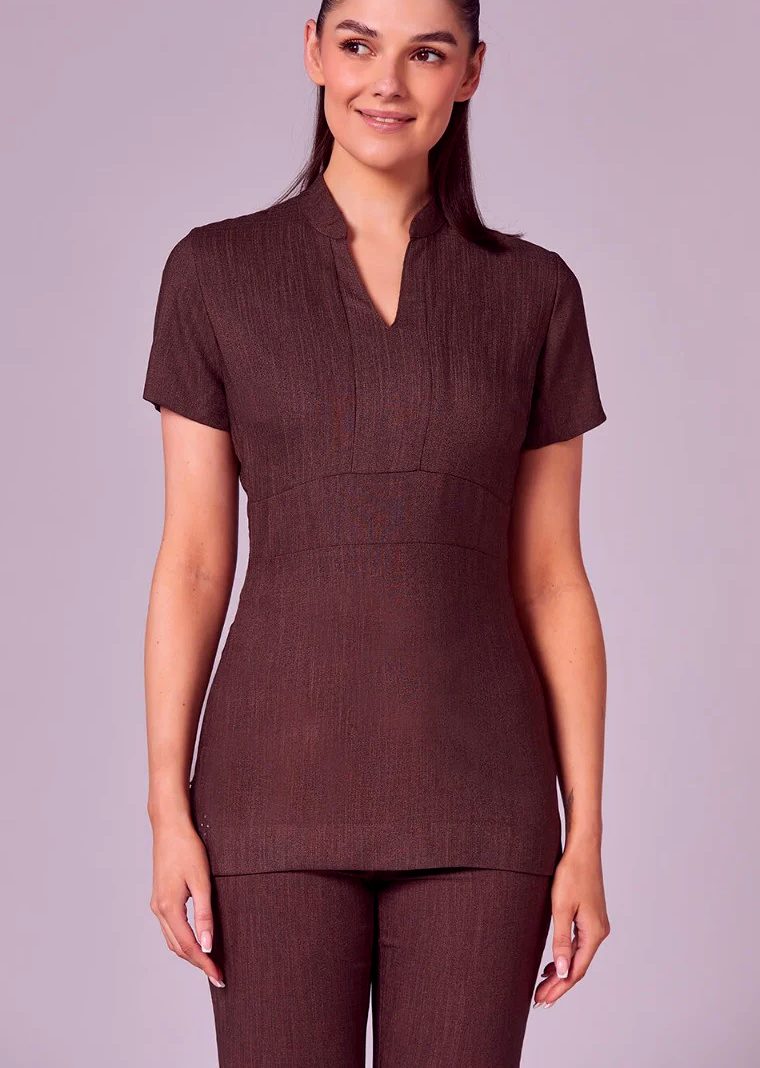
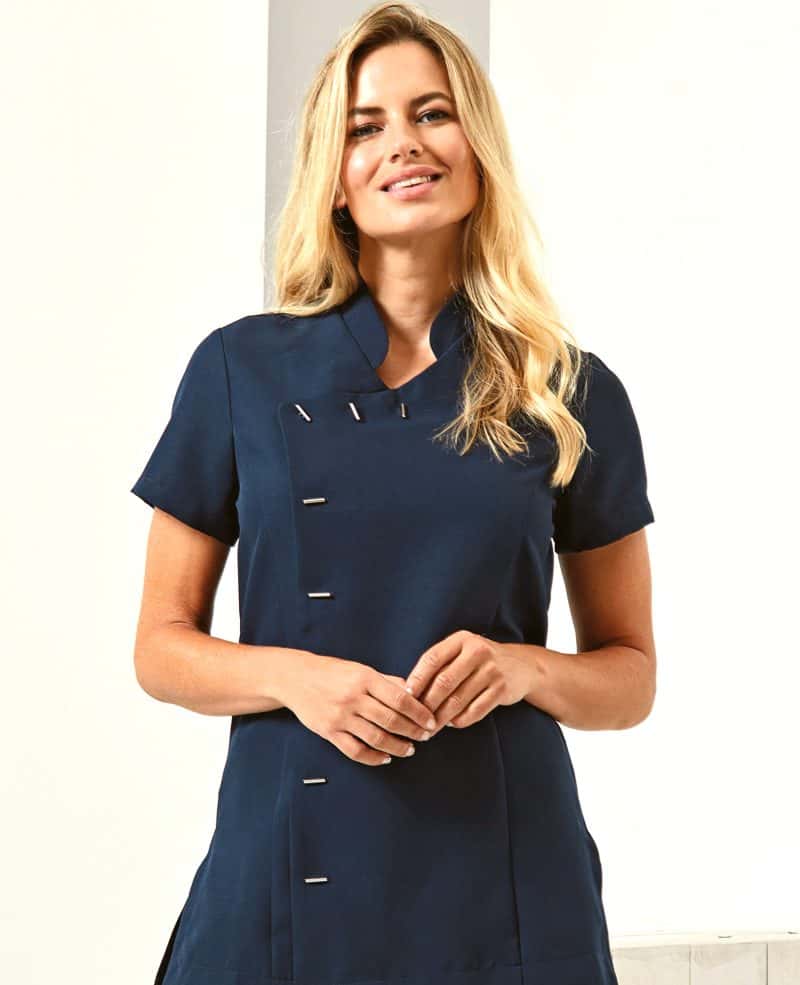
The details that separate professional beauty workwear from a generic tunic are invisible to anyone who has not spent time in a treatment room. A mandarin collar sits flat against the neck instead of flopping forward into a client’s face during a facial. Side vents at the hip allow the garment to move with the therapist rather than bunching when they bend. Pockets are placed low enough to reach without lifting the arm above shoulder height — because during a treatment, reaching for a tool should not disrupt the client’s experience.
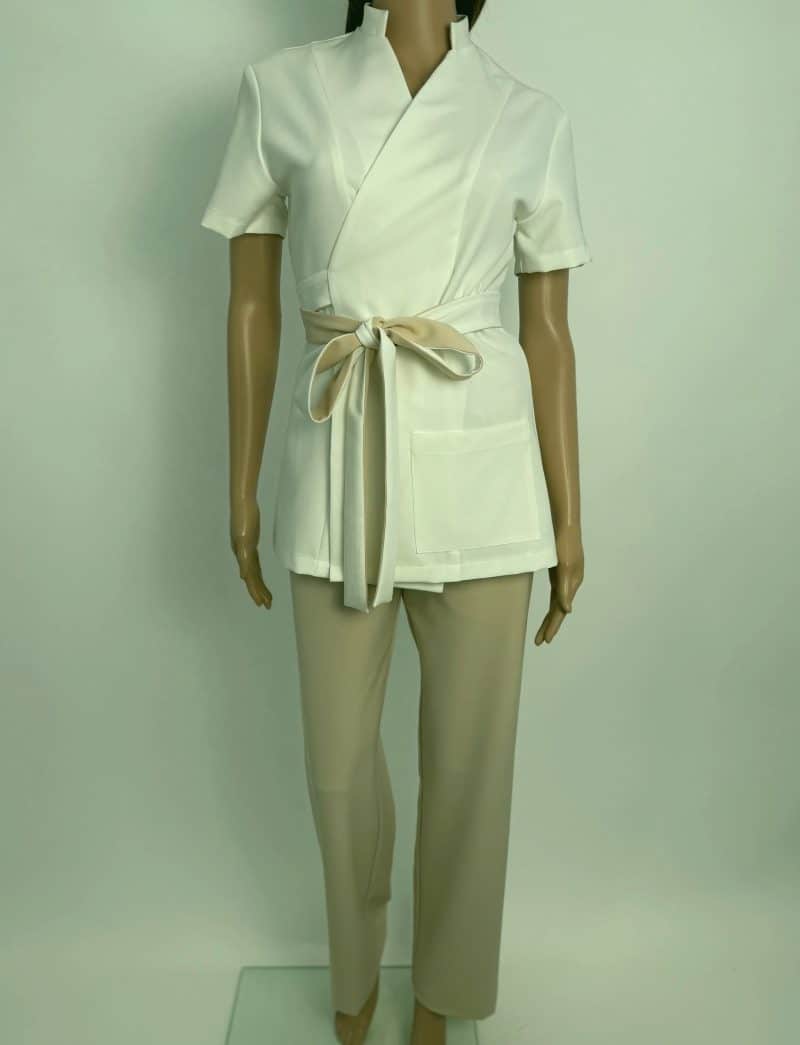
Closures matter more than they should. A zip at the back stays flat against a treatment bed when the therapist leans across. Press studs do not catch on towels or sheets the way buttons can. Wrap-style fronts allow adjustment through a shift without needing to find a mirror.
These are not selling points that appear in marketing copy. They are the details that determine whether a therapist reaches for the uniform each morning or leaves it in the wardrobe and wears leggings instead. Functional design earns daily use; aesthetic-only design earns a single season.
Twenty years ago, a significant portion of New Zealand’s beauty industry operated from converted spare bedrooms and rumpus rooms. The therapist wore whatever was clean and black. The treatment bed might have been a massage table bought second-hand. None of this meant the work was poor — some of the most skilled therapists in the country trained and practised in exactly these conditions. But the visual presentation of the profession was informal by default rather than by design.
The shift has been substantial. Today’s NZ beauty industry includes purpose-built clinical suites with extraction systems and LED therapy devices, salons designed by interior architects, and training programmes aligned with NZQA unit standards. The workwear has followed the environment. When you invest in a fit-out that costs six figures, dressing your team in yoga pants and logo tees creates a dissonance that clients notice even if they cannot articulate it.
Workwear choices have become one of the most visible markers of where a business sits on the professionalisation spectrum. Not the only marker, and not the most important one — but one of the first things a new client registers when they walk through the door.
For a salon owner running a small team, workwear decisions are more pragmatic than aspirational. The questions are specific: how much per garment, how many sets per therapist, how often will they need replacing, and who pays for laundering. A three-person salon buying two sets of tunics and pants per therapist is looking at a meaningful cost line, especially when the garments need replacing every twelve to eighteen months.
Staff satisfaction enters the equation in ways that surprise owners who have not dealt with it before. Therapists who find their uniforms uncomfortable, unflattering, or impractical will find ways to modify them — rolling sleeves, untucking hems, swapping the pants for their own. The uniform policy erodes from the edges. Conversely, workwear that fits well and feels good generates compliance without enforcement.
Brand consistency is the other consideration. A salon with a clear visual identity — coordinated colours, consistent fit, a professional silhouette — presents differently from one where each therapist has interpreted the dress code in their own way. For salon owners building a brand rather than just running a business, workwear is part of the identity system.
The most common mistake in selecting beauty workwear is starting with the colour palette. Salon owners choose a shade that matches the brand, then try to find garments in that colour that happen to work for the treatments they offer. The process should run the other direction.
Start with what your therapists actually do. If the clinic specialises in facials and skin treatments, the workwear needs to accommodate sustained forward-leaning postures with arms extended. Shoulder articulation and collar design matter most. If the focus is body massage, freedom of movement through the hips and legs takes priority — the therapist is using their body weight, shifting their stance, working from multiple angles around a table.
Nail technicians have different requirements again. They sit for most of the day, so comfort in a seated position trumps standing ergonomics. Chemical resistance around the forearms and lap is more important than stain resistance across the chest. Footwear needs change too — a nail tech does not need the same slip resistance as a therapist working on wet tiled floors.
Map the movements first, then select the garments, then worry about the colours.
Quality beauty workwear costs more upfront than generic alternatives, and salon owners operating on tight margins feel that difference. But the cost-per-wear calculation tells a different story. A well-constructed tunic that costs ninety dollars and lasts eighteen months works out cheaper per day than a forty-dollar option that needs replacing every four months. The fabric holds its shape, the colour stays true, and the seams survive the washing machine.
The less tangible returns are harder to quantify but no less real. Staff who feel properly equipped — who are wearing garments designed for their specific work rather than making do with approximations — carry themselves differently. There is a confidence that comes from wearing something that fits the role, and clients respond to that confidence whether they are conscious of it or not.
For salon owners weighing the expense, the practical question is not whether professional workwear costs more than the alternative. It does. The question is whether the investment in professional presentation, staff morale, and garment longevity justifies the higher unit cost. For most established salons trying to build a reputation beyond their immediate neighbourhood, it does.
The uniform question is, in the end, a professionalisation question. How an industry dresses its practitioners says something about how seriously it takes itself — and how seriously it expects to be taken. Spawear’s existence in the New Zealand market is a small but telling indicator that the beauty industry has moved well past the spare-bedroom era. The workwear has caught up with the work.