Ingredients, reviews, and professional insight for NZ beauty
Every few months, a Scandinavian beauty brand surfaces with clean packaging and a promise of less. Smink — Swedish for makeup, in case the subtlety escaped you — builds its entire identity on the idea that cosmetics should do less, look like less, and contain less. It is a compelling pitch for anyone who has ever stared at a cluttered makeup bag and wondered how it got that way. But minimalism in beauty is easier to brand than to practise, and a matte tube with a Swedish name is not the same thing as a genuinely different approach to cosmetics.
Smink is Swedish for makeup. That is the entire brand name, and it tells you almost everything about the positioning strategy. Founded in Stockholm, the brand leans hard into the idea that Scandinavian women approach cosmetics differently — less product, better skin underneath, a finish that looks like you are wearing nothing at all. It is a philosophy that sells well, particularly to women tired of the twelve-step Instagram face.
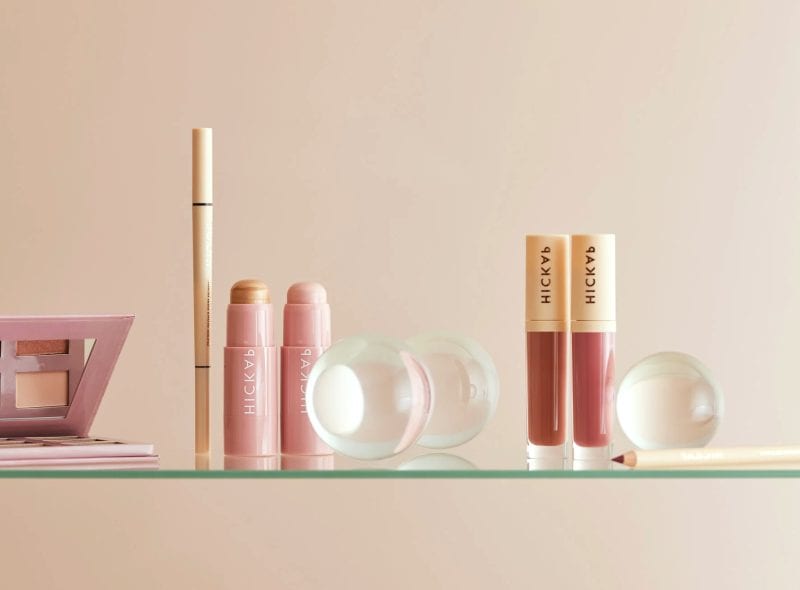
The range is deliberately small. Where a brand like MAC launches dozens of new SKUs every season, Smink keeps its line tight and focused. The packaging is predictably beautiful — clean lines, muted tones, the kind of understated design that photographs well on a marble bathroom shelf. None of this is accidental. Scandinavian minimalism has become its own luxury signifier, and Smink knows exactly which aesthetic buttons it is pressing.
But a brand built on restraint invites a particular question: is the restraint real, or is it a design language wrapped around ordinary cosmetics? That is worth unpacking before you hand over your credit card.
A standard makeup brand might carry forty to sixty lip products alone. Smink keeps its entire range to a fraction of that. The argument is curation — every product earns its place, nothing is filler, the range is edited rather than exhaustive. It is the Marie Kondo approach applied to a cosmetics line, and it sounds appealing in the same way a capsule wardrobe does.
The comparison to Glossier is obvious and partially fair. Both brands bet on the idea that modern women want fewer, better products. But Glossier built its empire on community and social media momentum, while Smink leans more heavily on ingredient credentials and professional positioning. RMS Beauty occupies similar territory with its clean-ingredient focus, though Rose-Marie Swift has the makeup artist pedigree that gives her products a different kind of authority.
The honest question is whether a small range reflects genuine philosophy or limited resources. A brand with four lip products does not necessarily have a more considered approach than one with forty — it might just have a smaller development budget. What matters is whether each product in the range genuinely does something the others do not.
This is where the rubber meets the road for any minimalist beauty brand. The Smink packaging is genuinely lovely — the kind of design-forward approach you would expect from a country that gave us IKEA and Acne Studios. Matte finishes, restrained typography, the whole visual language of considered simplicity. It looks expensive without trying to look expensive, which is of course its own form of trying.
The ingredient lists tell a more nuanced story. Some Smink formulations do lean towards shorter ingredient lists with recognisable components — plant oils, mineral pigments, fewer synthetic fillers than you would find in a mass-market equivalent. Others include the same dimethicones and cyclomethicones that appear in every mid-range cosmetic on the Farmers shelf. This is not a criticism in itself — those silicones create slip and smooth application for good reason — but it does complicate the narrative of radical simplicity.
The gap between aesthetic minimalism and formulation minimalism is where most of these brands live. The packaging says one thing, the INCI list says something more familiar. For an informed consumer, the question is not whether the packaging is beautiful — it is — but whether you are paying a premium for the design language rather than what is inside the tube.
Smink complexion products sit firmly in the sheer-to-medium coverage territory. If you are looking for a base product that makes your skin look like slightly better skin, this is the lane they are driving in. The brand typically offers skin tints and light foundations rather than full-coverage formulations, which is consistent with the Scandinavian approach of letting skin texture show through rather than painting over it.
The textures tend towards thin, serum-like consistencies that blend with fingers or a damp sponge rather than demanding a brush. In practice, they give a dewy, slightly luminous finish that works well on skin that does not need much correcting. If you have even tone and minimal scarring, these products will give you a polished, natural look with minimal effort.
The shade range is where the minimalist philosophy starts to feel less like curation and more like limitation. Scandinavian brands have historically launched with shade ranges that serve a narrow spectrum of skin tones, and while the industry has pushed hard on this front since Fenty Beauty reset expectations in 2017, smaller brands still tend to lag. If your skin tone sits outside the light-to-medium range, check the shade options carefully before ordering from overseas.
The lip and cheek products are where Smink feels most at home. Muted roses, soft berries, warm nudes — the palette reads like a Scandinavian autumn translated into cosmetics. These are not colours that announce themselves across a room. They are colours that make you look subtly put-together, the kind of shades that prompt someone to say you look well rather than commenting on your lipstick.
The textures lean towards balm-like formulas and cream blushes rather than powder or matte finishes. On skin, they tend to melt in rather than sit on top, which creates that coveted lit-from-within look when it works. When it does not work — on oilier skin types, in high humidity — the effect is less glow and more slide. By mid-afternoon in an Auckland February, a cream blush that melted beautifully at nine in the morning may have migrated somewhere you did not intend.
The curation argument is strongest here. Rather than offering thirty lip shades that overlap, Smink edits down to a handful that are genuinely distinct from each other. A dusty mauve that flatters a wide range of skin tones. A berry shade with enough brown to avoid looking juvenile. These are choices made by someone who understands that most women reach for the same three lipsticks regardless of how many they own.
Smink markets itself as thoughtful about ingredients without claiming the full clean beauty mantle. This is a smarter positioning than it might seem. The clean beauty movement has become so broad and poorly defined that the term itself is nearly meaningless — every brand from high-street to high-end has slapped a leaf on the packaging and called it natural.
What Smink does is emphasise plant-derived oils and waxes as base ingredients where possible, while being relatively transparent about where synthetics appear and why. You will find jojoba oil and shea butter alongside caprylic triglycerides and phenoxyethanol. The preservative system is conventional rather than the essential-oil-based alternatives that some clean brands use — and arguably more reliable for it, since natural preservatives have a patchy track record with product stability.
The ingredient lists are not dramatically different from what you would find in a well-formulated mid-range brand. The difference is more about what is absent — heavy fragrances, unnecessary colourants, ingredients that exist purely for texture tricks rather than skin benefit. Whether this constitutes meaningful ingredient restraint depends on your baseline. If you are coming from drugstore cosmetics loaded with synthetic fragrance, Smink will feel like a significant step up. If you are already buying from brands like Ilia or Kjaer Weis, the ingredient story is less distinctive.
The barely-there finish is Smink at its most honest and its most limited. These products genuinely look beautiful on application. The skin tints give a luminous wash of colour, the blushes melt into skin, the lip balms leave a stain of natural-looking pigment. In front of a bathroom mirror at eight in the morning, the result is exactly what the brand promises: skin that looks like itself, only slightly more polished.
The question is what happens at three in the afternoon. Sheer coverage products rely on your skin cooperating, and skin is not always cooperative. In the dry Canterbury winter, Smink products hold up reasonably well — the dewy formulations add moisture rather than emphasising flakiness, and the minimal powder content means less settling into fine lines. In Auckland humidity, the story changes. Cream products that felt weightless in the morning can feel tacky by lunchtime, and the lack of setting powder in the range means you are on your own for longevity.
This is the fundamental tradeoff with skin-first makeup. The finish is beautiful but impermanent. If you are the kind of person who applies makeup once and forgets about it until evening, full-coverage products with staying powder built in will serve you better. Smink is for the woman who does not mind a midday touch-up and values the look of the product over its endurance.
As of writing, Smink does not have a dedicated New Zealand stockist. The brand sells direct from its own website, which means international shipping, currency conversion, and the particular joy of calculating whether your order will attract GST at the border. Orders over NZD 1,000 incur GST automatically, and while a single Smink order is unlikely to hit that threshold, it is worth knowing if you are combining orders.
Shipping to New Zealand typically takes two to three weeks from Europe, and returns are impractical to the point of being effectively impossible. You are committing to your shade choice based on website swatches and descriptions, which is a gamble with any complexion product. Some NZ-based beauty retailers like Mecca carry Scandinavian-adjacent brands, but Smink has not yet appeared on their radar.
The lack of local stockists is not unusual for a brand of this size. The Scandinavian beauty market has produced dozens of small, design-forward brands that sell primarily in the Nordics and ship internationally as an afterthought. For NZ consumers, the practical reality is that trying Smink requires more commitment than walking into a store — you are ordering blind, paying shipping, and hoping your skin tone assessment was accurate.
Minimalism in cosmetics often comes with maximalism in pricing. Smink is not cheap, though it is not positioned at the extreme luxury end either. A skin tint typically sits in the NZD 55-75 range once you factor in shipping and conversion, which places it above drugstore but below prestige brands like Chanel or Tom Ford.
The price-per-gram calculation is where it gets interesting. Smaller brands often package in smaller quantities — a 20ml skin tint versus the 30ml standard — which means the per-gram cost can exceed products that appear cheaper on the sticker. It is worth doing the maths before assuming that a lower price point means better value.
For context, a comparable skin tint from Glossier costs roughly NZD 40-50 shipped to New Zealand. A similar product from Ere Perez, an Australian brand with NZ stockists, runs about NZD 45-55 and you can try it in person. A MAC Face and Body — the industry workhorse for sheer coverage — costs around NZD 60 from any Farmers counter, with the advantage of shade-matching in store. The Smink product needs to justify its price not just against what it does, but against the inconvenience of buying it.
Smink is for the woman who has already figured out her skin. She has a routine that works, her skin is in reasonable condition, and she wants makeup that enhances rather than transforms. She is not trying to cover acne scarring or correct significant redness — she is looking for a product that takes her from bare-faced to polished in under five minutes.
She is probably over thirty-five. Not because younger women cannot appreciate minimalist makeup, but because the less-is-more approach to cosmetics tends to appeal most to women who have already been through the experimental phase and know what suits them. She values quality over novelty and would rather own four products she reaches for daily than twenty that sit unused in a drawer.
She is also comfortable spending moderately on beauty without needing it to be the cheapest option. But she is not the woman who buys on brand cachet alone — she wants to understand what she is paying for and why. If that description fits, Smink is worth investigating. If you want bold colour, full coverage, or a brand available in New Zealand without the hassle of international shipping, your money is better spent elsewhere.
After looking at the range, the ingredients, and the positioning, Smink lands somewhere in the honest middle. The minimalist philosophy is not entirely a marketing construction — the range is genuinely small, the formulations are genuinely simpler than average, and the brand resists the industry impulse to launch new products for the sake of novelty. There is real editorial thinking in the product selection.
But it is not the radical departure from conventional cosmetics that the branding implies either. The ingredients, while cleaner than drugstore, are not dramatically different from other mid-range brands that make less noise about their formulations. The packaging does a lot of the heavy lifting — and packaging, however beautiful, is not a skincare benefit.
The most useful way to think about Smink is as a well-curated edit rather than a revolutionary approach. If the Scandinavian aesthetic resonates with you and you value a tight, considered range over endless choice, the products themselves are solid and the philosophy is sincere. But if you strip away the design language and the Nordic mystique, you are looking at a competent mid-range cosmetics brand with good taste and a small range. Whether that is worth the import hassle from New Zealand is a question only your bathroom shelf can answer.
Smink does what it sets out to do, which is offer a small, well-considered range of cosmetics for women who already know their skin and want products that stay out of the way. It is not going to change how you think about makeup, but it might simplify how you buy it — provided you are willing to navigate the realities of importing a niche Scandinavian brand to the bottom of the Pacific. Sometimes the most honest thing a beauty brand can be is exactly what it appears to be: good products, beautiful packaging, and a philosophy that holds up just enough to be worth respecting.