Ingredients, reviews, and professional insight for NZ beauty
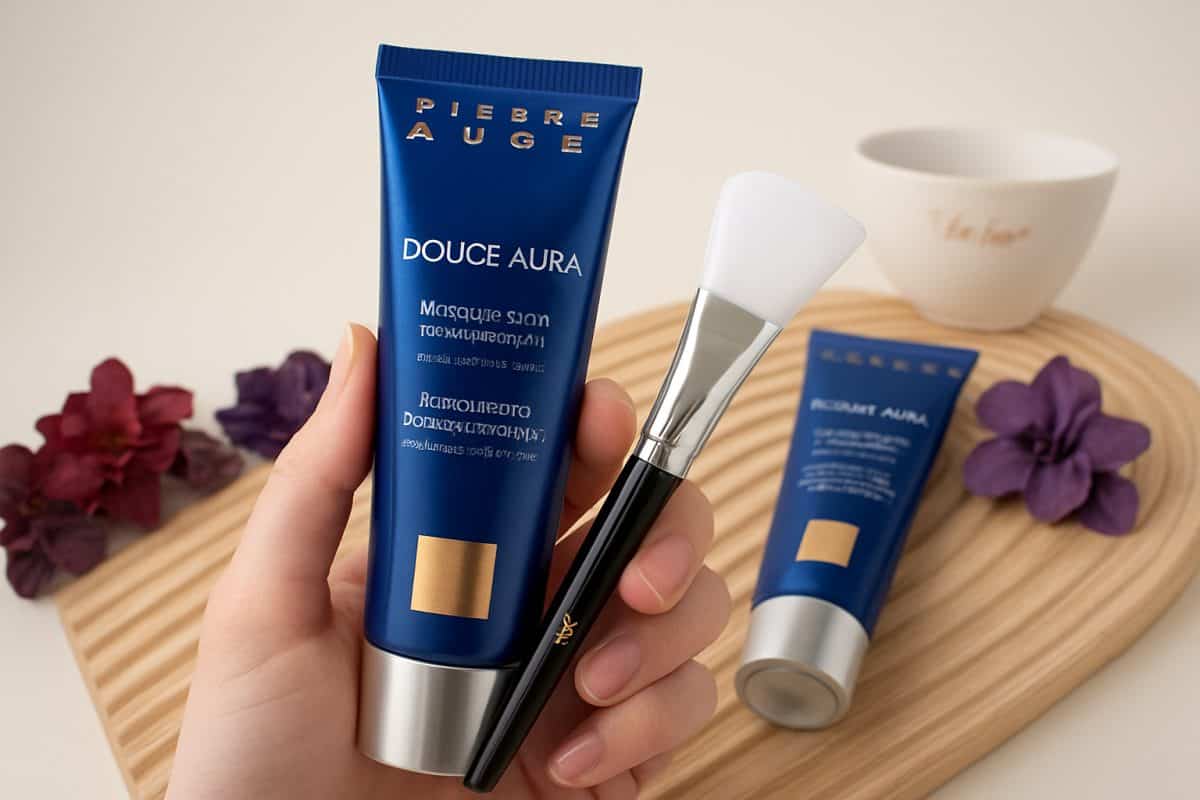
Pier Auge is one of those brands that most New Zealand skincare consumers have never heard of, and that is entirely by design. A French professional skincare house with seventy years of botanical formulation behind it, Pier Auge built its reputation in treatment rooms rather than on retail shelves. If you have encountered it, it was probably during a facial — and if you tried to repurchase afterwards, you discovered that finding it in New Zealand is a project in itself.
Pier Auge was founded in Paris in 1953, which puts it squarely in the post-war generation of French skincare houses that built their reputations on pharmacy-grade formulation rather than department store glamour. The founder, a pharmacist by training, was extracting plant actives and building treatment products around them at a time when most of the beauty industry was still focused on cold cream and powder compacts. That origin matters because it shaped everything that followed — a formulation philosophy rooted in botanical chemistry, not fragrance marketing.
The brand spent its first few decades growing through the French professional beauty channel, supplying aestheticians and skin clinics with products designed for in-cabin use. By the time plant-based skincare became a consumer trend in the 2000s, Pier Auge had been doing it for half a century. They were not early adopters of clean beauty. They were the people clean beauty eventually caught up with, though they would never have used that phrase themselves. The French pharmaceutical approach to skincare — rigorous, ingredient-led, quietly confident — runs through the brand like a watermark.
When Pier Auge calls itself clinical, it means something different from what most consumers understand by the word. This is not a brand you pick up at the pharmacy next to the La Roche-Posay. Clinical, in the Pier Auge context, means professional-channel distribution: products formulated for use by trained beauty therapists within structured treatment protocols.
The active concentrations are calibrated for professional application, the product sequences are designed to be prescribed by a therapist who has assessed the client skin, and several lines are restricted to in-cabin use only. That distinction matters because it separates genuine clinical positioning from the marketing version, where clinical just means the packaging is white and the copy mentions peptides.
Pier Auge products are built to work within a system. A therapist selects the cleansing milk, the treatment ampoule, the targeted serum, and the finishing cream as a protocol for a specific skin condition. The retail lines exist so that the client can maintain results between appointments, not as standalone purchases in their own right.
Most New Zealand consumers who know French skincare know the pharmacy brands — Avene, La Roche-Posay, Bioderma — or the prestige names like Chanel and Lancome. Pier Auge occupies neither of those spaces. It sits in the professional aesthetician channel alongside brands like Guinot, Thalgo, and Sothys: French houses that sell primarily through salons and skin clinics rather than through retail counters.
This positioning has consequences. You will not find Pier Auge at Farmers or Chemist Warehouse. You will not see it reviewed on mainstream beauty blogs. The price point sits above pharmacy skincare but below luxury prestige — a 50ml treatment serum might run between ninety and one hundred and fifty dollars, depending on the line. What you get for that price is a formulation built for professional use, without the marketing overhead that inflates prestige pricing. Whether that represents value depends entirely on whether you are using the products within a professional treatment context or simply buying them because you liked the texture during a facial.
The formulation philosophy is straightforward in principle, if less simple in execution. Pier Auge builds products around plant extracts — essential oils, botanical lipids, marine-derived actives, plant stem cells in the newer ranges — and reaches for synthetic ingredients only where a botanical alternative either does not exist or does not perform adequately. In practice, this means products with relatively short ingredient lists anchored by recognisable plant-derived components.
The honest assessment is that this approach produces some genuinely excellent products and some that are merely competent. Plant-based formulation has real strengths in skin compatibility and long-term tolerance — botanical lipids tend to work well with the skin barrier, and essential oil complexes can deliver anti-inflammatory and antimicrobial benefits that synthetic alternatives struggle to match.
But plants have limits. A purely botanical retinol alternative will not deliver the same cellular turnover as prescription tretinoin. A plant-derived peptide complex may support collagen synthesis, but it will not replicate the results of a well-dosed synthetic peptide serum. Pier Auge is honest enough to use synthetic actives where needed, which keeps the products effective rather than ideologically pure.
Therapists who have worked with the range tend to gravitate toward a few key lines. The Icewhite brightening range has genuine credibility for pigmentation management — it combines botanical brightening agents with professional-strength exfoliation protocols that produce visible results over a treatment course. The Dermo lines for reactive and sensitive skin are solidly formulated, with minimal fragrance and a focus on barrier repair. These are the products therapists reach for when a client presents with sensitised, over-treated skin that needs calming down before anything else can happen.
The anti-ageing protocols are where opinions divide. The Aromatique range uses essential oil complexes as the primary active driver, and while essential oils have legitimate therapeutic properties, the anti-ageing claims attached to them can stretch credulity. Some therapists swear by the results over a treatment course. Others find the newer ranges from competing professional brands — particularly those using encapsulated retinoids and synthetic growth factors — deliver faster, more measurable outcomes.
The basic moisturisers and cleansers are well-made but unremarkable. You are paying a premium for formulation quality that is real but not dramatically superior to what you would get from a good pharmacy brand at half the price.
Pier Auge arrived in New Zealand the way most professional skincare brands do: through a single distribution company that held the exclusive import rights, managed the salon relationships, and ran the product education programme. The distributor would bring in stock from France, warehouse it locally, supply registered salons at wholesale pricing, and organise training days where therapists learned the treatment protocols and product applications. This model is standard across the professional beauty channel in New Zealand, and it works well when the distributor is well-resourced and committed.
For a period, Pier Auge had a stable presence in the NZ professional market. A handful of salons and skin clinics across Auckland, Wellington, and Christchurch carried the range, offered Pier Auge facials as part of their treatment menus, and retailed the home-care products to regular clients. The brand never aimed for wide distribution — it did not need to. Professional skincare brands succeed on depth of relationship, not breadth of retail footprint.
The challenge with niche professional brands in a small market like New Zealand is that distribution depends on one company, and when that company changes direction, the brand goes quiet. Pier Auge has experienced this pattern — periods of active distribution followed by gaps where the distributor changed, the stock lines thinned, or the brand simply dropped off the radar in New Zealand while the French parent company focused on larger markets.
For the consumer, this creates a specific kind of frustration. You discover the products through a facial at a salon you trust. The therapist recommends a cleanser and a serum for home use. You buy them, you like them, you go back to repurchase six months later, and the salon no longer carries the range. The distributor has changed. Or the salon has switched to a different professional brand that offers better margin or more marketing support.
This is not unique to Pier Auge — it happens with professional brands across the beauty industry in New Zealand — but it is particularly common with smaller French houses that lack the resources to maintain consistent presence in a market of five million people.
If you are looking for Pier Auge products in New Zealand right now, the honest answer is that it requires effort. Start with professional beauty salons and skin clinics that have historically carried French professional ranges — a phone call or email asking whether they stock or can source Pier Auge is the most direct route. Some salons maintain access to the range even when formal distribution is patchy, ordering through international supply channels or carrying residual stock.
Beyond the salon channel, international online retailers that specialise in French professional skincare may ship to New Zealand, though you will pay freight and potentially customs duty on top of the product price. A fifty-dollar cleanser becomes an eighty-dollar cleanser once shipping and GST are factored in.
Be cautious with third-party marketplace sellers — professional skincare brands that appear on discount sites or grey market platforms may be expired, improperly stored, or counterfeit. Pier Auge products do not carry the tamper-evident packaging common to pharmacy brands, which makes authenticity harder to verify from a photograph. If the price looks too good, it probably is.
Some Pier Auge products earn their clinical positioning honestly. The treatment-grade serums and ampoules use botanical actives at concentrations that are genuinely higher than what you find in retail skincare, and the formulation bases are designed for professional application techniques — massage, extraction, galvanic current — that enhance penetration and efficacy. When a trained therapist uses these products within a structured protocol, the results are real and often visible within a treatment course of four to six sessions.
The home-care range is more nuanced. The cleansers and moisturisers are well-formulated, stable, and pleasant to use, but they do not dramatically outperform products from other professional brands at similar price points. The clinical label on a day cream that contains two percent botanical extract complex is technically accurate — it is formulated for professional-channel distribution — but the consumer expecting clinical-grade results from a daily moisturiser may find the gap between expectation and experience wider than the marketing suggests.
The strongest case for Pier Auge is not any individual product but the treatment system. A professional facial using the full Pier Auge protocol — the specific cleansing sequence, the targeted ampoule, the massage cream, the finishing mask — delivers a cumulative effect that the individual products cannot replicate alone. This is by design. The brand formulates for the professional treatment context, where a therapist controls the application sequence, the timing, and the technique.
Using Pier Auge products at home without the professional treatment context is a bit like buying a restaurant kitchen knife and expecting your cooking to improve. The tool is excellent, but the skill and system around it are what produce the results. A client who books regular Pier Auge facials and uses the prescribed home-care between appointments will get noticeably more value from the range than someone who buys a serum online because they read about it. This is not a criticism of the products — it is a recognition that professional skincare brands are designed for a professional context, and evaluating them outside that context misses the point.
The ideal Pier Auge client is someone who already has a relationship with a beauty therapist. She books facials regularly — every four to six weeks — and trusts her therapist to recommend products based on an ongoing assessment of her skin. She wants the products she uses at home to be the same products her therapist uses in the treatment room, because she has seen what they do when applied properly. She values professional expertise over peer reviews, and she is willing to buy through her salon rather than browsing online for the best price.
This customer profile exists, but it is smaller than it was a decade ago. The direct-to-consumer skincare revolution — driven by brands that sell through their own websites, publish their ingredient percentages, and build communities on social media — has trained a generation of skincare consumers to be self-directed. They research ingredients, compare formulations, and make purchasing decisions based on information rather than professional recommendation. Pier Auge does not serve this consumer well. The brand does not publish detailed ingredient breakdowns, does not cultivate an online following, and does not compete on transparency. It relies on the therapist as the intermediary, and that model is under pressure.
If you want skincare you can research independently, buy easily, and repurchase without depending on a salon relationship, Pier Auge is probably not worth your time. The NZ availability is inconsistent, the online presence is minimal, and the brand offers almost no consumer-facing information about its formulations. You cannot compare a Pier Auge serum against its competitors on ingredient percentages because the brand does not publish them in a consumer-accessible format.
For someone in that position — and it is most skincare consumers in New Zealand today — the market offers excellent alternatives that are far easier to access. Professional-grade brands like Aspect, Cosmedix, and Medik8 sell through salons but also have strong online retail channels, transparent ingredient communication, and active consumer communities. They deliver comparable formulation quality with far less friction.
Pier Auge remains a genuinely good skincare brand with a legitimate heritage and serious formulations. But good products are only useful if you can actually buy them, and in New Zealand, that is the question Pier Auge has never reliably answered.
Pier Auge makes the kind of skincare that rewards commitment — to a therapist, to a treatment schedule, to a brand that does not make itself easy to find. That model made perfect sense in a professional beauty industry built on salon relationships and distributor exclusivity. Whether it still makes sense in a market where consumers expect to research, compare, and purchase on their own terms is the question the brand has yet to convincingly answer, at least on this side of the world.