Ingredients, reviews, and professional insight for NZ beauty
Most women who search for LashSplash are doing the same mental arithmetic: salon lash extensions at $200-plus every three weeks, or a $55 kit and a YouTube tutorial. The maths looks compelling until you factor in what “semi-permanent” actually means when the person applying them is you, a bathroom mirror, and a pair of tweezers you last used to remove a splinter.
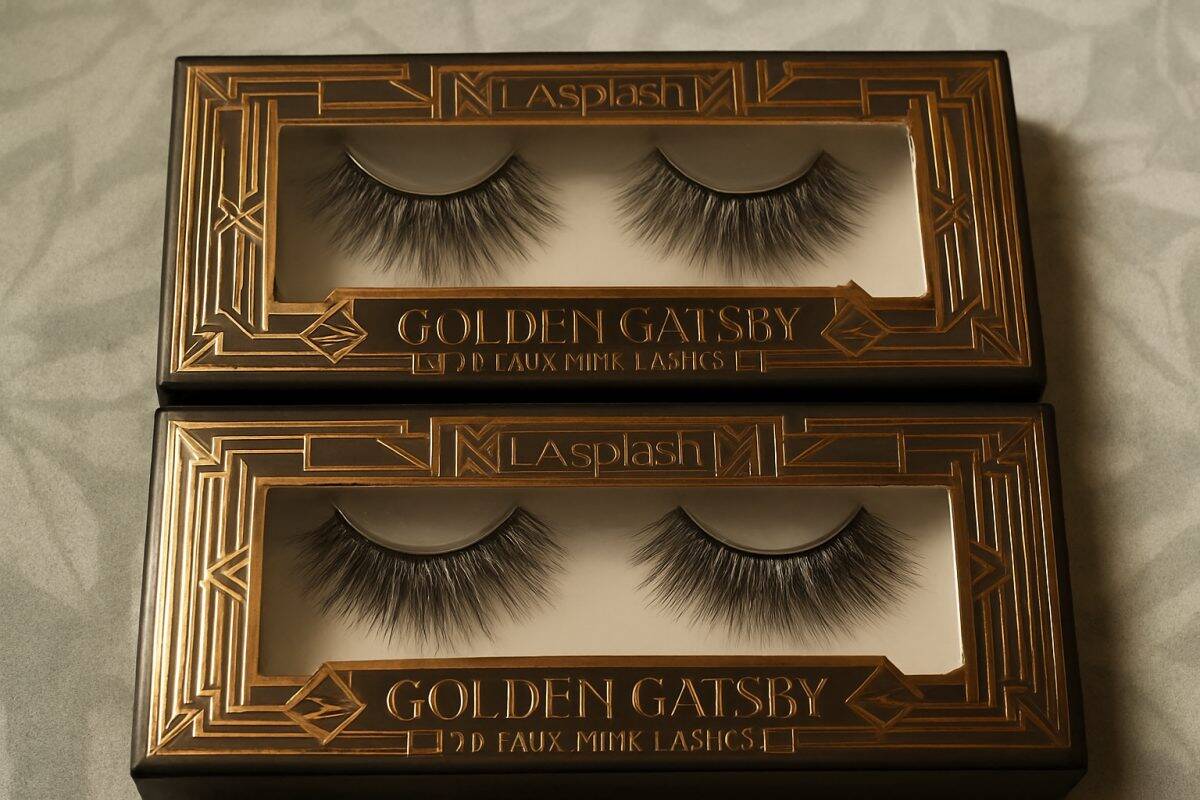
LashSplash positions itself in the cluster lash space — individual fans of synthetic fibres bundled together for application beneath or on top of the natural lash line. The core offering is a semi-permanent lash kit that includes pre-made lash clusters in varying lengths, a bond-and-seal adhesive system, and an applicator tool. Pricing sits in the $40-65 range for a starter kit, with refill cluster packs running $20-30.
The distinction from standard strip lashes is adhesive strength and application method. Strip lashes sit along the lash line as a single band. LashSplash clusters are applied in small groups across the lash line, which allows more customisation of volume and length placement. The adhesive is designed to hold for several days rather than a single evening.
Available in New Zealand primarily through their own website and select online beauty retailers, LashSplash has built a following through social media demonstration videos that make the application look effortless. The product range includes clusters marketed as “natural,” “classic,” and “volume” — the standard tiering you see across most at-home lash brands, with length options from 10mm to 16mm.
Here is where it gets sticky, and not just because of the adhesive. In the professional beauty industry, “semi-permanent lashes” has meant one thing for over a decade: individual synthetic lashes bonded one-by-one to your natural lashes by a trained technician using medical-grade cyanoacrylate adhesive. The result lasts through the natural lash growth cycle — typically two to three weeks before you need an infill appointment.
LashSplash uses “semi-permanent” to describe cluster lashes applied at home with a consumer-grade adhesive that holds for three to seven days. That is a meaningful difference, and it matters because the term sets expectations. A woman searching for semi-permanent lashes who finds LashSplash might reasonably expect something closer to the salon experience than what she actually receives.
This is not unique to LashSplash — the entire at-home lash category has borrowed salon terminology to elevate what are essentially improved strip lashes. But borrowing the language without delivering the result creates a gap that first-time buyers feel most acutely. Calling it what it is — multi-day wear cluster lashes — would be more honest and probably just as marketable.
The LashSplash customer is typically a woman in her twenties or thirties who has seen what lash extensions look like on friends or colleagues, wants that effect, but has run the numbers on salon visits and decided the ongoing cost is not where she wants her beauty budget going. In New Zealand, a full set of professional lash extensions runs between $150 and $350 depending on the salon and the style, with infill appointments every two to three weeks at $80-120 each. Over a year, a regular extension wearer can spend $2,000 or more.
The lockdown years accelerated the at-home beauty category significantly. Women who lost access to their lash technicians for weeks at a time discovered they either did not miss extensions as much as expected, or they started looking for alternatives they could manage themselves. LashSplash and brands like it found their market in that gap — women who wanted enhanced lashes without the recurring salon commitment.
There is also a trial market here. Women curious about whether lash enhancement suits their face shape or lifestyle can experiment with a $50 kit before committing to a $250 salon appointment. That is a genuinely useful entry point, as long as expectations are calibrated to what the product actually delivers.
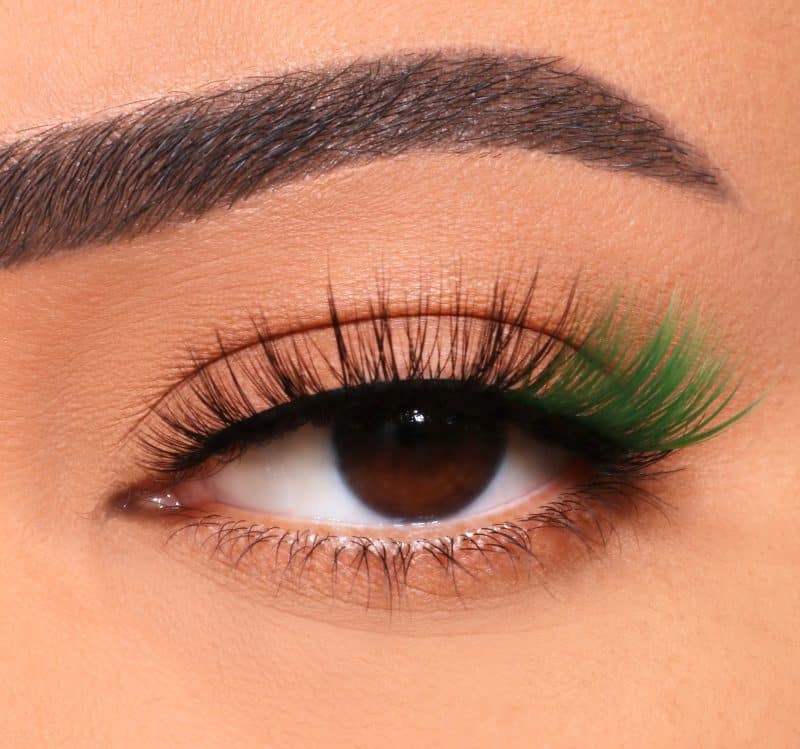
The brand videos show a calm woman in good lighting applying clusters with surgical precision in about fifteen minutes. The reality for first-time users involves a mirror angled at an uncomfortable degree, tweezers that feel designed for someone with smaller fingers, and adhesive that either sets too quickly or not quickly enough depending on how much you apply.
The learning curve is real. Most women report their first application taking forty-five minutes to an hour, with at least one cluster placed crookedly and needing removal and reapplication. By the third or fourth attempt, the process does become faster and the results more consistent. This is the part the marketing glosses over — you are essentially teaching yourself a manual dexterity skill that salon technicians spend weeks training for.
The bond-and-seal system that LashSplash uses requires applying a thin layer of bonding agent to your natural lashes, waiting for it to become tacky, placing the cluster, then sealing over the top. Each step has a timing window, and getting it wrong means clusters that pop off within hours or adhesive that clumps visibly. It works, but it is a skill, not a shortcut.
LashSplash markets wear times of five to seven days. In practice, most users report three to five days of genuinely good-looking lashes before gaps appear and the remaining clusters start looking sparse rather than glamorous. Several factors determine where you land on that range.
Oil is the enemy of lash adhesive. Oil-based cleansers, heavy moisturisers applied near the eye area, and naturally oily skin all break down the bond faster. Women with drier skin tend to get better retention. Sleeping position matters too — side and stomach sleepers compress their lashes against the pillow, loosening clusters faster than back sleepers.
Humidity plays a role that matters specifically in New Zealand. Auckland and Northland humidity can accelerate adhesive breakdown, while Canterbury and Central Otago dryness tends to extend wear. If you are applying LashSplash in Hamilton in February, adjust your expectations downward from the brand claims. Professional extensions use a stronger adhesive formulation that handles humidity better, which is one reason salon results last two to three weeks. The consumer-grade adhesives in at-home kits are deliberately milder — safer for unsupervised use, but less tenacious.
Any adhesive applied near the eye area deserves respect. The active ingredient in most lash adhesives, including those used by LashSplash, is cyanoacrylate — the same family of compounds found in superglue, formulated at lower concentrations for cosmetic use. Professional lash technicians train specifically in the safe handling of these adhesives, including ventilation requirements, application distances from the waterline, and emergency protocols for adhesive contact with the eye itself.
At-home users have none of that training, which is not a crisis but is worth acknowledging. The most common adverse reaction is contact irritation — red, watery eyes from adhesive fumes or direct contact with the delicate skin of the eyelid. True allergic reactions to cyanoacrylate are rarer but do occur, and they can be severe enough to cause swelling that closes the eye.
A patch test is non-negotiable before first use. Apply a small amount of adhesive to the skin behind your ear or on your inner wrist and wait twenty-four hours. If the skin reddens, itches, or swells, you are reactive to that formulation and should not use it near your eyes. LashSplash includes this instruction in their packaging, though the font size suggests they know most customers will skip it.
The single most damaging thing you can do to your natural lashes is pull off semi-permanent clusters without dissolving the adhesive first. The cluster is bonded to multiple natural lashes simultaneously. Pulling it away rips those natural lashes out at the root, and unlike head hair, eyelashes take six to eight weeks to regrow fully. Do this repeatedly and you end up with visibly thinner natural lashes — the exact problem people blame on extensions when the real culprit is improper removal.
LashSplash sells an oil-based remover designed to dissolve their adhesive. It works, but it requires patience — you apply the remover, wait several minutes for the bond to soften, and then gently slide the clusters away. Coconut oil or a dedicated cleansing oil will also break down cyanoacrylate adhesives, though purpose-made removers tend to work faster.
In a salon, your technician uses a professional-grade gel or cream remover applied with precision to the bonding points, dissolving the adhesive without any pulling force. The difference is not just product strength — it is technique and visibility. A technician can see the bond points clearly under a ring light. You, working with a handheld mirror, cannot. Take your time with removal. The five minutes you save by pulling will cost you six weeks of sparse lashes.
A professional lash extension appointment bears almost no resemblance to the at-home cluster experience, and understanding why helps calibrate expectations for both. In a salon, you lie on a treatment bed with your eyes closed for ninety minutes to two hours. The technician isolates each natural lash with a fine-tipped tweezer and bonds a single synthetic extension to it using medical-grade adhesive applied with a micro-applicator. The individual lash isolation is critical — each extension moves independently with its natural lash, which is why professional extensions look natural and why they shed gradually rather than in clumps.
LashSplash clusters, by contrast, bond a fan of five to eight synthetic fibres to three or four natural lashes simultaneously. The visual effect can be impressive, but the behaviour is different. Because multiple natural lashes are bonded together, they cannot move or shed independently. When one natural lash in the cluster reaches the end of its growth cycle and falls out, it pulls the others with it — which is why cluster products lose fullness in patches rather than evenly.
The technical gap between individual isolation and cluster application is the fundamental difference. It is not a quality issue with LashSplash specifically; it is a limitation of the cluster format itself.
The numbers are where at-home products make their strongest case. A professional full set in New Zealand averages $220, with infills every two to three weeks at roughly $90. For a woman maintaining extensions year-round, the annual spend lands between $1,800 and $2,400, plus the time spent lying on a treatment bed — roughly forty hours a year for appointments alone.
A LashSplash starter kit at $55 includes enough clusters for three to four full applications. Refill packs at $25 provide another three to four applications each. If you apply weekly, a year of LashSplash costs around $400. Even accounting for adhesive and remover refills, the saving is significant.
But the calculation is not purely financial. Factor in the time cost of self-application — thirty to forty-five minutes once you are proficient, plus removal time. Factor in product waste from failed applications, especially in the early learning phase. And factor in the quality differential. Professional extensions look like you naturally have incredible lashes. At-home clusters, applied well, look like you are wearing very good false lashes. Both are valid, but they are not the same result. Your decision depends on whether you are optimising for cost, convenience, or finish quality — and which of those matters most to you on a Tuesday morning.
At-home cluster lashes genuinely make sense for event-driven wear. A wedding, a holiday, a long weekend away — situations where you want enhanced lashes for a defined period and the recurring salon commitment is not justified. The application improves with practice, so women who use them four or five times a year develop enough skill to get a clean result without the frustration of the first attempt.
They also work well as a trial run. If you have never worn lash extensions and want to know whether the look suits you before spending $250 at a salon, a $55 kit is a low-risk experiment. You will not get the salon result, but you will get a sense of whether fuller lashes change your face in a way you enjoy.
Where at-home products struggle is daily wear. The reapplication cycle, the removal process, the gradual cluster loss between applications — it becomes a maintenance chore rather than a beauty enhancement. Women who want lash extensions as a permanent part of their look almost always end up at a salon eventually, because the consistency and low-maintenance nature of professional extensions is what makes them sustainable long-term. LashSplash fills a genuine gap in the market, but it fills the occasional-use gap more convincingly than the everyday-wear one.
LashSplash sells direct through their own website to New Zealand customers, with shipping from what appears to be locally held stock based on delivery times of two to four business days. They also list on some NZ-based online beauty retailers, though availability can be inconsistent — product lines rotate and specific cluster styles go in and out of stock.
Pricing in New Zealand sits at the higher end of the at-home lash market, reflecting the positioning as a semi-permanent rather than single-use product. A full kit with applicator, adhesive system, and clusters runs $55-65, with refill cluster packs at $25-30. Compared to international pricing, there is the usual NZ markup — the same products convert to roughly $10-15 less in Australian dollars.
One practical consideration for NZ buyers is the adhesive shelf life. Cyanoacrylate-based adhesives degrade once opened, typically losing effectiveness within four to six weeks of first use regardless of how much remains in the bottle. If you are an occasional user applying lashes once a month, you may find yourself replacing adhesive more often than expected. Factor that into the cost-per-wear calculation.
LashSplash is not operating in isolation. Several other brands have entered the at-home semi-permanent lash space, and some are easier to find in New Zealand than others.
Lashify is the brand that arguably created this category, with a patented underlash application system and a significantly higher price point. Their kits start around NZD $90-120 and the cluster refills are not cheap, but the application system is genuinely different — clusters bond beneath the lash line rather than on top, which some users find gives a more natural result. Available online with international shipping to NZ.
Falscara by Kiss sits at the budget end, available at some NZ pharmacies and beauty retailers for $15-25. The quality reflects the price — the clusters are less refined and the adhesive less durable — but as a first experiment with the format, the low cost makes the learning-curve frustration more bearable.
For women who want a middle ground between at-home application and full salon extensions, some NZ salons now offer express lash services using pre-made fans applied in thirty to forty-five minutes at $80-120. These use professional adhesive and trained application but skip the full individual-lash isolation, offering a result that sits between LashSplash and traditional extensions in both quality and price.
The at-home semi-permanent lash category fills a real gap — between the commitment of salon extensions and the single-night lifespan of strip lashes. LashSplash is a competent entry in that space, neither the cheapest nor the most refined, but functional once you clear the learning curve. The honest question is not whether the products work, but whether the version of “work” they deliver matches the version you had in mind when you typed the search.