Ingredients, reviews, and professional insight for NZ beauty
Most of us have lain under an LED panel or felt the glide of an RF handpiece without knowing the first thing about the machine doing the work. The professional beauty equipment behind your treatment — who made it, what it cost, how well your therapist was trained to operate it — shapes the outcome more than the serum applied afterwards. Healthtech is one of the distributors supplying NZ salons and medispas with this gear, and what they sell is worth understanding before you book your next appointment.
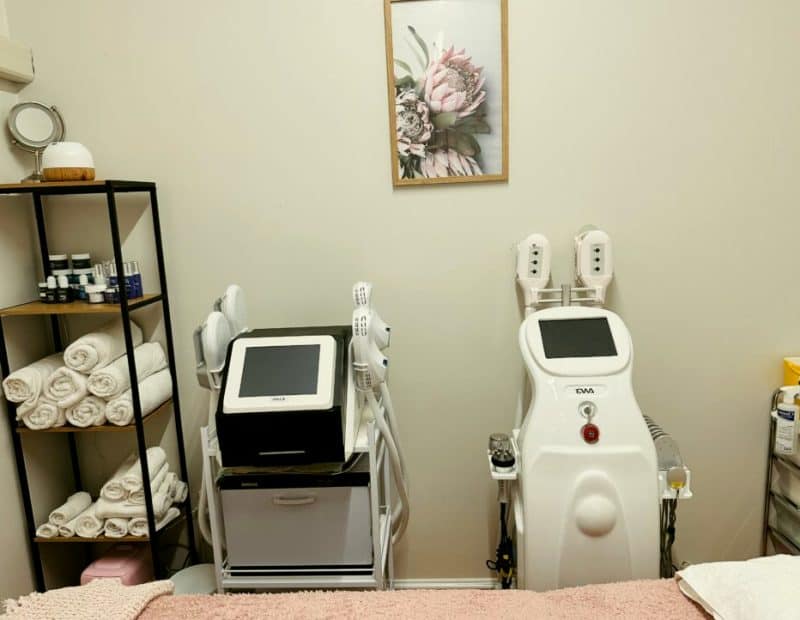
The first time I walked a Healthtech stand at a beauty trade expo, the scale of the operation caught me off guard. This was not a table with a few brochures and a demo unit. It was a wall of machines — LED panels the size of small doors, RF handpieces lined up like surgical instruments, microcurrent devices with more settings than a recording studio mixing desk. Behind each unit, a representative ready to walk you through specifications, wavelengths, joule counts, and clinical trial data. The professional beauty equipment world is not small.
What most consumers never see is the sheer range of technology available to NZ salons and medispas. A single distributor like Healthtech might carry LED therapy systems, microcurrent facial toning devices, radiofrequency skin tightening units, IPL machines, cryotherapy attachments, and oxygen infusion systems — all from different manufacturers, all at different price points, all promising different things. The salon you visit chose from this catalogue. The treatment you receive depends, more than you might expect, on which page they stopped at.
Healthtech operates as a distributor — the link between international equipment manufacturers and the NZ salons, clinics, and medispas that buy their machines. They do not make the devices. They source them, import them, handle the local regulatory requirements, and sell them with training and ongoing support. It is a model common across the NZ beauty trade, where the market is too small for most manufacturers to justify setting up their own local operations.
The supply chain runs roughly like this: a Korean, Israeli, or European manufacturer designs and builds a professional beauty device. A distributor like Healthtech picks up the NZ distribution rights, imports the units, and sells them to clinics. That sale includes product training — often a full-day education session covering device operation, treatment protocols, contraindications, and maintenance. For machines costing tens of thousands of dollars, the training is not optional. No salon owner wants a sixty-thousand-dollar device sitting idle because nobody knows how to calibrate it properly.
Here is where things get interesting for consumers. A professional LED panel — the kind your therapist uses during a treatment — might cost three to eight thousand dollars depending on the wavelength range, panel size, and build quality. A quality microcurrent unit runs five to fifteen thousand. Radiofrequency systems sit between ten and fifty thousand, depending on the technology. A medical-grade IPL system can clear eighty thousand without breaking a sweat.
These are not numbers most clients ever hear. But they explain a great deal about treatment pricing. When your facial costs forty dollars, the salon is not running a top-tier LED panel. When it costs two hundred and fifty, a significant portion of that reflects equipment amortisation — the clinic spreading the cost of a serious machine across thousands of treatments. Neither price is inherently wrong. But knowing the economics helps you understand what you are actually paying for when you book a “light therapy session” versus a comprehensive device-based treatment protocol.
LED light therapy is one of the few treatments where the science is reasonably solid and the marketing has only moderately outrun it. The principle is photobiomodulation — specific wavelengths of light penetrate the skin to different depths and trigger cellular responses. Red light (around 630-660nm) targets fibroblasts and supports collagen production. Blue light (around 415nm) kills the bacteria responsible for inflammatory acne. Near-infrared (around 830nm) penetrates deeper, reaching muscle tissue and reducing inflammation.
The catch is that not all LED panels deliver equal results. The variables that matter are wavelength precision, irradiance (power density), and treatment distance. A professional panel calibrated to deliver a specific dose at a consistent distance will outperform a consumer mask bought online, even if they both claim to emit “red light.” The consumer device might produce the right colour without delivering enough energy to trigger a meaningful cellular response. When your therapist positions that large panel a precise distance from your face and sets a timer, the precision is the point.
Microcurrent is the treatment that feels like nothing and does more than you expect. The device delivers extremely low-level electrical currents — measured in microamperes, well below what you can consciously feel — to facial muscles. The theory is that these currents mimic the body’s own bioelectrical signals, stimulating muscle tone and ATP production at a cellular level.
In practice, you lie there wondering if the machine is even on while your therapist works a pair of probes methodically across your face. The immediate result is subtle lift and improved muscle definition, most visible along the jawline and around the eyes. The catch is that results are cumulative and maintenance-dependent — skip a month and you are more or less back to baseline. Professional microcurrent units deliver higher, more controlled output than home devices like the NuFace, which is why the professional treatment produces more noticeable results. But the NuFace approach of daily low-level stimulation at home has its own logic, and plenty of therapists recommend them as maintenance between clinic visits.
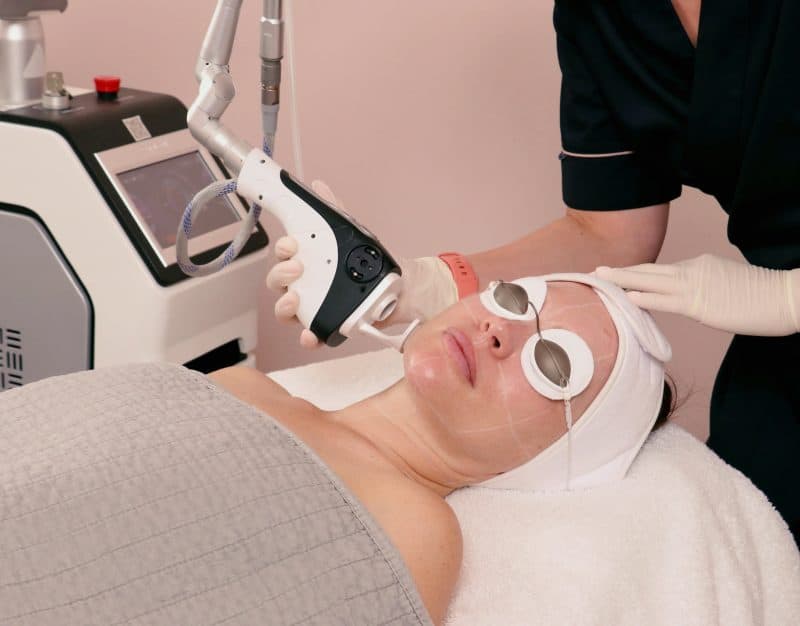
Radiofrequency skin tightening is the treatment most likely to be oversold and most likely to deliver genuine results — which makes it frustrating to write about honestly. The principle is sound: RF energy heats the dermal layer to around 40-42 degrees Celsius, causing existing collagen fibres to contract and stimulating new collagen synthesis over the following weeks. The result is firmer, tighter skin, most noticeable on the jawline, neck, and around the eyes.
The marketing tends toward “non-surgical facelift” territory, which is where the gap between claim and reality gets uncomfortable. RF tightening produces measurable improvement in skin laxity, supported by a reasonable body of clinical evidence. What it does not do is replicate surgical results. The improvement is real but modest — think subtle tightening over a course of treatments, not a dramatic transformation. Devices vary considerably too. Monopolar RF penetrates deeper and produces more intense results but requires more skill to operate safely. Bipolar and multipolar systems are gentler, more forgiving, and better suited to operators with less experience. The device your clinic uses matters, and so does who is holding it.
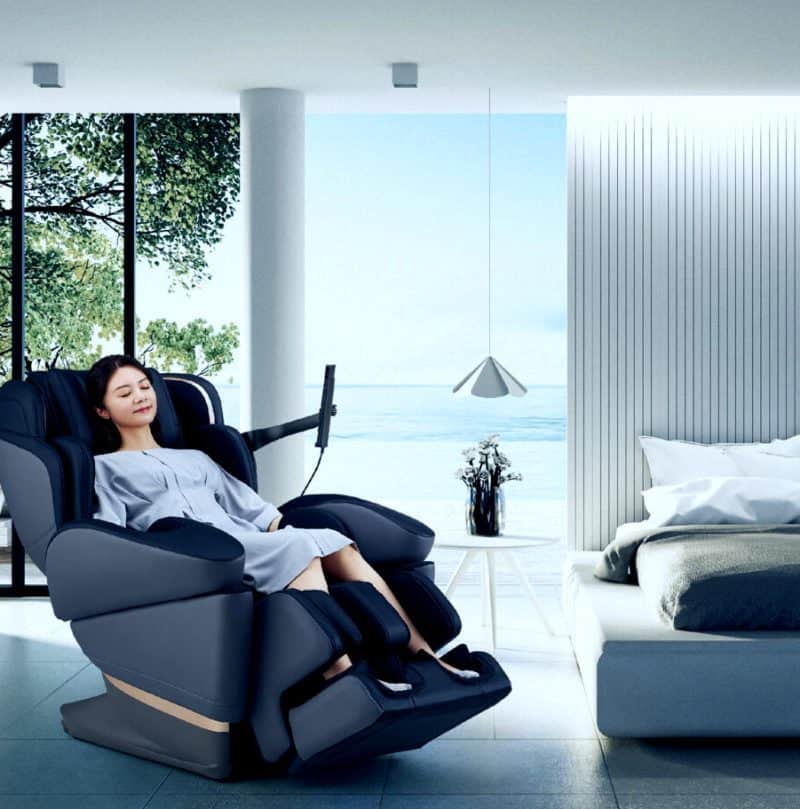
Two clinics in the same suburb can both offer “LED light therapy” and be delivering fundamentally different treatments. One might use a full-body panel from a reputable manufacturer delivering clinically validated wavelengths at measured irradiance. The other might use a smaller, cheaper unit that produces light in roughly the right spectrum but at a fraction of the power. Both call it LED therapy. Both charge for it. The experience and outcome will not be the same.
This is not unique to LED. The same pattern applies across virtually every device-based treatment. “Microcurrent facial” could mean a professional-grade unit with adjustable frequencies and a trained operator following a structured protocol, or it could mean a consumer-grade device being used in a clinic setting because it was cheaper to buy. Treatment names in the NZ beauty industry are not regulated or standardised. There is no requirement that “RF skin tightening” means a specific device, a specific protocol, or a specific training standard. For the consumer, this means the treatment name alone tells you very little. The equipment behind the name tells you a great deal more.
A professional beauty device is a tool. Like any tool, it performs best in trained hands and can underperform or cause harm in untrained ones. The training landscape in NZ professional beauty is uneven. Distributors like Healthtech provide equipment-specific training with every purchase — typically a full day covering operation, protocols, safety parameters, and contraindications. Some distributors go further, offering ongoing education and advanced technique workshops.
But there is no mandatory national standard that dictates how much training a therapist must complete before operating a specific device. A clinic owner who buys a radiofrequency unit receives training from the distributor. Whether every therapist in that clinic receives the same depth of training depends entirely on the clinic’s internal standards. Some clinics send their entire team through comprehensive certification programmes endorsed by organisations like the New Zealand Association of Registered Beauty Therapists. Others let staff learn on the job after watching a colleague demonstrate the basics. The gap between these two approaches is significant, and it is invisible to the consumer sitting in the treatment chair. This is not about questioning your therapist’s competence — most are thorough professionals. It is about understanding that the training standard behind the device is not something the industry makes easy to verify.
Good clinics will answer these questions without hesitation, because they have invested in their equipment and training and want you to know it. Start with the basics: what device are you using for this treatment? A confident clinic will name the machine and the manufacturer. If the answer is vague — “oh, it’s our LED system” — that is worth noting.
Follow up with training: what qualification or certification does the operator have for this specific device? Distributor-provided training is a minimum; additional certification from professional bodies or the manufacturer is a good sign. Ask about the equipment’s age and maintenance schedule. Professional devices require regular calibration, software updates, and consumable replacement. A machine that has been running for years without servicing is not performing to specification. None of these questions are confrontational. They are the beauty equivalent of asking a mechanic what diagnostic tools they use. The answers tell you whether the clinic treats its equipment as an investment or a prop.
Green lights are straightforward. A clinic that names its devices on its website or treatment menu is signalling confidence in its equipment. Visible manufacturer certifications or training certificates in the treatment room are a good sign. A therapist who explains what the device does and adjusts settings based on your skin assessment — rather than running the same programme for every client — is demonstrating competence.
Red flags are subtler. Vagueness about equipment is the biggest one: if a clinic cannot or will not tell you what device it uses, the reason is rarely flattering. Watch for consumer-grade devices being used at professional prices — a handheld LED mask that retails for three hundred dollars should not be the basis of a ninety-dollar clinic treatment. Be cautious of clinics offering every modality under one roof when the equipment all looks suspiciously similar — combination devices exist, but a single machine that claims to do LED, RF, microcurrent, and ultrasound is usually mediocre at all of them. The best clinics tend to specialise in a few treatments done well with high-quality equipment, rather than offering everything with mid-range devices.
New Zealand is a market of five million people at the bottom of the Pacific. For professional beauty equipment manufacturers, it is a footnote. The entire NZ salon and medispa market is smaller than a mid-sized Australian city, which means fewer distributors, less competition, and a narrower range of available equipment compared to what therapists in Sydney or London can access.
Trade shows like Beauty Expo NZ give the industry a concentrated look at what is available locally. Walking the exhibition floor, you see the handful of distributors who service the NZ market — Healthtech among them — each representing a curated selection of international brands. The limited competition has upsides and downsides. On the positive side, distributors tend to build closer relationships with their salon clients, offering more personalised training and support than you would get in a larger market. On the negative side, clinics have fewer options, and the cost of importing equipment to New Zealand — freight, customs, compliance — is baked into every price tag.
The professional beauty equipment market is shifting in ways that will eventually reach the consumer. Combination devices that integrate multiple modalities — LED, RF, and ultrasound in a single platform — are becoming more sophisticated, though the best results still tend to come from dedicated single-modality machines operated by specialists. AI-assisted skin analysis is moving from novelty to practical tool, with devices that photograph, map, and analyse skin condition to recommend treatment parameters. It is early days, but the direction is clear.
Consumer awareness about equipment quality is growing too, driven partly by the proliferation of home devices. When a client owns a NuFace and has read the research on microcurrent, she arrives at the clinic with different expectations and better questions. This is pushing clinics to invest in higher-quality equipment and to be more transparent about what they use. The professional beauty industry in NZ remains small, but it is becoming more informed — on both sides of the treatment bed.
The next time you lie down for a device-based treatment, the machine above your face has a story — who manufactured it, who imported it, what it cost, and how many hours of training the person holding it completed. None of that information is secret. Most of it is available if you ask. And the clinics doing the best work are the ones that want you to.