Ingredients, reviews, and professional insight for NZ beauty
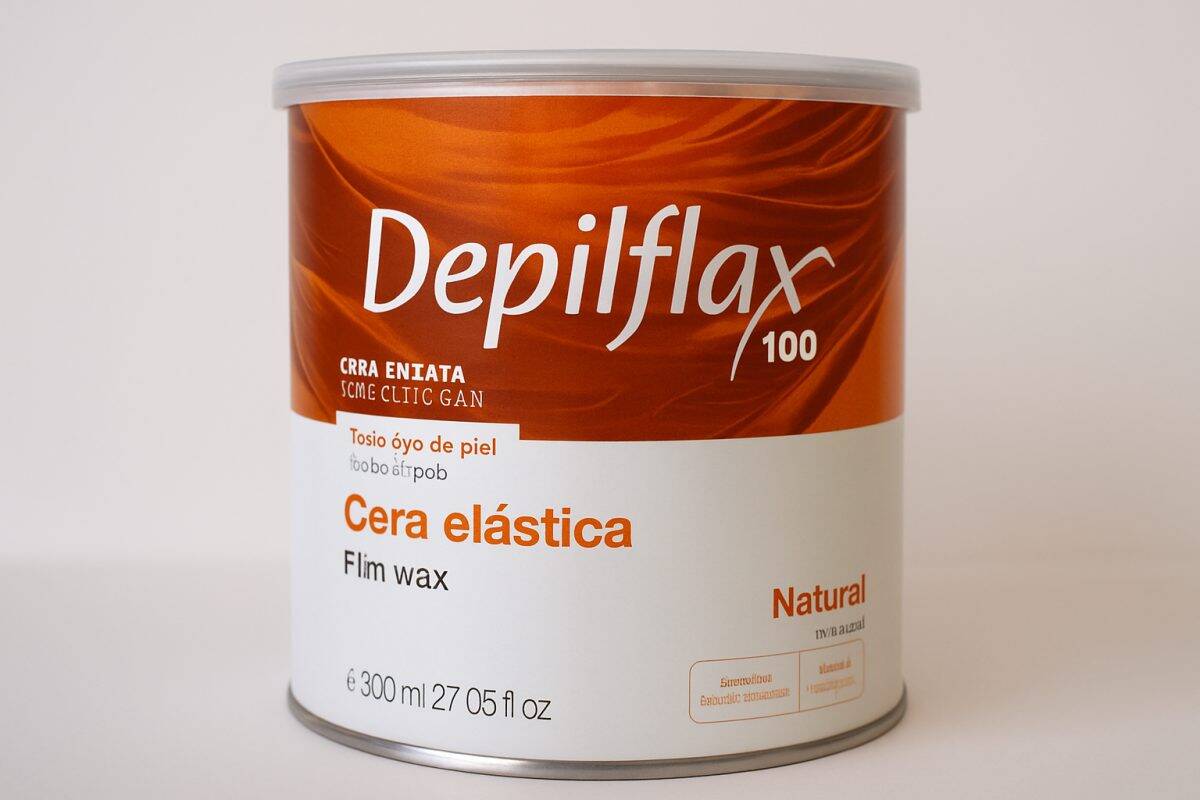
Most people have never heard of Depiflax. That is rather the point. The Barcelona-based wax manufacturer has been supplying professional salons for sixty years without ever courting a consumer audience — and the products sitting in your therapist’s wax heater right now might be theirs. Here is what is actually behind the salon door, and why it matters more than you think.
Depiflax has been manufacturing professional depilatory products in Barcelona since 1964. That is six decades of making wax — not skincare, not cosmetics, not a diversified beauty conglomerate that happens to have a waxing line. Wax is what they do. Their factory produces hard waxes, soft waxes, and the full ecosystem of pre and post-wax care products, all formulated for professional use in treatment rooms rather than bathrooms.
You will not find Depiflax at a department store counter or in the beauty aisle at your local supermarket. They are a trade brand, sold through professional distributors to licensed therapists and salon owners. This is a deliberate positioning choice, not a distribution failure. Their formulations assume trained hands, controlled temperatures, and the kind of application technique you learn in a professional training programme — not from a YouTube tutorial.
What European manufacturing brings to wax formulation is consistency. EU cosmetics regulations are among the strictest globally, and Spanish manufacturing standards mean every batch meets the same specifications for melting point, viscosity, and ingredient purity. For a therapist relying on predictable product behaviour across hundreds of clients, that consistency is not a luxury — it is the baseline.
Professional beauty brands do not arrive in New Zealand through the same channels as consumer products. There is no television advertising campaign, no influencer unboxing, no end-of-aisle display at Chemist Warehouse. Depiflax reaches NZ salons through specialist beauty wholesale distributors — companies that carry professional-only product lines and sell exclusively to trade account holders with valid industry credentials.
The pathway typically works like this: a NZ-based distributor picks up the Depiflax line, adds it to their wholesale catalogue, and introduces it to salon owners through trade representatives or at industry events like the annual Beauty NZ Expo in Auckland. A therapist encounters the product at a training workshop, tries it on a practice client, and either adds it to her salon order or moves on.
Distribution for professional waxing brands in New Zealand has always been patchy. The market is small — roughly five million people spread across two islands — and professional beauty supply is a niche within a niche. Depiflax does not have the NZ distribution muscle that Australian-made brands like Lycon enjoy, which means availability can vary depending on which distributor is carrying the line in any given year. A therapist in Wellington might have easy access through her regular supplier; one in Invercargill might need to order online from an Auckland-based wholesaler.
The professional-only model means Depiflax products sit behind the counter, not on it. You cannot walk into a shop, pick up a tin of their film wax, and take it home. This is by design — the products are formulated for application by someone who understands working temperatures, skin preparation, hair growth direction, and contraindications. A hard wax applied at the wrong temperature or removed with incorrect technique does not just fail to work. It can lift skin.
For the consumer, this creates an information gap. You experience Depiflax as whatever your therapist applies to your skin during a Brazilian or a brow wax, but you cannot read the label yourself, compare it to alternatives, or make an informed choice about which brand you prefer. Your therapist makes that decision for you, based on her training, her supplier relationships, and her assessment of what works for her clientele.
Whether this model genuinely serves clients or primarily protects professional margins is worth asking. The charitable reading is that professional-grade wax requires professional-grade skill, and putting it in untrained hands creates liability. The less charitable reading is that keeping products trade-only maintains price opacity and prevents the kind of consumer comparison that drives quality improvement in retail markets. The truth, as usual, sits somewhere between the two.
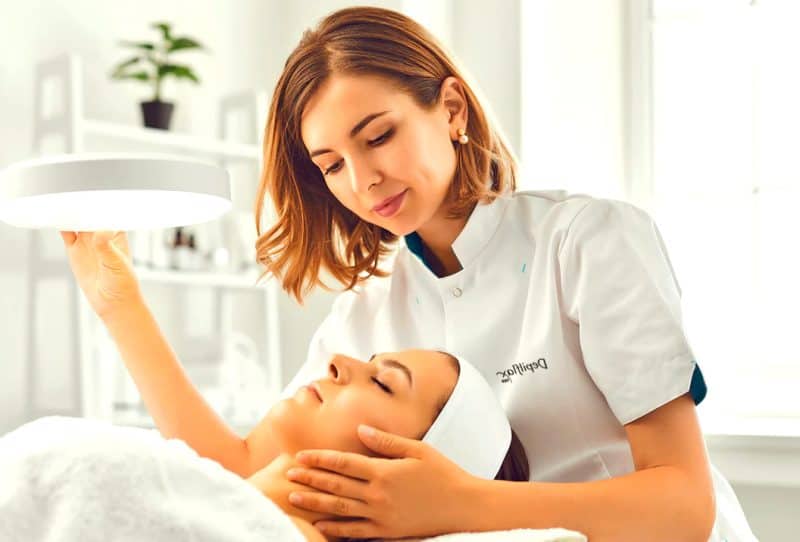
The distinction between hard wax and soft wax is not a marketing segmentation exercise — it is a fundamental difference in how the product behaves on skin and hair. Hard wax, also called film wax or stripless wax, is applied warm and allowed to cool until it sets into a pliable film. As it cools, the polymer matrix shrinks around individual hairs, gripping them firmly while contracting away from the skin surface. You peel the hardened wax away without a muslin strip, and the hair comes with it. The skin, ideally, does not.
Soft wax is a different proposition. Applied in a thin layer with a spatula and removed with a fabric or paper strip, it adheres to both hair and skin. It is faster to apply across large surface areas — legs, backs, arms — but that dual adhesion means it is harsher on the skin. You only get one pass with soft wax on any given area before you risk irritation or damage. Hard wax allows a second pass if needed.
Depiflax manufactures both categories. A therapist performing a Brazilian will almost certainly reach for their hard wax. The same therapist doing a full leg wax may switch to their soft wax for speed and economy. The choice is clinical, not arbitrary — it depends on the treatment area, the hair type, and the client sitting in front of them.
Crack open a professional wax formulation and the ingredient list tells a more interesting story than most skincare products. The base of nearly all professional waxes is modified rosin — colophony derived from pine resin, chemically modified to lower its melting point and increase flexibility. Depiflax builds on this base with synthetic polymers that control how the wax stretches and grips. These are not exotic ingredients. They are functional ones, chosen for mechanical performance rather than marketing appeal.
Where Depiflax formulations get specific is in their additives. Their film waxes contain titanium dioxide — the same mineral used in physical sunscreens — which creates a protective barrier between the wax matrix and the skin surface. Their azulene-infused variants use chamomile-derived compounds with genuine anti-inflammatory properties, which makes a measurable difference on reactive skin. These are not token botanical inclusions listed for label appeal. They are functional concentrations that affect how the skin responds during and after waxing.
Compare this to the consumer wax strips hanging in the pharmacy aisle. Those typically use hydrocarbon-based wax — essentially a refined petroleum product with added fragrance and sometimes a token botanical extract. They work, after a fashion. But the formulation gap between a Veet strip and a professional-grade Depiflax film wax is roughly equivalent to the gap between a supermarket moisturiser and a professional treatment serum. Both technically do the job. One does it considerably better.
Temperature control is where professional waxing separates most clearly from the home experience. A Depiflax hard wax has a working temperature range of approximately 45 to 55 degrees Celsius. Within that window, the wax flows smoothly from the spatula, spreads evenly across the skin, and sets at a predictable rate. Drop below 45 and the wax becomes thick and draggy, pulling at the skin rather than gliding. Push above 55 and you risk burns — though a trained therapist monitors temperature continuously and would never apply wax that hot.
Viscosity — how thick or thin the wax is at its working temperature — is engineered, not accidental. Depiflax formulates for what professionals call a “working consistency”: fluid enough to spread in a thin, even layer but viscous enough not to run or drip. This consistency needs to hold across the entire working temperature range, which is harder to achieve than it sounds. A wax that performs beautifully at 48 degrees but turns to soup at 52 is useless in a busy salon where the heater might fluctuate.
This is the kind of engineering detail that a consumer microwaving a pot of pharmacy wax will never think about. Professional wax heaters maintain temperature within a degree or two. Microwave heating is inherently inconsistent — hot spots, uneven melting, no temperature readout. The product and the equipment are designed as a system, and breaking that system is where home waxing most commonly goes wrong.
The Depiflax film wax range runs deeper than most therapists need, which is arguably the point. Their natural resin wax is the foundation — a straightforward colophony-based hard wax that works reliably on most skin types and hair textures. It is the one a new therapist learns on and the one an experienced therapist returns to when nothing fancy is required.
Beyond the workhorse, the range branches into purpose-built formulations. The azulene film wax, tinted a distinctive blue-green, is formulated for sensitive or reactive skin. The chamomile derivatives in the formulation actively reduce the inflammatory response during waxing, which matters for clients who flush red or develop histamine bumps after treatment. The black film wax contains activated carbon, which increases grip on shorter, stubbier hairs — the kind that resist standard wax. Therapists use it on areas where hair has been shaved between appointments or where the growth cycle produces coarser regrowth.
The gold wax and the rose wax sit at the premium end, marketed partly on experience — the idea that a luxury wax colour enhances the treatment atmosphere. There is some substance behind the positioning: the gold formulation uses a modified polymer blend that increases elasticity, making it marginally easier to remove in a single piece. But a therapist choosing between natural and gold is making a decision about client perception as much as clinical performance. Both do the job. One looks better doing it.
A waxing treatment is not a single-product event, and Depiflax builds their range around this reality. The pre-wax phase matters as much as the wax itself. Their pre-wax oil is applied before the wax to create a thin barrier between the wax and the skin surface. This reduces adhesion to live skin cells while allowing the wax to grip the hair. The result is less discomfort during removal and less redness afterwards. Skip the pre-wax oil and you are essentially waxing unprotected skin — which is exactly what most home waxing kits have you do.
Their pre-wax cleanser serves a different function: stripping natural oils, sweat, and any product residue from the treatment area so the wax adheres to hair rather than sliding over an oily surface. A client who arrives at her appointment wearing body lotion is a therapist’s quiet frustration. The cleanser fixes that.
Post-wax, the system continues. Depiflax post-wax oil dissolves any wax residue left on the skin and soothes the treated area. Their post-wax lotion addresses the inflammation and provides moisture to skin that has just had its top layer of dead cells ripped off along with the hair. Some formulations include ingredients that claim to slow hair regrowth — the evidence for these claims is thin, but the moisturising and soothing functions are genuine and necessary. A professional wax service that skips the post-wax care is, frankly, an incomplete service.
Brand loyalty in professional waxing has less to do with marketing than with muscle memory. A beauty therapist trains for hundreds of hours before she is licensed, and during those hours she learns to wax with a specific product. She learns how long to heat it, how it looks when it is ready, how it feels on the spatula when the consistency is right, how many seconds to wait before removing it. These are not intellectual decisions. They are physical ones, embedded in the hands through repetition.
If a therapist trained on Depiflax, she knows that their natural film wax needs about twelve minutes in the heater from cold, that it spreads best when it drips off the spatula in a slow, steady ribbon, and that it sets in roughly thirty seconds on a bikini area. Switch her to Lycon and every one of those reference points shifts. The set time changes, the ideal spreading thickness changes, the removal technique needs adjusting. She can adapt — therapists do switch brands — but there is a transition period where her timing is off and her confidence dips.
NZ beauty training programmes tend to partner with specific brands. If your training school uses Depiflax as their teaching product, an entire graduating class enters the workforce predisposed to ordering Depiflax for their first salon. This is not coincidence. It is how professional beauty brands build market share — not through consumer advertising, but through institutional relationships with training providers.
Professional wax economics come down to a simple calculation: cost per service. A salon owner buying Depiflax film wax in 800-gram tins or 1-kilogram bags of beads is not thinking about the per-kilo price in isolation. She is thinking about how many grams she uses per Brazilian, how many Brazilians she performs per week, and what her wastage rate looks like.
A premium formulation like Depiflax might cost 20 to 30 percent more per kilo than a generic professional wax from a bulk supplier. But if the wax spreads thinner, sets faster, and removes cleaner — requiring less product per application and fewer re-applications on missed patches — the per-service cost narrows. Add in the client experience factor: fewer complaints about pain, less post-wax redness, higher rebooking rates. The economics of wax are not just about what goes into the pot.
Salon owners who have been in business for a few years learn to calculate this properly. The cheap wax that costs half as much per kilo but requires twice the amount per service and generates client complaints is not a saving. It is a false economy. Equally, the most expensive wax on the market is not automatically the best value. The sweet spot is a formulation that minimises product use, maximises client comfort, and keeps the therapist working efficiently. Where Depiflax lands in that equation depends on the salon, the clientele, and the specific products in use.
In the New Zealand professional waxing market, Depiflax competes against several well-established brands. Lycon, manufactured in Australia, is probably the most widely used professional wax in NZ salons. They have strong local distribution, an extensive training programme, and the advantage of proximity — orders arrive faster and shipping costs less from Melbourne than from Barcelona. Caronlab, also Australian, offers a broad range at competitive pricing and has solid NZ distribution through established beauty wholesale networks.
From the European side, Perron Rigot — a French brand — occupies the premium end with formulations that some therapists consider the finest available. Their pricing reflects that positioning.
Depiflax sits at a mid-to-premium price point with a range that rivals any competitor for breadth. Where they genuinely excel is in formulation consistency — that Spanish manufacturing discipline means batch-to-batch variation is minimal, which matters when your technique depends on predictable product behaviour. Their film wax range is arguably the most varied in the professional market, with more purpose-specific formulations than most competitors offer.
Where they fall behind in NZ is visibility and support. Lycon runs regular training workshops in New Zealand, has brand ambassadors visiting salons, and maintains a strong social media presence aimed at NZ therapists. Depiflax’s NZ presence is quieter — more reliant on the product speaking for itself through distributor channels than on active brand building. For a therapist choosing between two equally good waxes, the brand that also offers ongoing education and local support has a meaningful advantage.
Next time you are lying on a treatment bed waiting for your therapist to apply wax, you are entirely within your rights to ask what brand she is using. It is not a strange question, and any therapist worth returning to will answer it without hesitation. Most are genuinely enthusiastic about their product choices — they have tried multiple brands, settled on one for specific reasons, and are happy to explain why.
Knowing the brand lets you do your own research if you have reactive skin or known sensitivities. If your therapist tells you she uses Depiflax azulene film wax, you can look up the ingredient profile and check for anything you react to. Colophony sensitivity, while uncommon, is a real thing — and it is present in virtually all professional resin-based waxes. Knowing the brand name gives you a starting point for that conversation with your GP or dermatologist if you do experience a reaction.
The question also tells you something about the salon. A therapist who knows her products, can name the brand, and can explain why she chose it over alternatives is a therapist who takes her craft seriously. One who shrugs and says “just wax” is not necessarily bad at her job, but she is missing an opportunity to demonstrate the professional knowledge that justifies the price you are paying.
The gap between a professional wax like Depiflax and a consumer product like Veet strips or a Nad’s microwaveable pot is real, but it is worth being honest about where that gap matters most. The formulation difference is genuine — professional wax uses higher-quality base ingredients, functional additives, and precise temperature engineering that consumer products simply do not match. A professionally applied Depiflax hard wax will grip hair more effectively, cause less skin irritation, and produce a cleaner result than a home wax strip applied in your bathroom.
But the product is only half the equation. The other half is the person applying it. A trained therapist understands skin preparation, hair growth direction, application angle, removal speed, and aftercare. She can see the back of your legs, assess your skin type in real time, and adjust her technique mid-treatment. You, working alone with a mirror and a microwave, cannot do any of that. The superiority of professional waxing is as much about the hands as it is about what is in them.
Home waxing kits have their place — they are fine for maintenance between professional appointments, for touch-ups on less sensitive areas, and for people who genuinely cannot access or afford regular salon visits. But if you are comparing the experience and the result, professional-grade products applied by trained hands will win every time. That is not brand snobbery. It is the compounding effect of better product, better equipment, better technique, and better visibility of what you are actually doing.
The next time someone asks whether professional waxing is worth the price, the answer is not just about pain tolerance or convenience. It is about the difference between a product engineered for precision and one designed for a microwave, applied by hands that have done this thousands of times versus hands holding a mirror at an awkward angle. Depiflax is one version of that professional standard — not the only one, but a solid example of what sixty years of doing one thing well looks like when it reaches your skin.