Ingredients, reviews, and professional insight for NZ beauty
Every few years, a skincare tool arrives that looks too good not to buy. Beauty globes — those gleaming stainless steel balls you chill in the freezer and roll across your face — are the current favourite, backed by satisfying social media footage and clinical-sounding language about cryotherapy and cellular renewal. After testing more pairs than any reasonable person should own, here is what they actually do, what they cannot do, and whether a bag of frozen peas deserves more credit than it gets.
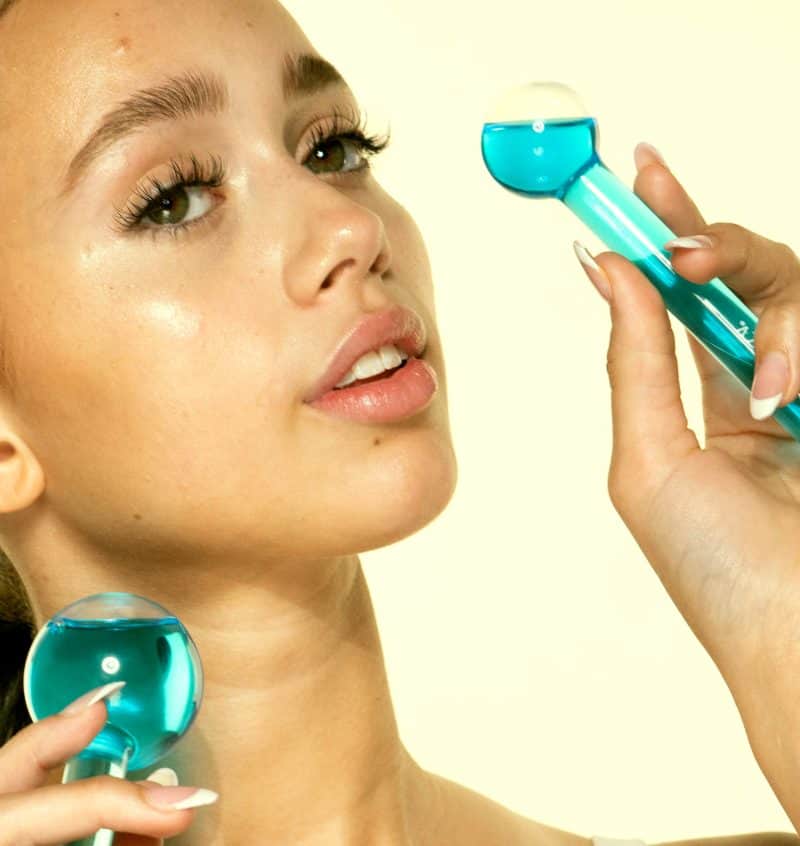
The pitch goes something like this: cryotherapy for your face, at home, for under a hundred dollars. Brands selling beauty globes borrow liberally from the language of clinical cryotherapy — a legitimate medical treatment that uses liquid nitrogen or compressed gas to hit temperatures around -110C. Your beauty globe, fresh from the freezer, sits at roughly -18C. That is a meaningful gap, and nobody selling these tools is in a hurry to point it out.
The claims cluster around five core promises: reduced puffiness, tightened pores, improved circulation, lymphatic drainage, and enhanced product absorption. Each one sounds clinical enough to feel credible. Some brands add “facial contouring” or “collagen stimulation” to the list, reaching further into medical terminology without any of the regulatory scrutiny that would come with an actual medical device.
The packaging references dermatology. The aesthetic is clean, clinical, premium. And the word “cryotherapy” does most of the heavy lifting, connecting a stainless steel ball to a treatment modality that costs several hundred dollars per session at a wellness clinic.
Beauty globes found their audience through social media, specifically the satisfying-to-watch morning routine video. The footage is always the same: a clean-skinned woman rolling a gleaming steel ball across her cheekbones in golden light, looking like she has never experienced a 6am alarm in her life. It is genuinely appealing content, and it sells.
The core buyer is a woman who takes skincare seriously but is not necessarily booking regular clinic treatments. She has moved past supermarket cleansers, owns a couple of serums, and is open to tools that make her routine feel more intentional.
Beauty globes sit in a comfortable price range — most pairs retail between NZD 30 and NZD 80 — which makes them an easy self-purchase or a reliable gift for someone who already has a bathroom shelf full of actives. They photograph well. They feel premium. They arrive in satisfying packaging. As a product designed to be purchased, they are extremely well executed.
The word “cryotherapy” is doing overtime in this category, and almost nobody stops to question it. Clinical cryotherapy involves controlled exposure to extreme cold — we are talking temperatures that can destroy abnormal tissue or trigger a systemic anti-inflammatory response. The beauty globe version involves holding a cold metal ball against your skin for a few minutes. These are not the same thing. They are not even in the same postcode.
But the association is useful, and brands lean into it hard. By placing a consumer tool in the same linguistic neighbourhood as a clinical treatment, they create an implied efficacy that the product itself has never demonstrated.
No beauty globe brand publishes clinical trial data for their specific product. No peer-reviewed study compares beauty globe use to a control group. The evidence gap between what these tools imply and what they have proven is wide, and it is filled almost entirely with marketing language and customer testimonials.
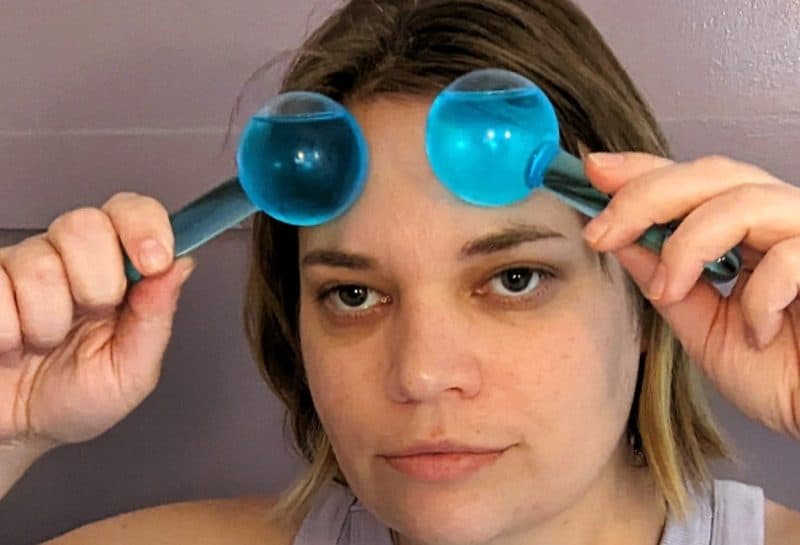
Strip away the branding and the clinical language, and what you have is cold on skin. That part actually does something. When cold hits your face, blood vessels near the surface constrict — vasoconstriction, in the dermatology textbooks. Less blood flow to the surface means less visible redness and reduced puffiness.
If your face is swollen from a bad night of sleep, salty food, or a good cry, cold application genuinely helps. It is why your grandmother told you to put a cold cloth on your face.
The catch is duration. These effects are temporary. The vasoconstriction reverses once your skin warms back up, typically within 30 to 60 minutes. Your puffiness returns. Your redness comes back. There is nothing wrong with a temporary fix — most of us apply makeup that lasts only until we wash it off — but it is worth understanding that cold application is a short-term intervention, not a cumulative treatment. And crucially, none of this is unique to beauty globes. A cold spoon from the fridge does the same thing. So does an ice cube wrapped in a flannel.
Pores do not open and close. It is one of the most persistent myths in skincare, and beauty globe marketing leans on it without shame. Pores are not equipped with tiny muscles that respond to temperature, as dermatological research has consistently shown. What cold does is temporarily reduce the appearance of pores by slightly constricting the surrounding tissue — think of it as a brief optical effect rather than a structural change. Once your skin returns to its normal temperature, your pores look exactly the same as they did before.
The circulation claim is slightly more interesting but equally inconclusive. Cold application initially reduces blood flow through vasoconstriction. When you remove the cold source, reactive hyperaemia kicks in — blood rushes back to the area, producing a temporary flush.
Some brands frame this as “boosting circulation” as though it provides a lasting benefit. It does not. The flush is your body restoring normal blood flow after you temporarily restricted it. Whether that brief surge of blood to the face produces any meaningful skin improvement over time has not been demonstrated in any rigorous study. It is a plausible-sounding claim with no evidence behind it, which is a recurring theme in this product category.
Here is the comparison nobody in the beauty globe business wants you to make. A bag of frozen peas, wrapped in a tea towel and held against your face, delivers cold to your skin. A stainless steel spoon from your cutlery drawer, chilled in the freezer for twenty minutes, delivers cold to your skin. An ice cube in a cloth delivers cold to your skin. The active mechanism in all three cases is identical to the one in a beauty globe: cold contact reducing puffiness and redness through vasoconstriction.
Where the beauty globe has a genuine advantage is in the delivery. The spherical shape rolls easily across facial contours. Stainless steel holds cold for a reasonable amount of time — longer than a spoon, less messily than ice. The surface is smooth and hygienic, easy to clean between uses.
These are real ergonomic benefits. A beauty globe is a better-designed cold delivery tool than a bag of peas. But it is still fundamentally a cold delivery tool. The technology is temperature, and temperature is free.
What you are paying for, honestly, is a nicely shaped piece of stainless steel that sits comfortably in your hand and rolls smoothly across your face. You are paying for the fact that it lives in your freezer looking like a deliberate skincare tool rather than a repurposed kitchen utensil. You are paying for something you can clean properly, that will not drip on your shirt, and that feels genuinely pleasant to use.
That is a legitimate product. Good tools improve experiences, even when the underlying activity is simple. A beautiful wooden spoon does not make your soup taste better, but it makes cooking more enjoyable.
The problem arises when the price tag reflects claimed clinical efficacy rather than tool quality. A solid stainless steel pair at NZD 35 is reasonable for a well-made facial tool. The same product at NZD 80 because the box mentions “cryotherapy” and “cellular renewal” is charging a premium for marketing claims the product cannot support. Know what you are buying: a nice tool for a pleasant ritual. Pay for that, and no more.
There is a benefit to beauty globes that rarely appears in the marketing copy because it sounds too simple to sell: the ritual itself. Taking five minutes in the morning to roll a cold tool across your face is a deliberate pause. You are standing still, paying attention to your skin, doing something that feels good. In a morning routine that usually involves rushing through steps while checking your phone, that pause has genuine value.
The skincare industry is slowly acknowledging what dermatologists and psychologists have noted for years — the act of caring for your skin has benefits beyond the products you apply. Stress reduction lowers cortisol, which measurably affects skin health. Gentle facial massage, regardless of the tool used, can reduce tension and improve how your face feels.
The sensory experience of cold metal on warm skin is pleasant in a way that is hard to replicate with a serum alone. None of this requires a beauty globe specifically. But if the globe is the thing that gets you to slow down for five minutes, it has done something useful — just not what the label says.
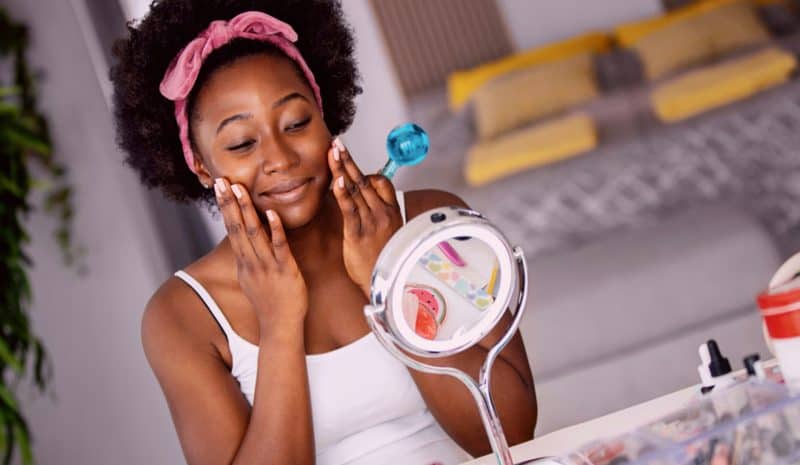
If you like the idea of a cold facial tool, enjoy the ritual, and have realistic expectations, beauty globes are a perfectly reasonable buy. Look for solid stainless steel rather than plated versions — plating can wear over time, and solid steel is more hygienic. You do not need the most expensive pair on the market. The fundamental function is the same across price points; you are paying for material quality and design, not proprietary technology.
Use them after your morning cleanser, before your serum. Roll gently from the centre of your face outward. Keep your expectations grounded: you will get temporary de-puffing, a pleasant cooling sensation, and a few minutes of deliberate self-care. That is the real product. If those things appeal to you and the price feels right, go for it. Treat them as a nice addition to a routine you already enjoy, not as a substitute for active skincare ingredients.
If you are reaching for beauty globes because you want lasting pore reduction, permanent skin tightening, or anything resembling clinical results, stop. That NZD 50 to 80 will go much further spent on a proven active ingredient.
A well-formulated retinol serum has decades of clinical evidence supporting its efficacy for fine lines, texture, and skin renewal. A vitamin C serum with proven stability offers measurable antioxidant protection. These are not glamorous purchases. They do not photograph as well on a bathroom shelf. But they work.
Alternatively, put the money toward a single professional facial with a qualified skin therapist. One treatment with someone who understands your skin type and can recommend targeted products will deliver more lasting value than months of cold rolling. The beauty industry is full of products that feel like they are doing something. The ones that actually change your skin over time tend to be less photogenic and more boring. If results matter more than ritual to you, spend accordingly.
Beauty globes are a good tool dressed up as a treatment. The cold feels great, the ritual has genuine value, and a well-made pair will last for years. Just know what you are buying. The science behind cold on skin is real but temporary, the marketing claims outpace the evidence by a considerable margin, and the most effective things you can do for your skin remain unglamorous, evidence-backed, and unlikely to trend on social media any time soon.