
Ingredients, reviews, and professional insight for NZ beauty
Ask a room of beauty therapists who regulates cosmetics in New Zealand and you will get Medsafe, the Ministry of Health, or a shrug. The correct answer is the Environmental Protection Authority, which oversees your night cream under the same legislation it applies to industrial solvents. That is less alarming than it sounds – but it does explain what the front of the box gets away with.
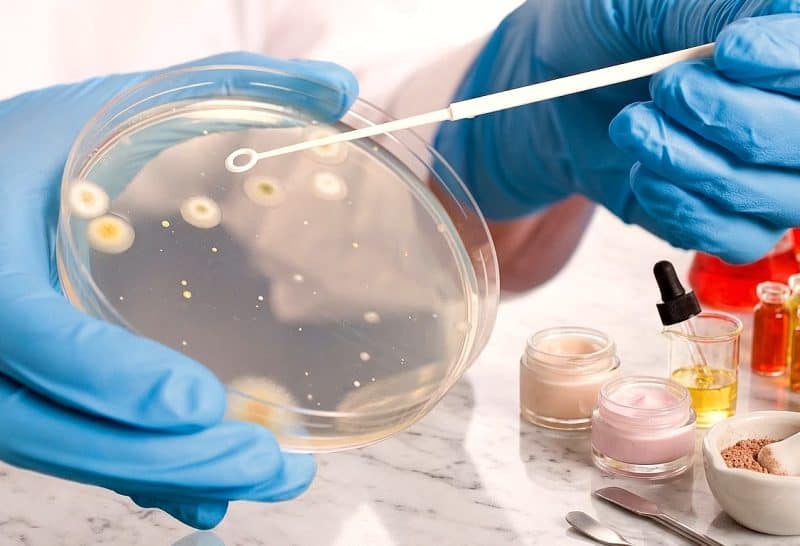
The Environmental Protection Authority administers something called the Cosmetic Products Group Standard, and the name explains most of it. A group standard is one set of rules written for an entire class of products, so each individual product does not have to be assessed on its own. It sits under the Hazardous Substances and New Organisms Act, the legislation New Zealand uses to manage chemicals generally.
That is the whole logic. Cosmetics are chemical mixtures, chemical mixtures fall under the hazardous substances regime, so your vitamin C serum is governed by the same statutory framework as paint thinner. It is a classification, not a judgement. Nobody at the EPA thinks your moisturiser is dangerous. There was a chemicals law, cosmetics were chemicals, and the file landed on that desk.
Here is the part that surprises people: there is no approval step. No dossier goes to a regulator, no product is registered, nobody reads the formula and issues a consent before it can be sold. A brand formulates its serum, checks it against the standard, decides it complies, and ships it.
Compare that with medicines, where Medsafe must grant consent before a product is distributed at all. Cosmetics run on self-declared compliance. The rules about what may go in a formula are real and reasonably strict, but the checking happens afterwards, if it happens at all, and usually because somebody complained.
Everyone on the trade side knows this. Almost nobody standing in front of the skincare wall at Farmers does.
What the standard does contain is lists, and they are long. There are schedules of components that cannot be used in a cosmetic at all, schedules of components allowed only under conditions – a maximum concentration, a restriction to rinse-off products, a required warning – and separate lists covering colourants, preservatives and UV filters.
These schedules track the European approach closely. Europe does the heavy toxicological work, New Zealand adopts the outcome, and the local market stays in step with the strictest major regime rather than the loosest. It also means the lists move as evidence accumulates: several parabens that were unremarkable in a 2005 formula are no longer permitted, while others remain acceptable below a set concentration.
The composition side is genuinely regulated. It is the only part that is.
The other substantive obligation is labelling, and it is the one that quietly does the most work for you. A cosmetic sold here must carry:
– a full ingredient list in the international naming convention, in descending order of weight, with anything present at one percent or less free to appear in any order after that threshold
– the name and New Zealand address of the supplier or importer
– any warnings the schedules require for restricted ingredients, along with a batch identifier
That naming convention is why ingredient lists read like a chemistry exam. Water is aqua, shea butter is butyrospermum parkii, and the vitamin C you paid for is ascorbic acid or one of its derivatives. It is not obfuscation – it is one international vocabulary, so a single label works in Auckland, Sydney and Lyon.
Compliance sits with whoever brings the product into the country or makes it here – not the retailer, and not the therapist selling it from her treatment room. For an established brand with a regulatory function this is routine. For the small local labels that have multiplied over the last decade, often built on a good idea and a contract manufacturer, it can be a real gap in knowledge.
The EPA can act when something goes wrong, and non-compliant product can be stopped at the border. But there is no routine inspection regime and no sampling programme working its way along the shelves. Enforcement is reactive by design.
The most consequential line in cosmetic regulation is not about ingredients at all. It is about what you are allowed to say.
A cosmetic, legally, is a product applied to the body to clean it, perfume it, change its appearance, protect it, or keep it in good condition. Every one of those is about surface and appearance. The moment a product claims to prevent or treat a disease, or to change how the body works, it stops being a cosmetic and becomes a medicine – regardless of what is in the bottle.
So a moisturiser can say it hydrates, softens, and improves the look of fine lines. It cannot say it treats eczema. A serum can improve the appearance of blemishes; it cannot treat acne. The formula might be identical either way. The claim is what moves the product from one regulatory universe into another.
Once a therapeutic claim is made, the product falls under medicines legislation, administered by Medsafe, and the requirements change entirely – evidence, consent before distribution, controls on advertising. Very few beauty brands want any part of that.
Which explains the strange grammar of skincare packaging. The hedged verbs, the appears and the helps to and the look of – that is a legal boundary being walked carefully, not marketing timidity.
It also produces something worth knowing as a shopper. A formula with a well-dosed active and a formula with a token sprinkle of the same active are restricted to the same vocabulary. Neither is permitted to say plainly that it works, so how bold the wording sounds tells you nothing about how strong the product is.

None of this means a brand can print whatever it likes on the front of the box. The Fair Trading Act prohibits misleading and deceptive conduct in trade and requires claims to be substantiated – you need reasonable grounds before making a claim, not after somebody questions it. That one is enforced by the Commerce Commission.
The practical limits are worth understanding. The Commission is complaint-driven with an entire economy to police, so cosmetics compete for attention with electricity retailers and finance companies. Action tends to follow claims that are specific and checkable – a percentage, a timeframe, a test result – rather than the soft language brands favour precisely because it cannot be pinned down.
Sunscreen is the exception. SPF claims sit under a mandatory product safety standard, so the number on the bottle has to be earned through testing to a set method.
Put it together and a simple rule falls out: the regulated part of the packaging is the ingredient list. Everything on the front is shaped by claim law, not by any test of whether the product performs.
The list rewards a little technique. Order is by weight, so the first five or six ingredients are the formula. The one percent threshold is the useful part – preservatives and fragrance are almost always used well below one percent, so anything sitting at or after them is present in small quantities. If the hyaluronic acid you are paying for appears after the phenoxyethanol, you know roughly what you have bought.
That is the literacy the system quietly hands you. Not an assurance that a product works, but an honest account of what is in it, in an order that means something – which is more than the front of the box is obliged to offer.
The system regulates what can go in the bottle and what can be said about it, and does neither with the pre-market scrutiny most shoppers assume is happening on their behalf. That is not a scandal, just a different design – and it puts the reading squarely on you. The label was written to be read. Only not the side facing out.