
Ingredients, reviews, and professional insight for NZ beauty
Double cleansing arrived here the way most routines do – fully formed, via Korean skincare and then Instagram, with no explanation of what the second step was for. It is now treated as a rule, which means a good number of women are solving a problem they do not have, while others still are not getting their sunscreen off. The difference comes down to one thing, and it is not your skin type.

Almost every gel and foaming cleanser works through surfactants – molecules with a water-loving end and an oil-loving end, which is how they lift grime off skin so a rinse can carry it away. But a surfactant suspended in water will not shift everything sitting on your face.
What it struggles with is anything designed not to move. Water-resistant sunscreen filters, the silicones in primer and long-wear foundation, waterproof mascara – all oil-soluble, all built to survive sweat and humidity. Like dissolves like. Breaking that film down takes an oil-based cleanser, which is the whole argument for a first cleanse. The water-based one then removes the oil and what it carried.
There is a test that takes one night. Cleanse as you normally would, dry your face, then wipe a white cotton pad across your cheeks, jaw and hairline. If it comes away tinted or greasy, the cleanser has not finished.
The other tells are softer and just as reliable. Skin that feels coated rather than clean. Grey smudges under the eyes in the morning that were not there at bedtime. Serum pilling instead of sinking in.
None of it means your cleanser is bad. It means it is doing one job and being asked to do two.
Now the blunt part. If your face has had nothing on it all day but a moisturiser, there is nothing oil-soluble to dissolve, and the second cleanse is taking your own skin’s oils and little else. Given how hard the UV is here, that group should be small, but a bare face needs one wash.
The industry will not say this loudly, because the second product is the sale. For most women wearing tinted moisturiser and a swipe of mascara, one good cleanse with a flannel does what the two-step routine claims. The question was never your skin type. It is what you are asking the cleanser to remove.

A balm is solid in the jar and melts on contact. That texture is the point: it buys you thirty seconds of massaging over sunscreen and makeup rather than running off your chin.
Balms are the most effective option for heavy SPF and long-wear foundation, and the most comfortable on skin that runs dry. They are also the fussiest. Most want a warm flannel to come away cleanly, and one that emulsifies poorly leaves a film the second cleanse then has to deal with. Reckon on $30 at a pharmacy up to $70-plus at a department store counter; the cheaper end performs perfectly well.
An oil does the same chemistry with less ceremony. It goes on as a liquid, you massage, then add water and it turns milky – that is emulsification, and it is what lets the oil rinse away rather than sit there. If your cleansing oil does not go cloudy under the tap, it is leaving residue behind.
Oils suit anyone who finds balms heavy, which in Auckland humidity is a lot of people. Faster, no flannel, and an easier sell to oilier skin that flinches at putting oil on deliberately. Check the fragrance load, though – it sits on the face for a full minute, and reactive skin will notice.
Cream and milk cleansers sit in the middle. They carry some oil and some surfactant, so they lift light makeup and a day’s grime without stripping, but they will not fully break down a water-resistant sunscreen on their own.
For genuinely dry skin – Canterbury in August, or skin that has got drier with age – a cream cleanser is often the best single wash available here. The QV and Cetaphil options in any NZ pharmacy are unglamorous and do the job. As a second cleanse they stop the routine ending on a squeak.
Micellar water is the most misunderstood product in the category. It is water with tiny surfactant clusters – micelles – suspended in it, and they grab oil and lift it onto the cotton pad. It works, and it works gently. It is very good for eye makeup, a quick cleanse at the end of a long day, and travel.
What it is not is a substitute for a proper wash after sunscreen. It lifts some and leaves the rest, and because most people do not rinse afterwards, the surfactant stays on the skin. Use it, then rinse or follow with a cleanser. It is a first cleanse, not a routine.
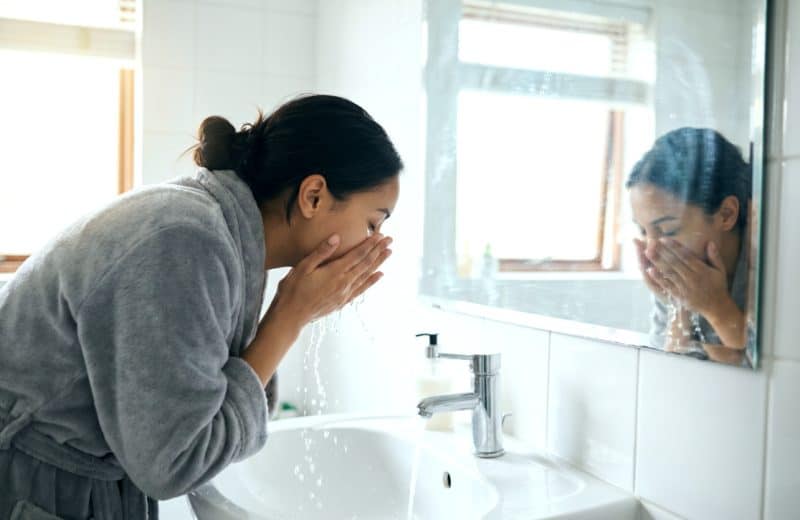
Two cleanses a night on skin that needed one has a cost. The barrier is the mortar between your surface skin cells – lipids that hold water in and irritants out – and surfactants strip a little of it every time. Do that twice nightly for months and it stops rebuilding fast enough.
You will know. Skin stays tight for more than a minute after washing. Serums that were fine start to sting. There is flaking around the nose, and reactivity to old favourites. Dropping back to one cleanse usually settles it within a fortnight. If it does not, or there is persistent redness or broken skin, that is a GP or dermatologist conversation, not another product.
Where you live changes the arithmetic more than international advice allows. Humid Auckland and Northland summers mean more sweat, more sebum and heavier sunscreen use – and sunscreen applied properly, reapplied through the day, is exactly the film an oil cleanse exists to shift. Up there the second cleanse earns its place most of the year.
Canterbury and Central Otago are another proposition. Dry air, a nor’wester that pulls moisture out of everything, and winter heating indoors leave skin far less margin. The routine that keeps an Auckland face clear will have a Christchurch one tight and flaking by July.
The workable rule is not a number of cleanses. It is a question: is there anything on my face tonight that water and a surfactant cannot dissolve?
– Sunscreen, long-wear foundation or waterproof mascara: cleanse twice.
– Tinted moisturiser and a light SPF after a day indoors: one cleanse, done properly, with a flannel.
– A bare face: one cleanse, or in a Canterbury winter, warm water and a soft cloth.
Mornings almost never need two: overnight your skin has made a little oil and touched a pillowcase, and a gentle wash handles it. If you are cleansing twice because a chart said so rather than because of what came off your face, that is the part worth changing.
Double cleansing is not a virtue, and skipping it is not laziness. It is a response to one problem – a film of oil-soluble product that a water-based wash cannot break down – and if that film is not on your face, the second cleanse is cost and friction. Work out what you are actually wearing, then pick the routine that removes it.