
Ingredients, reviews, and professional insight for NZ beauty
Somewhere in your forties, the skincare routine that served you for years quietly stops working. Skin that was reliable turns drier, lines settle in, and products that never bothered you start to sting. It is not your imagination and it is not neglect – it is your hormones rewriting the rules. The good news is that the response is not a panicked overhaul but a series of sensible adjustments. Here is what actually changes in perimenopausal skin, how to tune your routine rather than replace it, and which of the new “menopause skincare” promises are worth your money.
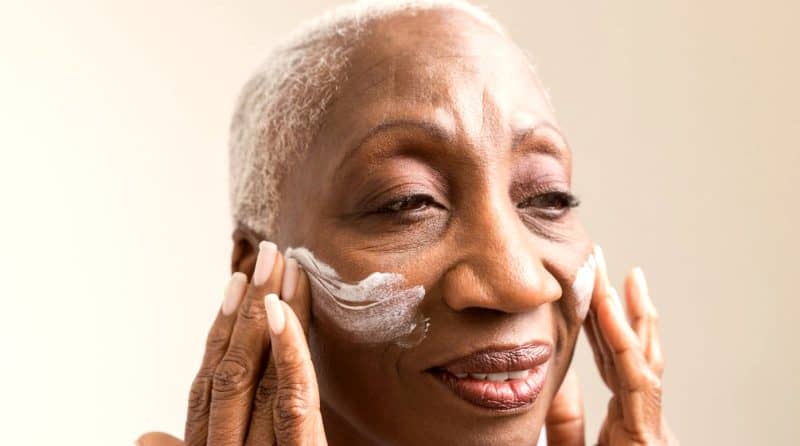
There is a real, measurable reason your skin starts behaving like someone else’s in your forties. As oestrogen declines through perimenopause, so does collagen – and the drop is steeper than most people expect, with skin losing a meaningful share of its collagen in the first years around menopause. Less collagen means skin that is thinner, less springy, and slower to renew itself than it was a decade ago.
That is the engine behind most of what you are noticing: lines that settle in rather than bounce back, a loss of the plumpness that used to fill them, a general sense that skin looks tireder for the same amount of sleep. None of this is a personal failing or a sign you stopped trying. It is the way skin ages as hormones shift, and understanding the mechanism is what lets you respond to it sensibly rather than panic-buying. What follows is skincare, not medical advice – hormones themselves are a conversation for you and your doctor.
Alongside the collagen story is a more immediate, everyday change: skin gets drier and touchier. Oil production falls as hormones shift, so the natural lubrication that kept skin comfortable thins out, and the protective barrier that used to shrug things off becomes more easily disrupted. The result is skin that feels tight, looks a little dull, and – frustratingly – starts reacting to products it happily tolerated for years.
This is the bit that catches women off guard. The acid toner you have used since your thirties suddenly stings. A familiar moisturiser no longer feels like enough by afternoon. Your skin flushes at things that never used to register. None of this means your skin has become “sensitive” in some permanent, mysterious way – it means the barrier needs more support than it used to, and the routine that suited the old conditions needs adjusting to the new ones.
Before we go further, the reassurance: this is a tuning job, not a teardown. The beauty industry would love you to believe that perimenopause requires throwing out everything and starting again with a special, expensive new range – panic is good for sales. It does not. The fundamentals of good skincare do not change with your hormones; the emphasis does.
What you are doing is adjusting dials, not rebuilding the machine. Cleansing a little gentler. Moisturising a little richer. Holding onto the actives that still earn their place while easing off where your skin now objects. The reader who approaches perimenopausal skin as a calm series of small adjustments ends up far better off than the one who, alarmed by a few new lines, empties the bathroom cabinet and starts over with whatever the most aggressive marketing promised. Keep what works. Adjust what does not. That is the whole strategy.
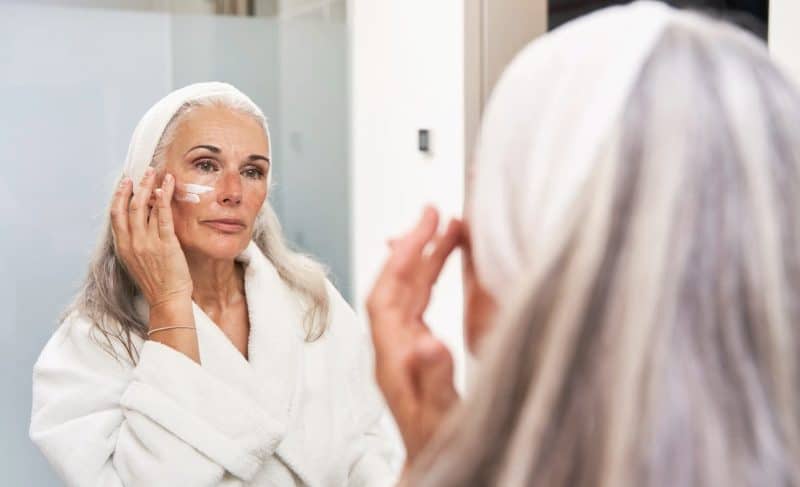
The first dial to turn is cleansing, and it almost always needs turning down. The foaming, squeaky-clean cleansers many women have used for years strip the skin of oils it can no longer easily replace, leaving an already drier face tight and irritated. That squeaky-clean feeling, long sold as the goal, is actually the sound of your barrier being compromised.
Swap to a cream, milk, or balm cleanser that removes the day without stripping it. Your skin should feel comfortable and soft after cleansing, never tight. If you wear makeup or sunscreen, a gentle double cleanse in the evening does the job without harshness. This single change – cleansing kindly rather than thoroughly – resolves a surprising amount of the new dryness and reactivity women blame on age, when the real culprit was a cleanser that stopped suiting them.
Second, give your skin more to work with. The lightweight gel moisturiser that suited oilier, younger skin is rarely enough now, so step up to something richer, especially at night. This is the moment ceramides become genuinely worth seeking out – they are part of the skin’s own barrier, and topping them up helps a weakened barrier hold moisture and stay calm.
Look for moisturisers built around ceramides, fatty acids, and humectants like glycerin, and do not be afraid of a properly rich night cream or even a facial oil layered on top to seal everything in. In a dry New Zealand winter this matters even more. The aim is to stop the moisture loss that thinner, lower-oil skin is prone to, and a well-chosen barrier cream does more for perimenopausal skin than almost any serum promising to turn back time. Comfortable, well-supported skin simply looks better.
Here is where people overcorrect: spooked by new sensitivity, they drop their actives entirely. That is the wrong move, because a well-chosen retinoid and a vitamin C are arguably more valuable now than ever – the retinoid supporting collagen as it declines, the vitamin C defending against the daylight that ages thinner skin faster. You do not abandon them; you adjust how you use them.
That might mean using your retinoid two or three nights a week instead of nightly, buffering it by applying moisturiser first, or stepping to a gentler form if your skin protests. Vitamin C usually stays put but can be moved to alternate mornings if it stings. The principle is the same one running through this whole piece: the actives that work still work, but the skin receiving them has changed, so the dose and pacing change with it. Lower and slower, not gone.
If the routine has one genuinely non-negotiable step now, it is sunscreen – and it earns that status more with every passing year. Thinner, lower-collagen skin shows sun damage faster and repairs it more slowly, so the daylight you barely thought about in your twenties does visibly more now. Daily broad-spectrum SPF is the single highest-value thing in a perimenopausal routine, full stop.
This matters acutely here, because New Zealand’s UV is among the harshest anywhere, working on skin that is now more vulnerable to it. Sunscreen every morning, regardless of season or cloud, protects the collagen you have left and every other step you are taking – there is little point investing in retinoids and rich creams while letting unprotected UV undo the work. If you adopt only one new habit from this article, make it the sunscreen, and make it daily.
You will have noticed the rise of skincare ranges marketed specifically at menopausal women, often in tasteful packaging at a tasteful premium. The honest assessment: most of them are perfectly good products built around exactly the ingredients we have been discussing – ceramides, peptides, richer textures, gentle actives – repackaged with a life-stage label and priced accordingly.
There is nothing wrong with them, but there is nothing magic either. None of those useful ingredients are exclusive to a “menopause” range; you will find them across the market, often for less. So buy on formulation, not on the word on the box. If a menopause-branded cream is well made and you like it, enjoy it – but do not pay a premium believing it contains something a comparably formulated cream without the label does not. The hormone-shift marketing is selling reassurance as much as skincare, and reassurance is not an active ingredient.
The skin you have in your fifties responds to the same thing that served it in your thirties: consistency. A calm, barrier-supportive routine – gentle cleanse, rich moisture, sensible actives, daily sunscreen – done steadily for years will do far more than any miracle cream bought in a moment of alarm and abandoned a month later. The unglamorous habits are the ones that hold.
It is also worth being realistic about what skincare can and cannot do. Topicals can keep skin healthy, comfortable, protected, and looking its best for its age; they cannot rewind the hormonal clock, and any product implying otherwise is overpromising. If a skin concern genuinely troubles you – persistent irritation, changes that worry you – see a dermatologist or your doctor rather than self-prescribing from a shelf. Tend the basics well, protect your skin from our sun, and let go of the idea that this stage requires a frantic reinvention. It just asks for a slightly kinder version of what already works.
Perimenopause asks you to adjust your skincare, not start it over. Cleanse more gently, moisturise more richly, hold onto the actives that work at a dose your skin can take, and treat daily sunscreen as the one true non-negotiable. Skip the panic-marketed miracle ranges and put your money into well-formulated basics used consistently. Your skin has changed, and a slightly kinder version of a good routine is exactly what it is asking for – not a reinvention, just a recalibration.