Ingredients, reviews, and professional insight for NZ beauty
Hyaluronic acid is the hydration darling of the last decade – in every serum, on every shelf, promising plump, dewy skin. And yet a surprising number of New Zealand women use it faithfully and end up with skin that feels tighter than before. They have not bought a dud; they have misunderstood what the ingredient is and what it needs to do its job. Here is what hyaluronic acid actually does, the two-step technique that decides whether it helps or hurts, and why our dry Kiwi winters make getting it right matter more than the advice from overseas lets on.
Hyaluronic acid gets talked about as though it were a moisturiser, and it is not – it is a humectant, which is a different job entirely. A humectant is a water magnet: it draws moisture toward itself and holds it. That is genuinely useful, but it is only half of what keeps skin hydrated. The other half is sealing that water in, which is the work of the oils and creams sitting on top, and hyaluronic acid does none of it.
This distinction is not pedantry. It is the entire reason so many people slather on an expensive hyaluronic serum, skip everything else, and find their skin feels tighter and drier than before. They have applied a sponge and then left it uncovered. Hyaluronic acid is a brilliant ingredient inside a complete routine and a faintly counterproductive one on its own – and understanding why comes down to what a water magnet does when there is no water around to grab.
Here is the part the marketing leaves out. A humectant pulls water from wherever it can get it. In a humid environment, that water comes from the air, which is exactly what you want. But in dry air, with nothing sealed over the top, hyaluronic acid will draw moisture from the only other reservoir available – the deeper layers of your own skin – up to the surface, where it promptly evaporates. The net result is skin that feels tighter and more parched than before you started.
This is not a flaw in the ingredient; it is physics doing precisely what it does. The way humectants and the moisturisers around them work together is the whole game. Used correctly, hyaluronic acid grabs water and something else holds it there. Used as a lonely layer in a dry room, it can quietly move your own moisture to where it can escape. Whether it helps or hurts comes down entirely to how you apply it.

The first rule is the one almost nobody is told: apply hyaluronic acid to damp skin, not dry. Give it water to work with and it behaves perfectly – it grabs that surface moisture and holds it against your skin. Apply it to a bone-dry face in a dry room and you have set up exactly the backwards scenario from a moment ago.
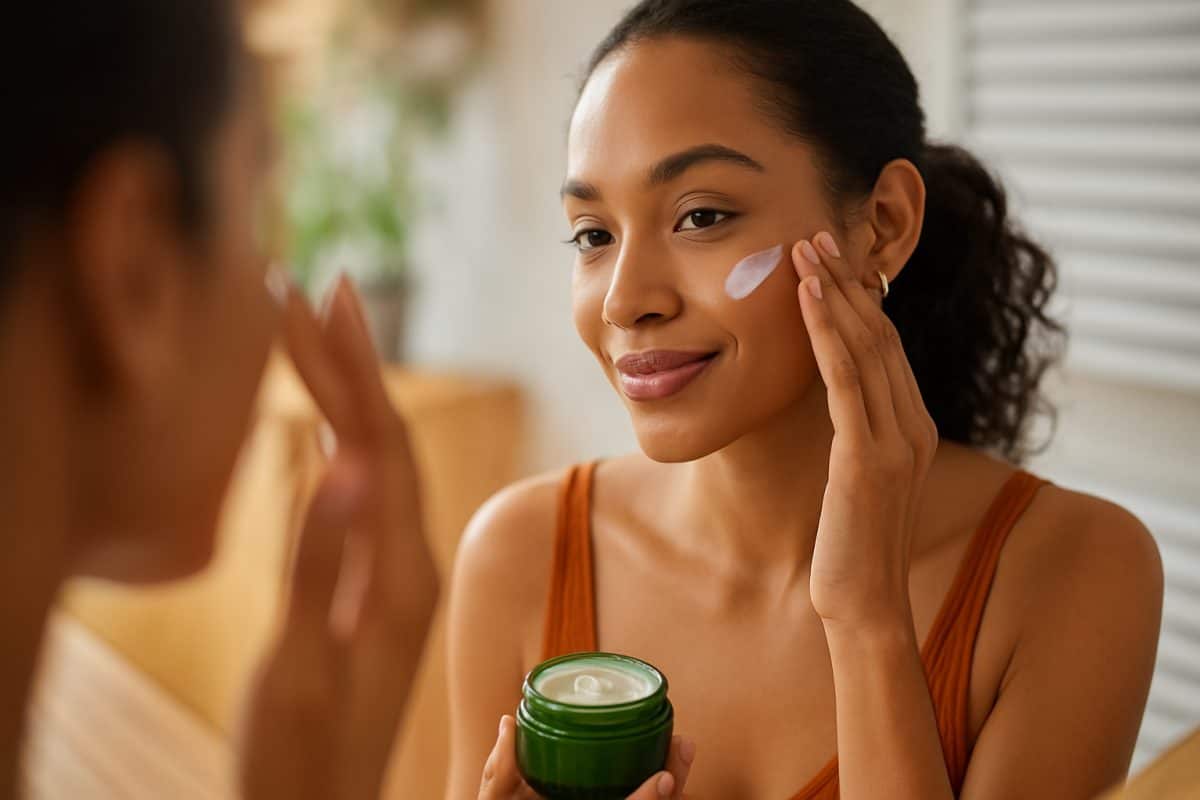
In practice this means a hyaluronic serum goes on straight after cleansing, while your face is still slightly wet, or onto skin you have just misted with a little water or a hydrating toner. You are not aiming for dripping – just damp. A few seconds matters here. The same serum that leaves skin plump and dewy when applied to a damp face can leave it tight when applied to a dry one, and the only variable that changed was timing.
Step two is the one people skip, and it is not optional: put a moisturiser over the top. Once the hyaluronic acid has bound water to your skin, you need something to stop that water evaporating away again, and that is what a cream or facial oil does. Serum, then moisturiser, in that order – the humectant grabs, the moisturiser seals.
Think of it as wetting a sponge and then wrapping it so it cannot dry out. Skip the wrap and the sponge is dry again within the hour. This is why hyaluronic acid performs so well as one step inside a routine and so poorly as a standalone hero product. On its own it is half a job. With a moisturiser locking it down, it does exactly what the label promised – and the difference between the two experiences is one inexpensive step most people already own.
All of this matters more in New Zealand than the international advice assumes, because we spend a good chunk of the year in genuinely dry air. A Canterbury or Otago winter is bone-dry. So is any office running air-conditioning, or a lounge with the heat pump going all evening. These are precisely the conditions in which an unsealed humectant has nothing to draw from but your own skin.
So the wetter-skin-then-seal routine is not a nice-to-have here – in a dry Kiwi winter it is the difference between hyaluronic acid helping and actively working against you. If you have ever bought a hyped hydrating serum, used it faithfully through July, and concluded your skin was somehow getting drier, this is almost certainly why. The serum was fine. The room was dry and nothing was sealing it in.
If you read labels you will run into talk of molecular weight, and it is worth a sentence or two. Hyaluronic acid comes in different sizes: larger molecules sit on the surface and plump it visually, while smaller ones are said to settle a little deeper for a less immediate but more lasting feel. Many serums now blend several weights to cover both, which is a sensible bit of formulation.
That is genuinely all you need to know. Molecular weight is a real thing, not pure marketing, but it is not worth obsessing over or paying a steep premium to chase. A well-formulated multi-weight serum from a reputable brand has this handled. Do not let a brand convince you that their particular fractionated, low-molecular-weight, deep-penetrating formula is worth triple the price – the technique you use it with will matter far more than the precise size chart on the box.
Before you add a standalone hyaluronic serum to your basket, check what you already have. Hyaluronic acid is one of the most common ingredients in modern skincare – it is quietly present in a large share of decent moisturisers, serums, and even some cleansers. There is a fair chance you are already using it without having bought it as a hero product.
A dedicated hyaluronic serum earns its place if your skin is genuinely dry and wants an extra hydrating layer, or if you enjoy the plumping feel under makeup. For plenty of people, though, the hyaluronic acid built into a good moisturiser is doing the job already, applied correctly, sealed in by the very cream it lives in. Spend on it if it solves a real problem for your skin. Just do not buy it because a serum told you that you were missing out – you may well already have it.
Hyaluronic acid is a genuinely good ingredient wrapped in some genuinely misleading marketing. Treat it as what it is – a humectant that needs water to grab and a moisturiser to seal – and it earns every bit of its reputation. Treat it as a magic serum you dab on dry skin and walk away from, in a dry Kiwi winter, and it will quietly do the opposite of what you paid for. The ingredient was never the problem. The instructions were just left off the box.