
Ingredients, reviews, and professional insight for NZ beauty
Every April, the same quiet betrayal plays out in bathrooms across New Zealand. The moisturiser that worked all summer starts failing. Skin feels tight after cleansing, foundation clings to dry patches that were not there in February, and the hyaluronic acid serum that felt like a revelation in January is somehow making things worse. The problem is not your skin and it is not your products — it is the air. And in New Zealand, where winter humidity varies dramatically between regions, the fix depends entirely on where you live.
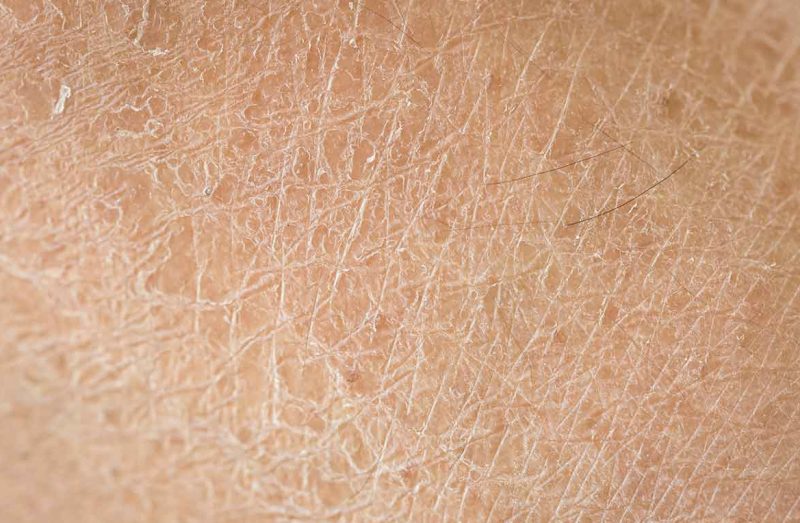
Most skincare advice treats humidity as a background detail. It is not. The difference between 80% relative humidity and 40% is the difference between skin that holds itself together and skin that starts cracking at the knuckles by June. In Auckland, outdoor winter humidity rarely drops below 70% — the air stays damp even when the temperature falls. Move inland or south and the story changes fast. NIWA climate summaries show the regional variation clearly. Christchurch winter mornings regularly sit around 60% outdoors, but the real damage happens inside. Canterbury homes running heat pumps through a July cold snap can push indoor humidity below 30%, which is drier than most commercial aircraft cabins.
Central Otago is worse. Queenstown and Wanaka get the combination of altitude, clear skies, and dry nor-west winds that pull moisture out of everything — skin included. If you have lived through a Central Otago winter, you already know what this feels like before anyone explains the science. Your lips crack, your hands split, and your forehead feels tight by mid-morning.
The reason this matters for skincare is simple: your skin barrier is designed to hold water in, but it can only do that job when the moisture gradient works in your favour. When the air around you is wet, water stays in your skin because it has nowhere better to go. When the air is dry, physics pulls water out through your epidermis. Every skincare product you apply is either helping that barrier hold the line or it is not.
You cannot control the nor-wester, but you can control what your heat pump does to your living room. Most New Zealand homes use reverse-cycle heat pumps, which work by cycling air across a heated coil. That process is brutally effective at stripping moisture. A room that starts the evening at 50% relative humidity can drop below 30% within a couple of hours of sustained heating — well into the range where skin barrier function measurably declines.
The alternative matters more than people realise. Radiant heating — a panel heater, an oil column, underfloor heating — warms objects and surfaces rather than cycling air. It still dries the room to some degree, but the effect is significantly less aggressive than convective systems. If you are running a heat pump all winter and wondering why your skin feels parched despite a five-step routine, the heat pump is a bigger factor than any product you are applying.
A hygrometer costs fifteen dollars. Put one in your bedroom and your living room. If either room drops below 40% humidity regularly, a small humidifier will do more for your winter skin than upgrading your moisturiser.
The outer layer of your skin — the stratum corneum — is not a wall. It is a matrix of dead cells held together by a lipid mortar made primarily of ceramides, cholesterol, and fatty acids. When this lipid layer is intact, it limits transepidermal water loss to a manageable rate. When it thins or breaks down, water escapes faster than your skin can replace it.
Cold weather slows ceramide production. Low humidity accelerates water loss. The combination means your skin barrier is simultaneously weakening and working harder, which is why winter dryness tends to compound — it gets worse as the season progresses unless you intervene early. The first signs are subtle: slightly rough texture on the cheeks, foundation sitting differently, moisturiser absorbing faster than usual. By the time skin feels actively tight or starts flaking, the barrier is already significantly compromised.
What makes this relevant to your routine is that a compromised barrier changes how every other product performs. Active ingredients like retinol and vitamin C that your skin tolerates comfortably in summer can become irritants when the barrier is weakened. Acid exfoliants that keep your skin clear in humid months can tip compromised skin into redness and sensitivity. The barrier is the foundation — everything else you apply depends on it holding.

This is the concept that changes how you think about winter skincare, and it is the one most people get wrong. Hyaluronic acid is everywhere — in serums, essences, moisturisers, masks. It is marketed as the ultimate hydrator, capable of holding up to a thousand times its weight in water. That claim is technically true and practically misleading.
Hyaluronic acid is a humectant. Humectants work by drawing water molecules towards themselves. In a humid environment, they pull moisture from the air and deposit it into your skin. This is why hyaluronic acid feels miraculous in an Auckland summer or after a steam — there is abundant atmospheric moisture to draw from. The mechanism works exactly as advertised.
In dry air, the equation reverses. When the atmosphere holds less water than your deeper skin layers, the humectant draws moisture upward from your dermis instead. Your skin surface feels temporarily plumped, but you are borrowing from deeper reserves. Without an occlusive layer on top to trap that moisture, it evaporates into the dry room air. The net effect is that you end up drier than if you had applied nothing at all.
Glycerin behaves the same way. So does urea at humectant concentrations. The fix is not to stop using humectants — it is to seal them. Apply your hyaluronic acid serum, then lock it under a cream or oil that provides an occlusive barrier. In humid Auckland, you can get away without that cap. In a heated Canterbury living room in July, it is not optional.
There is a particular satisfaction in a lightweight moisturiser that absorbs in seconds and leaves no residue. In summer, that fast absorption usually means the product is doing its job — delivering hydration into well-functioning skin. In winter, it means something different. Skin that drinks a moisturiser instantly and still feels tight twenty minutes later is skin that is losing water faster than the product can supply it.
Gel moisturisers and lightweight lotions are formulated with high water content and minimal occlusive ingredients. They hydrate the surface layer but do not create a physical barrier to prevent evaporation. In dry conditions, that surface hydration is gone within the hour. The experience of applying moisturiser, feeling briefly comfortable, and then feeling dry again by mid-morning is not a sign that you need to apply more often. It is a sign that your moisturiser lacks the occlusive weight to hold moisture in your skin.
Occlusion is not complicated. It means a physical layer on the skin surface that slows evaporation. Common occlusives include petrolatum, dimethicone, shea butter, squalane, and beeswax. They feel heavier than what you are used to in summer, and that is the point. If your winter moisturiser feels exactly as light as your summer one, it is probably not doing enough.
Auckland gets cold enough to make you reach for a heavier moisturiser, but not cold or dry enough to justify a total routine overhaul. Winter temperatures hover between 8 and 15 degrees, and outdoor humidity stays relatively high thanks to the coastal climate. The main skin stressor is not dry air but the constant transition between cold outdoor wind and heated indoor spaces. That cycling can irritate sensitive skin and trigger redness, but it does not cause the deep dehydration you see further south.
For most Auckland skin, the winter adjustment is moderate. Swap your gel moisturiser for a cream, consider adding a facial oil as a final step if your skin feels tight by evening, and pay attention to whether your cleanser is too stripping. If you are using a foaming cleanser that feels fine from October to March, try switching to a cream or oil-based cleanser from May onwards. Beyond that, Auckland winters are manageable with the routine you already have.
The exception is anyone with naturally dry or eczema-prone skin. If that is you, the humidity advantage of Auckland only gets you partway — you will still need the occlusive layering and barrier repair that the rest of the country needs as standard.
Christchurch in June is a different climate from Auckland in June, and your skin knows it. The Canterbury Plains get genuine cold — regular frosts, mornings at minus two or three, and the nor-west foehn wind that strips moisture from the air with industrial efficiency. Indoor humidity in Canterbury homes during a sustained cold snap routinely drops into the twenties. This is desert-dry air, and it demands a desert-dry-air response.
If you live in Canterbury or Central Otago, the humectant-plus-occlusive principle is not a nice idea. It is the minimum. Your hyaluronic acid serum needs to be sealed under a ceramide cream every single application. A facial oil — squalane, rosehip, or marula — becomes a non-negotiable final layer rather than an optional extra. Your cleanser needs to be cream or balm based. Foaming cleansers are out until September.
Queenstown and Wanaka add altitude to the equation. UV exposure is higher, the air is thinner and drier, and the cold is more sustained. Women who move to Central Otago from Auckland or Wellington often notice their skin changing within the first winter — suddenly products that always worked are not enough. That is not your skin ageing. That is your skin responding to conditions your old routine was never designed for.
Wellington winter is its own category. It is cold and exposed, but the humidity stays higher than Canterbury because of the harbour and the constant weather systems rolling through. The skin challenge here is wind damage rather than dry-air dehydration. The southerly funnels through the city with enough force to compromise skin barrier through mechanical stress — chapped lips, raw cheeks, that wind-burned tightness after walking across the waterfront. Wind protection and barrier repair matter more here than heavy occlusion.
Dunedin is cold but sits in a wetter microclimate than Christchurch. The humidity is higher, the frosts are frequent but less sustained, and the main issue is the combination of cold exposure and the indoor-outdoor cycling that comes with an older housing stock. Dunedin homes tend to be colder inside than Canterbury homes, which means less aggressive heating but also less thermal stress on skin.
The point is not that every New Zealand woman needs a different routine for her exact postcode. It is that international winter skincare advice — written for London or New York or Seoul — does not translate directly to any part of New Zealand, and even within the country, the woman in Queenstown and the woman in Auckland are solving different problems. Read the conditions, not the marketing.
Start at the sink. If your summer cleanser foams, it is probably built on sulphate surfactants that strip the skin barrier — tolerable when humidity is high, problematic when it is not. The winter swap is straightforward: move to a cream, milk, or oil-based cleanser that removes makeup and sunscreen without leaving your skin feeling tight afterwards. The right cleanser should clean without stripping. If your face feels squeaky after washing, you are removing lipids you need.
Toners deserve a harder look in winter. If your toner contains glycolic acid, salicylic acid, or any AHA or BHA, consider dropping it entirely from May through August, or reducing frequency to once or twice a week. A compromised winter barrier plus daily acid exfoliation is a fast track to sensitised, reactive skin. If you want to keep an active toner, buffer it — apply it after a hydrating serum rather than on bare skin, and follow it with a richer moisturiser than you would use in summer.
What you drop matters as much as what you add. Winter is the season to simplify. A complicated ten-step routine with multiple actives and exfoliants is asking more of your skin at the exact moment it has less resilience to give. Pull back to the essentials: cleanser, hydration, moisture barrier, SPF. Add actives back only if your skin handles them without reaction.
The layering logic in summer is light to heavy — watery serum, light moisturiser, sunscreen. In winter, the same principle applies but the products shift up a weight class. Your hydrating serum stays, but it needs backup. Apply it to slightly damp skin — either immediately after cleansing or after a spritz of thermal water — so the humectant has a local water source to draw from rather than pulling from deeper in your skin.
Follow the serum with a moisturiser that contains both emollients and occlusives. Emollients — like squalane, jojoba oil, and fatty alcohols — soften and smooth the surface. Occlusives — like dimethicone, shea butter, and petrolatum derivatives — form a physical barrier that slows water loss. A good winter moisturiser does both. Ceramide-based creams deserve special mention here because they directly replenish the lipid mortar between skin cells — they are not just sitting on top, they are integrating into the barrier structure.
If a cream moisturiser alone is not enough, add a facial oil as the final step before sunscreen. Squalane is the safest starting point — it is lightweight for an oil, non-comedogenic for most skin, and provides genuine occlusive protection. Rosehip oil adds antioxidant benefit but is slightly heavier. The test is your skin at midday: if it still feels comfortable and not tight, your layering is working.
New Zealand sits under a thinner ozone layer than most of the Northern Hemisphere, which means UV radiation here is more intense at equivalent latitudes. A clear winter day in Queenstown can deliver a UV index of 3 or 4 — moderate by summer standards, but enough to cause cumulative damage and enough to undermine any anti-ageing routine that skips protection half the year.
The winter sunscreen switch is about texture and function. Lightweight fluid SPFs that feel invisible in summer can feel drying or insufficient when your skin is already moisture-compromised. Look for SPF formulations with built-in moisturising ingredients — products that function as a hydrating last step rather than a separate layer sitting uncomfortably on dry skin. Some mineral sunscreens with zinc oxide have the added benefit of providing a mild physical barrier that also helps with occlusion.
The coverage question changes too. In summer, you reapply every two hours because you are outdoors and exposed. In winter, a single morning application covers most people for a standard office day. The exception is anyone spending time at altitude or near snow — reflected UV off snow and the increased intensity at elevation means winter sun exposure in the mountains can rival summer levels at sea level. Ski-field skin damage is not a myth.

The fifteen-minute shower at forty-three degrees is the highlight of a cold morning and the worst thing you can do for your skin barrier. Hot water dissolves the lipid layer between skin cells the same way hot water dissolves grease on a frying pan. The effect is temporary — your body replaces those lipids — but in winter, when lipid production is already slower, the damage accumulates faster than the repair.
The practical advice is unglamorous: shower cooler and shorter. Lukewarm water for five to seven minutes does the job without stripping the barrier. If you cannot give up the heat entirely, keep the hottest water off your face — wash your face at the sink with cool water separately. And the two-minute rule for moisturising after a shower is not a lifestyle suggestion. When you step out of warm water, your skin is briefly hydrated from the steam. Applying a body moisturiser within two minutes traps that moisture under an occlusive layer. Wait ten minutes and the moisture has already evaporated, taking some of your natural lipids with it.
The same logic applies to face washing. Lukewarm water, gentle cleanser, pat dry, then immediately into your serum and moisturiser while the skin is still slightly damp.
Your skin does its heaviest repair work between roughly 11pm and 2am — cell turnover peaks, collagen synthesis increases, and the barrier restores itself. The humidity of the room you sleep in directly affects how well that repair cycle runs. If your bedroom sits below 30% humidity for eight hours, your skin is losing moisture through the night at exactly the time it is trying to rebuild.
A bedroom humidifier is the least glamorous skincare recommendation and one of the most effective for anyone in Canterbury, Central Otago, or any region where indoor winter humidity drops significantly. Set it to maintain 40-50% relative humidity. Your skin, your sinuses, and your sleep quality will all improve. It does not need to be expensive — a basic ultrasonic unit handles a standard bedroom adequately.
The overnight skincare adjustment matches the same logic. Your night cream in winter should be heavier than your day cream — this is the one time a thick, occlusive product has eight uninterrupted hours to work. Sleeping masks and overnight recovery creams exist for this purpose: they create a sustained occlusive environment over your serums and treatments, giving your skin the conditions it needs to do the repair work it is designed to do. Apply them as the last step, over everything else, and let the night shift run.
Winter skincare is not a product problem. It is an environment problem that products can help solve — but only if you understand what the environment is actually doing. The woman in Kaikoura and the woman in Cromwell are not dealing with the same winter, and the advice that serves one may actively harm the other. Read your conditions, adjust your barriers, and stop trusting products to do what physics will not allow.