Ingredients, reviews, and professional insight for NZ beauty
Most skincare advice assumes you can walk into a Sephora. In New Zealand, the closest equivalent is a Farmers beauty counter and a lot of patience with international shipping. The gap between what the beauty internet recommends and what you can actually buy here is wide enough to build an entire shopping strategy around — and that is exactly what this is.
You have read the review. Some dermatologist on YouTube has spent twenty minutes explaining why this particular niacinamide serum will change your skin. You open a new tab, search for where to buy it, and discover that the brand does not ship to New Zealand. Or it does, but the shipping costs more than the product. Or a local retailer lists it at nearly double the overseas price with no explanation beyond “that is what it costs here.”
This is the central reality of buying skincare in New Zealand: we are a market of five million people at the bottom of the Pacific, and most international beauty brands treat us accordingly. The distribution model for prestige skincare relies on regional partners, and NZ often falls under an Australian distributor who may or may not prioritise getting products across the Tasman. Brands like Skinceuticals, Dr Dennis Gross, and Sunday Riley have either limited or zero official NZ stockists. You can sometimes find them through parallel import channels, but that introduces its own complications.
The gap between what beauty media recommends and what you can actually purchase in this country is not a minor inconvenience. It shapes what NZ women put on their skin.
The price difference is not random. A serum that retails for USD 30 in the States might land at NZD 75 here, and the markup has a traceable path. Start with the conversion rate — the NZ dollar buys roughly 60 cents US on a good day. Add freight to a geographically remote market with small order volumes. Layer on 15% GST. Then add the distributor margin, because most brands do not sell directly into NZ retail — they work through a local or Australian distributor who takes a cut for warehousing, marketing, and managing the retail relationships.
Some brands set a recommended NZ retail price that absorbs these costs into something reasonable. Others leave pricing to whoever brings the product in, and the result is whatever the market will bear. The premium brands are the worst offenders — their margins are already generous, and the NZ markup just adds another layer on top.
None of this means you should accept every inflated price tag. But understanding the chain helps you judge which premiums are structural and which are simply opportunistic.
New Zealand is one of the more relaxed markets when it comes to parallel imports. If a retailer can source a genuine product through unofficial channels — buying it wholesale in another market and importing it independently — that is perfectly legal here. This is why you will sometimes see prestige skincare brands on shelves at stores that are not authorised stockists, often at lower prices than the official retail.
The trade-off is traceability. An authorised retailer can tell you exactly where the product came from, when it was manufactured, and how it was stored. A parallel importer usually cannot. For shelf-stable products like basic moisturisers and cleansers, this rarely matters. For active ingredients that degrade — retinol, L-ascorbic acid vitamin C, certain peptides — storage history is the difference between a product that works and an expensive bottle of nothing.
If you are spending serious money on actives, buy from an authorised source or direct from the brand. If you are picking up a cleanser or SPF from a trusted retailer who happens to be a parallel importer, the risk is minimal. The distinction matters most where the chemistry is sensitive.
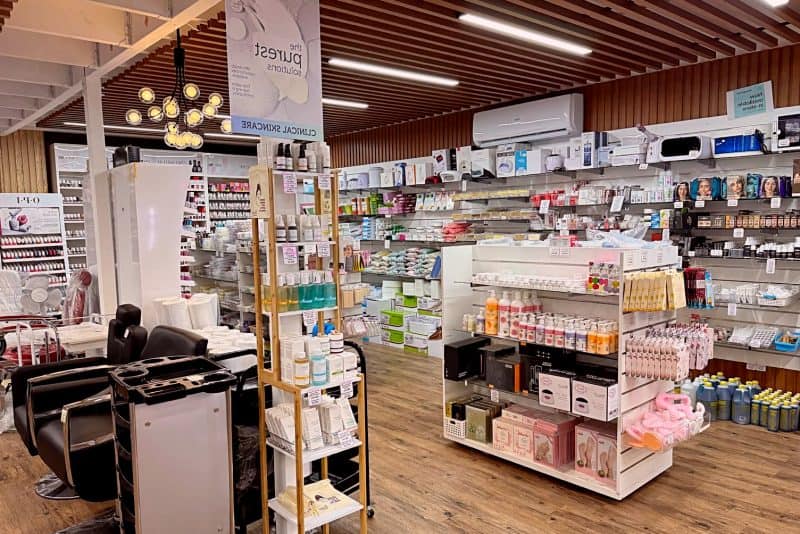
Farmers is the closest thing NZ has to a traditional department store beauty hall, and within that limited frame, they do a reasonable job. The counters carry the heritage prestige brands — Clinique, Estee Lauder, Lancome, Clarins — with trained consultants who can colour-match a foundation or walk you through a skincare regimen. If you want to try before you buy, and you want the product in your hands today, Farmers is still the most reliable option in most NZ cities.
Their online store mirrors the in-store range and occasionally runs sales that make the prestige price points more palatable. The loyalty programme offers genuine returns if you concentrate your beauty spending there. Where Farmers falls short is range. The selection is safe and mainstream — you will not find indie brands, Korean skincare, or the clinical-grade actives that have driven the biggest shifts in skincare over the past decade. Farmers stocks what the established distributors bring them, and that means a curated but conservative edit of what the international market actually offers.
For the mainstream brands they carry, though, the purchase experience is straightforward and the product is guaranteed authentic.
The pharmacy channel is where NZ quietly punches above its weight in skincare retail. Life Pharmacy and Unichem carry dermocosmetic brands — La Roche-Posay, Avene, Bioderma — that in other markets sit in specialist stores or dermatologist clinics. CeraVe has arrived on pharmacy shelves more recently, and its presence here reflects how seriously NZ pharmacies now take the skincare category.
The advantage is advice. A pharmacist who understands skin barrier function and ingredient interactions can steer you toward products that work with your skin rather than against it. This is particularly valuable for anyone dealing with sensitivity, rosacea, or eczema, where the wrong active ingredient causes more problems than the right one solves.
The inconsistency is the catch. A flagship Life Pharmacy in central Auckland might have a dedicated skincare section with testers, samples, and knowledgeable staff. A smaller suburban branch might stock the same brands but with less range and nobody behind the counter who can explain the difference between a niacinamide serum and a hyaluronic acid one. If you find a pharmacy with a good skincare range and staff who know the products, hold onto it — that relationship is worth more than any online discount.
If you have spent any time reading international beauty coverage, you have encountered brands that are considered entry-level staples overseas but remain effectively inaccessible in NZ. NARS, Too Faced, Charlotte Tilbury, Fenty Beauty — some have patchy availability through Mecca, but Mecca itself has a limited NZ footprint compared to its Australian operation. And Sephora, the single biggest multi-brand beauty retailer globally, has no NZ presence at all.
This is the gap that shapes everything else about buying skincare here. In Australia, you walk into a Mecca or Sephora and have access to hundreds of brands across every price point, with testers and expert staff. In New Zealand, that experience does not exist at scale. Mecca ships to NZ from their online store, and if you are near one of their NZ locations you can browse in person. But the range available to NZ customers is narrower than what Australian shoppers see, and the selection of skincare specifically — as opposed to colour cosmetics — can feel like an afterthought.
Until a major multi-brand retailer commits to NZ properly, online remains the primary route to anything beyond the mainstream.
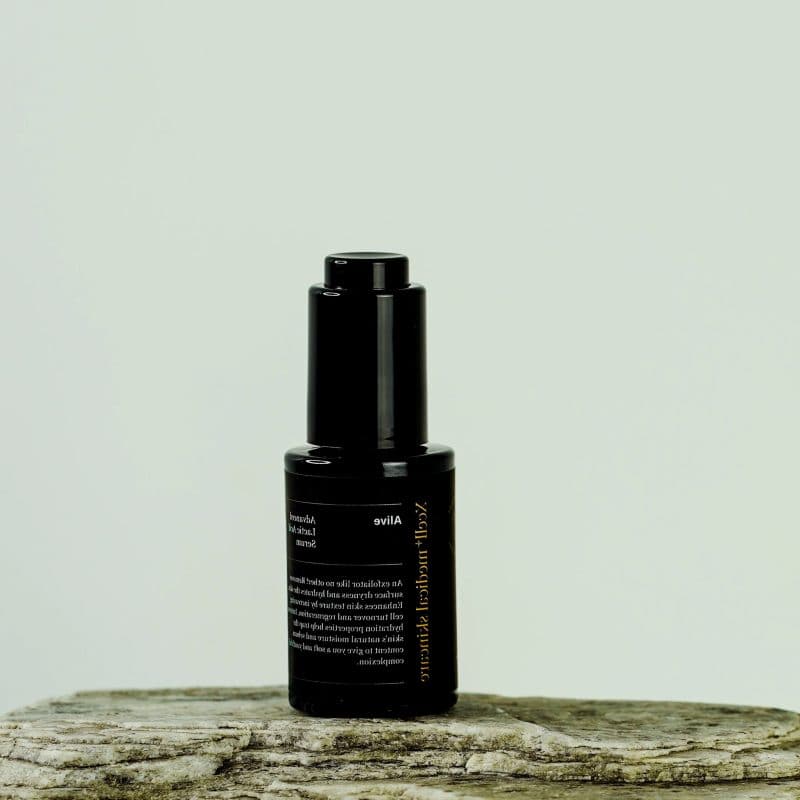
Adore Beauty is an Australian online retailer, but for NZ skincare buyers it functions as the most accessible route to a wide range of brands that have no local stockist. Their catalogue runs deep — Medik8, Alpha-H, Drunk Elephant, The Ordinary, Paula’s Choice — and shipping to NZ is straightforward. Standard delivery typically runs AUD 8-10 and arrives within five to eight business days. Free shipping thresholds apply, usually around AUD 50, making it easy to consolidate orders.
The practical appeal is range. Adore stocks clinical and professional skincare brands alongside mainstream ones, which means you can build an entire routine from a single order rather than piecing it together across three different retailers. They also carry brands that are technically available in NZ but at a significant markup — ordering from Adore often lands cheaper even after shipping, depending on the exchange rate.
Where Adore falls short for NZ customers is returns. Sending back an opened product to Australia is neither cheap nor practical. Buy what you know, or start with travel sizes where available. The sampling culture that makes Australian beauty retail forgiving does not extend as gracefully across the Tasman.
A handful of NZ-based online stores have carved out a niche stocking skincare brands that the mainstream retailers overlook. They tend to be smaller operations run by people who genuinely know the products — curated selections rather than endless catalogues. The advantage is obvious: NZD pricing, fast domestic delivery, no customs considerations, and local customer service if something goes wrong.
The range varies. Some focus on natural and organic brands, others on clinical skincare, and a few try to cover everything. What they share is a willingness to bring in brands that Farmers and the pharmacy chains have not picked up — whether that is a Korean sunscreen with a cult following or a professional-grade exfoliant from a smaller European brand.
The limitation is scale. These stores cannot match the breadth of Adore Beauty or the pricing power of a large international retailer. You pay a modest premium for the convenience of buying locally, and on some products that premium is fair. On others, a quick comparison with the Australian or direct-from-brand price reveals a markup that is harder to justify. It is worth keeping two or three bookmarked and checking prices before committing.
Several international skincare brands now sell directly to NZ customers through their own websites, and for specific products this is often the best route. DECIEM ships The Ordinary and NIOD to NZ with flat-rate international shipping. Paula’s Choice has operated an NZ-friendly online store for years. Some of the clinical brands — SkinCeuticals in certain regions, Medik8 — have direct purchase options that bypass the distributor chain entirely.
The appeal is straightforward: you get genuine product, current stock, and pricing that reflects the brand’s own margins rather than a third-party retailer’s. Freshness matters for unstable actives, and buying direct from the manufacturer is the surest way to get product that has not been sitting in a warehouse for months.
The drawback is fragmentation. If your routine spans four brands, you are placing four separate orders, paying four lots of shipping, and tracking four deliveries. Some brands absorb the shipping cost above a spend threshold — The Ordinary offers free shipping over a set amount, and Paula’s Choice runs regular promotions. Others charge flat rates that make single-product orders uneconomical. The maths only works if you are buying enough from one brand to clear the free shipping bar, or if the product simply is not available through any other channel.
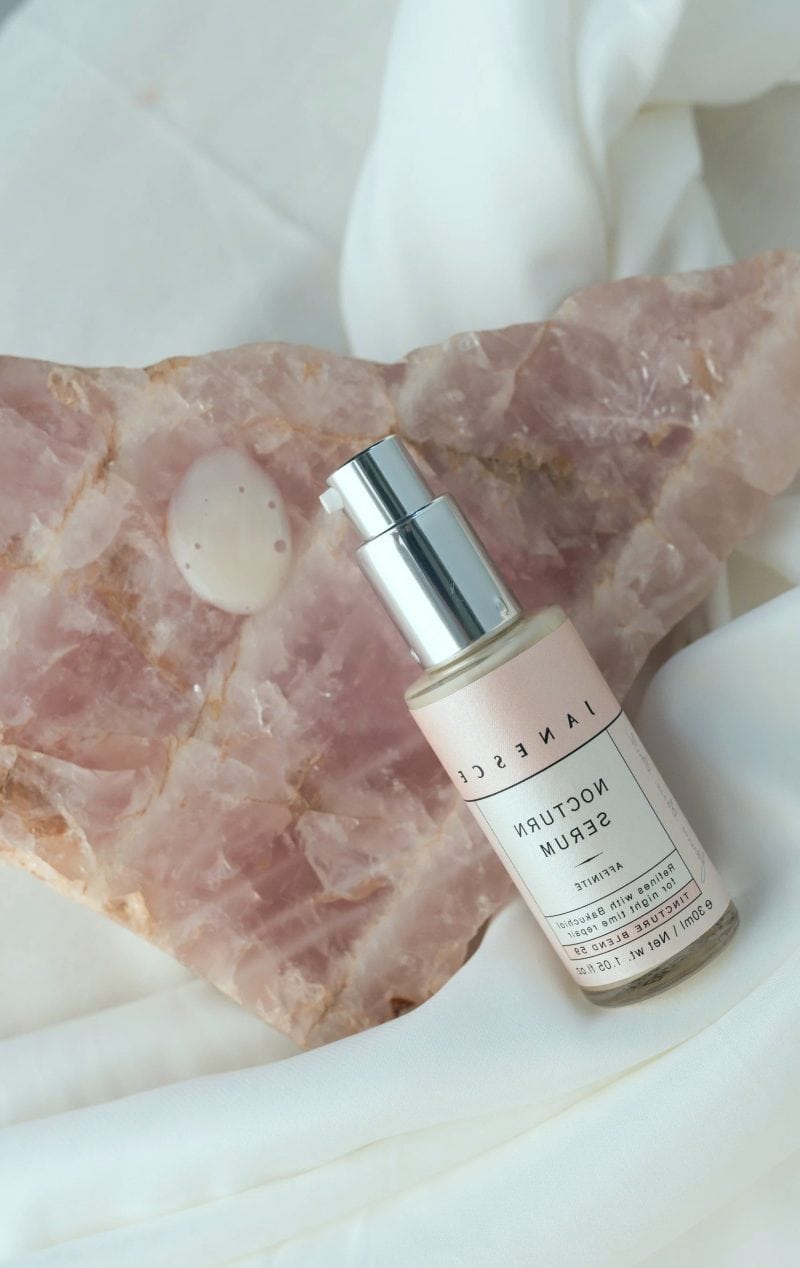
Korean skincare has a dedicated following in NZ, but getting hold of it requires more effort than it should. The mainstream retail channel has absorbed the basics — you can find sheet masks at most pharmacies and supermarkets, and COSRX has started appearing on some shelves. But the brands driving the K-beauty conversation internationally — Beauty of Joseon, Anua, Torriden, Isntree — have minimal official NZ distribution.
A few small NZ-based importers specialise in Korean and Japanese skincare, operating mostly online. They bring in curated selections of popular products and sell at prices that reflect the import costs plus a reasonable margin. These stores fill a genuine gap, and for anyone who wants a specific product without navigating an overseas order, they are worth knowing about.
The supermarket and pharmacy K-beauty you see on local shelves tends to be the most commercially accessible end of the market — the products designed for export rather than the ones that built K-beauty’s reputation for ingredient innovation. For the good stuff, you are mostly looking at importing.
The main international platforms for Korean beauty — YesStyle, Stylevana, Olive Young Global — all ship to New Zealand. The experience is functional but requires patience. Shipping typically takes two to four weeks, occasionally longer depending on the platform and the time of year. Costs vary: YesStyle offers free shipping above a threshold that shifts periodically, Stylevana charges flat rates, and Olive Young runs free shipping promotions frequently enough that waiting for one is usually worth it.
Customs is straightforward for most beauty orders. New Zealand’s GST on imported goods is collected at the point of sale by most large international retailers, which means you pay GST at checkout and the parcel clears customs without delay. For platforms that do not collect GST, orders under NZD 1000 in value historically cleared without additional charges, though the rules have tightened as more overseas sellers register for NZ GST.
The practical risk is limited recourse. If a product arrives damaged, expired, or simply wrong, returning it to South Korea is not realistic. Order from established platforms with decent customer service records, check expiry policies, and start with one or two products before committing to a large haul. The savings on K-beauty staples like sunscreens and serums are genuine — often 40-60% less than local markup — but they come with slower delivery and no ability to test before buying.
New Zealand changed its approach to GST on imported goods in recent years. Since 2019, overseas suppliers with annual sales exceeding NZD 60,000 to NZ customers are required to register for and collect GST at the point of sale. In practice, this means most large international retailers — including Adore Beauty, YesStyle, ASOS, and many brand-direct websites — now charge you 15% GST at checkout. The product arrives without any additional border charges because the tax has already been paid.
For smaller overseas retailers that have not registered for NZ GST, the old rules still functionally apply. Goods valued under NZD 1000 generally clear customs without GST being collected at the border, though Customs NZ reserves the right to assess any consignment. Above NZD 1000, you will pay GST plus a Customs processing fee, which makes large single orders more expensive than breaking them into smaller shipments.
The practical takeaway: check whether the retailer charges NZ GST at checkout. If they do, the price you see is the price you pay and there are no surprises at delivery. If they do not, keep individual orders modest and factor in the possibility of a border charge on anything substantial.
The international beauty retailers that reliably ship to NZ have settled into a reasonably predictable pattern. Cult Beauty ships from the UK with tracked delivery for around GBP 5-8, arriving in ten to fourteen days. Their skincare range is strong — they carry brands like Medik8, The Ordinary, Drunk Elephant, and several K-beauty lines that are harder to find through NZ or Australian channels.
Look Fantastic, also UK-based, ships to NZ and regularly runs percentage-off sales that can make the international shipping worthwhile, particularly for restocking staples. Their delivery runs a similar timeframe. SpaceNK ships but at a premium — their shipping rates make it viable only for higher-value orders or products you genuinely cannot find elsewhere.
From the US side, Dermstore ships internationally but the freight costs and delivery times make it a last resort rather than a regular channel. Paula’s Choice ships direct from their own site at competitive rates. Sephora US does not ship to NZ, which remains one of the more frustrating gaps.
The Australian retailers — Adore, Mecca, Oz Hair and Beauty — are the most practical for regular orders. Shorter transit times, lower shipping, and the products arrive without having crossed two oceans. For anything not available through the Australian channel, UK retailers are the next best option. Save the US sites for products that genuinely cannot be sourced any other way.
Buying good skincare in New Zealand is not difficult so much as fragmented. The product exists; the question is always which channel gets it to you at a reasonable price with genuine stock. Once you have your two or three reliable sources sorted, the rest is just knowing when to wait for a sale and when the shipping is worth paying.