Ingredients, reviews, and professional insight for NZ beauty
I spent the better part of a year working through the Antipodes range — not the curated PR selection, but the actual products you find on the shelf at Life Pharmacy. Some of them earned a permanent spot in my routine. Most did not. If you have ever stood in a pharmacy aisle wondering whether the green bottle is genuinely better than the alternatives beside it, or whether you are just paying for a brand that has perfected the art of looking premium, this is the honest breakdown.
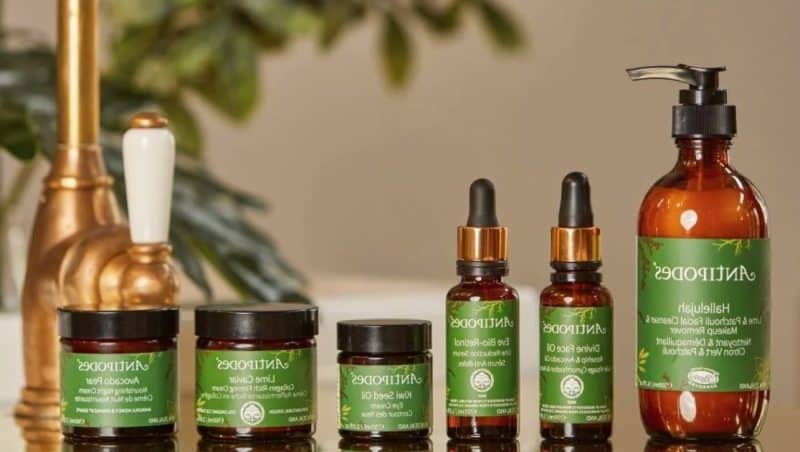
Antipodes has built its brand on three pillars: certified organic ingredients, New Zealand provenance, and science-backed formulations. Two of those three hold up to scrutiny. The organic certification is genuine — they hold BioGro certification, which is not a rubber stamp. The NZ-made claim is legitimate. But “science-backed” does the heaviest lifting in their marketing, and it is also the vaguest. The clinical studies Antipodes cites are typically small, sometimes conducted on the raw ingredient rather than the finished product, and occasionally funded by the brand itself. That does not make them worthless, but it does mean you should read them the way you read any interested party’s research — with one eyebrow raised.
What the ingredient lists actually show is a brand that formulates competently but not exceptionally. The hero actives — vinanza grape extract, manuka honey, kiwi fruit compounds — are legitimate antioxidants with real research behind them. But the concentrations are rarely disclosed, and the supporting cast of ingredients in many products is standard cosmetic fare. Glycerin, cetearyl alcohol, basic emulsifiers.
There is nothing wrong with that, but there is nothing that justifies a significant premium over other well-formulated natural brands either. The honest assessment: Antipodes makes good products that occasionally cross into very good, wrapped in marketing that consistently implies great.
In New Zealand, Antipodes pricing falls into predictable bands:
– Serums: $45-70
– Moisturisers: $40-55
– Cleansers: $30-45
To put that in context: Trilogy, which occupies a similar natural-premium-NZ-made position, prices comparably but often edges slightly lower. The Ordinary, which has become the benchmark for affordable actives, sells serums for $10-25. At the department store end, you are looking at $80-150 for brands like Clinique or Estee Lauder.
So Antipodes lands in the middle — more expensive than budget actives, cheaper than luxury counter brands. The question is whether that middle ground delivers middle-ground results or something better. For their standout products, the answer is yes. For the bulk of the range, you are paying a convenience premium: decent formulations, pleasant textures, nice packaging, and the comfort of a recognised brand.
You could assemble a more effective routine for the same money by mixing The Ordinary actives with a solid NZ-made moisturiser. But not everyone wants to play cosmetic chemist with their bathroom shelf, and that is a perfectly reasonable position. Just know what you are paying for — sometimes it is the formula, sometimes it is the ease of grabbing a recognisable green bottle off the shelf at Life Pharmacy.
Organic certification matters most when the product is predominantly composed of the ingredients being certified and when those ingredients sit on your skin long enough to interact with it meaningfully. A face oil is almost entirely oil — if those oils are organic, cold-pressed, and minimally processed, you genuinely get a different quality of fatty acid profile and antioxidant content compared to conventionally processed alternatives. The Antipodes Divine Face Oil benefits from this. The raw avocado and rosehip oils are better when they are handled well, and organic certification at least ensures a baseline of ingredient integrity.
A cleanser, on the other hand, sits on your skin for maybe thirty seconds before you rinse it off. Whether the aloe vera in it was organically grown is, from a skin-outcome perspective, largely irrelevant. The surfactants do the work, and surfactants are surfactants. Similarly, a toner that you swipe across your face delivers its actives in a momentary pass — the organic status of the botanical extracts listed at the bottom of the ingredient deck is not meaningfully changing your skin.
The practical rule: spend your organic premium on leave-on products with high concentrations of plant-derived actives. Oils, serums, and rich moisturisers. Save your money on anything you rinse off.
The Worship serum is the product that justifies Antipodes having a reputation. It uses their proprietary vinanza grape and kiwi fruit extract — and before you dismiss “proprietary blend” as marketing speak, there is actually published research on vinanza showing meaningful antioxidant activity. The texture is lightweight, absorbs without that tacky film that plagues many natural serums, and layers well under sunscreen and makeup.
After several months of use, what it delivers is a noticeable improvement in skin tone evenness and a reduction in that dull, slightly grey look that Auckland humidity and office air conditioning conspire to produce. It is not going to perform miracles on deep pigmentation or advanced ageing — no topical antioxidant will, regardless of what the marketing says — but as a daily defence and radiance product, it earns its place in a routine.
At around $50-60 depending on where you catch it, the Worship serum sits at a price point that matches its performance. You could pay less for a vitamin C serum from The Ordinary, but the texture and stability of the Worship formula is genuinely superior, and it plays better with sensitive skin. This is an Antipodes product you can recommend without caveats.
The Divine Face Oil is built around avocado oil, which is an underappreciated carrier in skincare. Rich in oleic acid and naturally high in vitamins A, D, and E, avocado oil has a heavier texture than the rosehip and jojoba oils that dominate the natural beauty market, but that weight is precisely what makes it effective for drier skin types and for anyone dealing with the dehydration that New Zealand’s UV exposure quietly inflicts. The addition of rosehip oil brings linoleic acid into the mix, which balances the richness and adds its own well-documented benefits for skin repair and tone.
Where some face oils feel like they sit on top of your skin waiting to transfer onto your pillowcase, the Divine formula absorbs within a few minutes and leaves skin feeling fed rather than greasy. It layers under sunscreen without pilling — a genuine test that many oils fail. In winter, it is substantial enough to use as a final step over a light moisturiser. In summer, particularly in humid conditions, it can replace your moisturiser entirely.
The price — usually around $30-45 for 30ml — is reasonable for a well-formulated face oil using quality cold-pressed ingredients. Trilogy’s rosehip oil is comparable in price and also excellent, but the two products do slightly different jobs. The Divine oil is richer and better suited to anyone whose skin drinks moisture rather than reflects it.
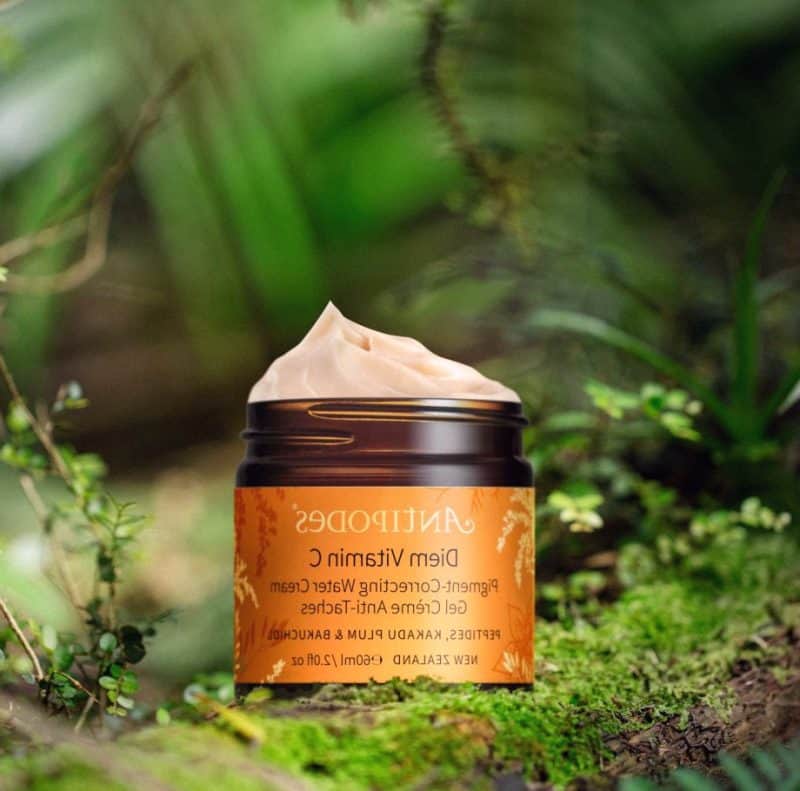
This is where the Antipodes range starts to coast. The Rejoice Light Facial Day Cream and Vanilla Pod Hydrating Day Cream are perfectly pleasant moisturisers — nice textures, inoffensive scents, they do the basic job of hydrating and occluding. But at $40-50, they are competing with products that do significantly more for the same money or deliver equivalent results for less.
The ingredient lists on these moisturisers tell the story. After water and the standard emulsifier system, you get modest amounts of plant extracts and oils. There are no standout actives at concentrations that would drive visible results. No peptides, no meaningful niacinamide levels, no advanced delivery systems. Compare that to:
– Neutrogena Hydro Boost at half the price, using hyaluronic acid effectively
– CeraVe moisturisers with ceramides and niacinamide for similar money
– Trilogy Vital Moisturising Cream with rosehip at a comparable NZ-made price point
The Antipodes moisturisers have the organic certification and the pleasant botanical feel, but from a skin-outcome perspective, they are not outperforming their price bracket. If organic formulation is a genuine priority for you rather than a nice-to-have, these moisturisers are acceptable options. But if you are spending $45 because you expect $45 worth of skin results, you will find better returns elsewhere.
The argument against premium cleansers is simple and it applies to almost every brand, not just Antipodes: a cleanser’s job is to remove makeup, sunscreen, and accumulated grime without stripping your skin barrier. It does this in the thirty to sixty seconds it is on your face. The carefully sourced manuka honey or the high-quality calendula extract in an Antipodes cleanser has almost no time to deliver any benefit before it goes down the drain.
The Antipodes Grace Gentle Cream Cleanser is a fine product. It cleans without drying, it does not irritate, the texture is pleasant. But a $35-40 cleanser is a hard sell when a $15 Sukin or Simple cleanser does the same fundamental job equally well. The toner situation is similar — the Anoint Lime and Patchouli Toner is nicely formulated but toners are, at best, a preparation step for your actives. Spending premium money on the preparation step while skimping on the serum that follows is backwards budgeting.
If you have the budget and you simply prefer the experience of using Antipodes cleansers, that is a valid personal choice. But if you are trying to get the most out of your skincare spend, this is the category to downgrade first. Put that $35 towards a better serum and clean your face with something basic.
Every skincare brand eventually decides it needs a complete range, and the products born from that ambition rather than from genuine formulation inspiration are usually obvious. The Antipodes lip and eye products fall squarely into this category.
The Kiwi Seed Oil Eye Cream is a lightweight emulsion with kiwi seed oil and vitamin E — ingredients that are perfectly fine but unremarkable at this price point. Eye creams in general are one of skincare’s great cons — they are usually just lighter-textured face moisturisers in smaller jars at higher per-millilitre prices. The Antipodes version does not break that pattern.
The lip products are similarly dutiful rather than inspired. The Moisture Boost Natural Lipstick range offers decent colour payoff and a comfortable wear, but the formulation is not doing anything that justifies choosing it over any number of natural lip products at lower price points. These are products that exist because a brand that sells serums and moisturisers is expected to also sell lip and eye products. They round out the display at the pharmacy, they fill space on the website, and they are nobody’s reason for buying Antipodes.
Skip them. Your money does more useful work almost anywhere else in your routine.
Antipodes is widely stocked across New Zealand, which means it goes on sale regularly if you know where to look:
– Chemist Warehouse: Consistently the sharpest discounts at 30-40% off RRP, with deeper cuts during major sale events
– Health Post: Seasonal sales include Antipodes, and their between-sale prices often sit slightly below standard RRP
– Farmers: Beauty events several times a year, though discounts tend to be more modest at 20-25%
The one thing to watch is inflated RRP games. Some online retailers list a high “was” price to make a modest discount look dramatic. Check the actual shelf price at your nearest Life Pharmacy or Unichem before assuming an online deal is genuine. The true RRP for most Antipodes serums is around $50-60, moisturisers $40-50. If someone is claiming 50% off a $90 serum, they have inflated the starting number.
Buying direct from the Antipodes website rarely offers the best price unless they are running a specific promotion. For the products you use regularly, the smartest approach is to buy two when the price drops below 30% off and avoid paying full retail.
After testing extensively across the range, three Antipodes products justify their retail price without qualification:
1. Worship Skin Defence Serum — a genuinely effective antioxidant with superior texture and good sensitive-skin compatibility
2. Divine Face Oil — quality cold-pressed oils in a formulation that works in New Zealand conditions across seasons
3. Apostle Skin-Brightening Serum — a gentler approach to brightening that suits reactive skin types better than more aggressive vitamin C formulas
Everything else in the range falls into one of two categories: buy it on sale if you enjoy the brand experience, or skip it entirely and spend the money on something that works harder. The moisturisers are pleasant but overpriced for their ingredient depth. The cleansers and toners are functional but no better than products at half the cost. The lip and eye products are range-fillers.
Brand loyalty is a poor skincare strategy. The smartest approach is to cherry-pick — take the two or three products where Antipodes genuinely excels, fill the rest of your routine with whatever delivers the best results per dollar from any brand, and stop feeling obligated to buy an entire range from one company. Your skin does not care about brand consistency. It cares about what is in the jar.
Antipodes is not a bad brand. That is worth saying plainly, because honest criticism can sound like dismissal when the internet prefers extremes. What they are is a brand with two or three genuinely excellent products surrounded by a range of competent but overpriced filler. Buy the serum, consider the oil, and spend the rest of your budget wherever the formulations — not the labels — earn it.